

 русский
 عربى
عربى
Industry News
What should I consider before buying a VMC?
 2026.07.30
 Industry News
Content
- 1 Quick Answer: What Should I Consider Before Buying a VMC?
- 2 Spindle Power, Speed Range and Torque Matched to Your Workpieces
- 3 Table Size, Axis Travel and Overall Machine Footprint
- 4 Structural Rigidity, Casting Design and Vibration Control
- 5 Automatic Tool Changer Capacity and Tool Change Speed
- 6 CNC Control System and Programming Interface
- 7 Coolant Systems, Chip Evacuation and Enclosure Design
- 8 Positioning Accuracy and Repeatability
- 9 Automation Compatibility: Pallet Changers, Robot Loading and Bar Feeding
- 10 Matching VMC Type to Your Application: Mold Making, Automotive Parts and General Machining
- 11 Evaluating a Vertical Machining Center Manufacturer or Supplier
- 12 Common Mistakes to Avoid When Selecting a VMC Machine
- 13 Industry Demand and Why Vertical Machining Centers Remain a Core Investment
- 14 About Nantong New Era Technology Co., LTD
- 15 Frequently Asked Questions
Quick Answer: What Should I Consider Before Buying a VMC?
Before buying a vertical machining center, the short answer is this: match the spindle power and speed range to your material mix, confirm the table size and axis travel cover your largest part envelope, check the structural rigidity of the casting and guideway design, review the automatic tool changer capacity, and confirm the CNC control platform fits your programming workflow. Positioning accuracy, coolant and chip management, automation readiness, and the manufacturing background of the supplier round out the list. A VMC machine is a long-service production asset, so the decision is rarely about a single spec sheet number. It is about how the whole configuration behaves across your actual part mix, shift pattern, and floor layout.
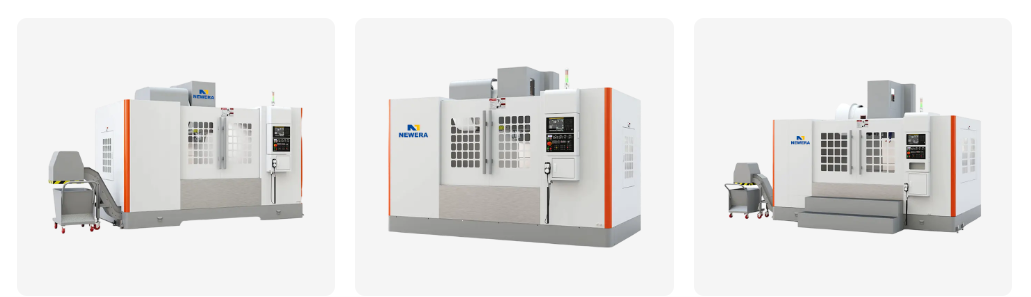
The sections below walk through each factor in detail, with reference ranges, comparison charts, and a supplier evaluation checklist that buyers commonly use when narrowing down options.
- Spindle power, speed range and torque matched to your typical material
- Table size and axis travel relative to your largest part envelope
- Structural rigidity of the casting, guideways and ribbing design
- Tool changer capacity and tool change speed for your part complexity
- CNC control platform and how it fits your existing programming workflow
- Positioning accuracy and repeatability needed for your tolerance class
- Automation compatibility for pallet changers, robot loading or bar feeding
- Supplier manufacturing history and after sales technical support
Spindle Power, Speed Range and Torque Matched to Your Workpieces
The spindle is the part of a vertical machining center that most directly decides what you can cut, how fast, and how cleanly. A spindle chosen without reference to your material mix tends to leave either speed or torque on the table, and buyers often discover this only after the machine is already on the floor. It helps to think in three broad spindle classes rather than a single number.
Standard Torque Spindles
Running roughly between 6,000 and 10,000 rpm, this class favors low and mid speed torque, which suits steel, cast iron and general mold steel roughing where chip load matters more than surface speed. Shops running heavier stock removal on ferrous material typically lean toward this class.
Mid Speed Balanced Spindles
Extending from about 10,000 to 15,000 rpm, this range is a common default for mixed production floors that run both steel components and aluminum parts through the same VMC machine. It is a practical middle ground rather than a specialist choice.
High Speed Spindles
From 15,000 up to 24,000 rpm and occasionally higher, torque drops off at the top of the range in exchange for surface speed. This class fits aluminum structural parts, graphite electrodes and fine mold finishing where surface quality depends on spindle speed rather than raw cutting force.
| Spindle Class | Typical Speed Range | Torque Character | Best Suited Material |
|---|---|---|---|
| Standard Torque | 6,000 to 10,000 rpm | Higher low end torque | Steel, cast iron, mold steel |
| Mid Speed Balanced | 10,000 to 15,000 rpm | Balanced across the range | Mixed steel and aluminum production |
| High Speed | 15,000 to 24,000 rpm | Lower torque near top speed | Aluminum, graphite, mold finishing |
Table Size, Axis Travel and Overall Machine Footprint
Table size and X, Y, Z travel decide the largest part you can run, but they also decide how much floor space, crane clearance and aisle width the machine will occupy on your shop floor. A small vertical machining center is popular in tool rooms and prototype shops precisely because it keeps the footprint compact while still covering common bracket, plate and housing sizes.
Reference X axis travel by vertical machining center size class
| VMC Class | Table Size (approx) | X / Y / Z Travel |
|---|---|---|
| Small Vertical Machining Center | 600 x 400 mm | 500 / 400 / 400 mm |
| Standard Vertical Machining Center | 1000 x 500 mm | 1000 / 500 / 600 mm |
| Large Vertical Machining Center | 1500 x 800 mm and above | 1600 / 800 / 800 mm |
Beyond the raw numbers, check crane hook height, forklift access to the front and side panels, and clearance for the electrical cabinet doors to open fully during maintenance. Many buyers size the machine correctly but forget the service clearance around it, which then forces an awkward layout change later.
Structural Rigidity, Casting Design and Vibration Control
Rigidity determines how a vertical machining center behaves under real cutting load rather than at idle. A machine that looks identical on paper to a competing model can still chatter, deflect or lose finish quality once a heavy roughing pass begins, and the difference usually traces back to casting design rather than motor size.
Look for a wide column base, thick internal ribbing beneath the table, symmetrical thermal design between the left and right sides of the column, and either box way or linear guideway construction sized appropriately for your typical cutting depth. Box ways generally favor heavy roughing stability, while linear guideways favor rapid traverse speed and lower friction. Neither is universally better; the right choice depends on whether your part mix leans toward heavy stock removal or faster, lighter finishing passes.
Vibration and Thermal Stability
Ask how the spindle housing manages heat during extended runtime, since thermal growth in the spindle is one of the most common causes of dimensional drift over a long shift. A well ribbed casting combined with a spindle cooling jacket reduces the gap between the first part off the machine in the morning and the two hundredth part later in the shift.
Automatic Tool Changer Capacity and Tool Change Speed
The automatic tool changer, or ATC, is where cycle time is often won or lost on complex parts. Two figures matter most: magazine capacity, which is how many tools the machine can hold ready, and tool to tool change time, which is how quickly the machine swaps between operations.
Reference tool magazine capacity by production mix requirement
A shop running a small number of repeat parts rarely needs more than sixteen to twenty tool positions. A high mix job shop cutting many different part numbers per week benefits from a larger magazine, since fewer manual tool swaps during the workday translates directly into more spindle uptime. Tool to tool change speed matters most on parts with frequent tool switching, such as detailed mold cavities or parts with many small features.
CNC Control System and Programming Interface
The control platform on a VMC machine shapes daily operator experience more than almost any other single component. A capable spindle paired with a control that your programmers find awkward to work with will underperform its specification sheet in practice.
Coolant Systems, Chip Evacuation and Enclosure Design
Coolant delivery and chip management rarely appear at the top of a buyer checklist, yet they directly affect tool life, cycle time consistency and how much manual cleanup labor a shop absorbs every shift.
Coolant Delivery Options
Flood coolant handles most general milling work, while through spindle coolant becomes important for deep hole drilling and tapping where chip clearing at depth is otherwise difficult. High pressure coolant options assist with chip breaking in gummy or long chipping materials.
Chip Evacuation and Full Enclosure
A screw type or hinge belt chip conveyor keeps chips moving out of the work zone automatically rather than requiring manual raking during breaks. A fully enclosed work area reduces coolant mist exposure in the shop and keeps swarf contained, which matters more as spindle speed and material removal rate increase.
Positioning Accuracy and Repeatability
Positioning accuracy describes how close the machine gets to a commanded coordinate, while repeatability describes how consistently it returns to the same point over many cycles. For most general work, repeatability matters more day to day, since it determines part to part consistency across a production run on a precision VMC machine.
- 0.010 mmTypical repeatability, economy class
- 0.006 mmTypical repeatability, standard class
- 0.003 mmTypical repeatability, precision class
Lower values indicate tighter repeatability across machine classes
Feedback method plays a direct role here. Semi closed loop systems rely on a rotary encoder at the motor to infer position, while closed loop systems add a linear scale on the axis itself to measure actual table position, which compensates for ballscrew wear and thermal expansion over time. Buyers targeting a tight tolerance class on a precision VMC machine should ask specifically which feedback method is fitted rather than assuming it from the price tier alone.
Automation Compatibility: Pallet Changers, Robot Loading and Bar Feeding
Even if automation is not part of your initial purchase, it is worth confirming whether the machine architecture supports it later. Adding automation to a machine that was never designed for it is far more difficult than starting with the right access ports and control interfacing from day one.
- Manual loading with a single operator tending one machine, suited to low volume or highly varied part runs
- Robot cell integration, where a six axis robot arm loads and unloads parts from a fixture while the operator manages several machines at once
- Pallet pool systems, where multiple pre loaded pallets queue automatically so the spindle keeps cutting between operator visits
- Extended unattended or lights out operation, combining pallet pools, in process probing and tool life monitoring for overnight production runs
Matching VMC Type to Your Application: Mold Making, Automotive Parts and General Machining
Not every application weighs the same factors equally. A shop focused on VMC for mold making prioritizes rigidity and repeatability above raw throughput, while a shop running an automotive parts VMC machine line typically prioritizes cycle time, automation readiness and consistent throughput across long production runs.
- Small Vertical Machining Center
- Standard Vertical Machining Center
- Precision / Custom Vertical Machining Center
| VMC Type | Primary Application | Key Strength |
|---|---|---|
| Small Vertical Machining Center | Prototype shops, tool rooms | Compact footprint, lower floor space demand |
| Standard Vertical Machining Center | General job shop, automotive parts VMC machine work | Balanced speed, travel and rigidity |
| Precision / Custom VMC | VMC for mold making, detail parts | Tight repeatability, thermal stability |
Evaluating a Vertical Machining Center Manufacturer or Supplier
Specifications tell part of the story, but the manufacturing background of a vertical machining center manufacturer or vertical machining center supplier tells the rest. Two machines with near identical spec sheets can still perform very differently over years of service depending on how consistently they are built and supported.
| Evaluation Area | What to Look For |
|---|---|
| Manufacturing History | Years actively designing and producing machine models, in house component sourcing |
| Customization Capability | Support for OEM and ODM requests, configurable spindle, table and control options |
| After Sales Support | Availability of technical guidance, spare parts access, remote diagnostic support |
| Production Consistency | Repeatable geometry and calibration process across production units |
| Documentation | Clear operation manuals, maintenance schedules, wiring and parameter references |
Buyers looking for a custom vertical machining center configuration should confirm early in discussions whether the supplier can adjust spindle taper, table dimension, control brand preference and automation interface as a custom VMC manufacturer, rather than discovering the limits of flexibility late in the process.
Common Mistakes to Avoid When Selecting a VMC Machine
- Undersizing spindle power for the heaviest material in the part mix rather than the average job
- Ignoring service clearance around the machine for cabinet doors, coolant tank access and future automation
- Overlooking coolant filtration needs for the specific material chips being generated
- Choosing purely on headline speed figures while skipping rigidity and repeatability review
- Underestimating operator training time needed for an unfamiliar control interface
- Treating an affordable VMC machine search as a reason to skip rigidity or accuracy review, when the more useful approach is identifying which specifications actually matter for your part mix before comparing options
Industry Demand and Why Vertical Machining Centers Remain a Core Investment
Demand for vertical machining centers has stayed resilient because they cover a wide range of part geometries with a comparatively compact footprint. Industry market analysis projects the global vertical machining center segment to expand from an estimated USD 7.6 billion in 2025 to close to USD 9.9 billion by 2031, reflecting steady annual growth (Source: Vertical Machine Center Market Forecast, 2026 to 2031). Separate industry research places the vertical segment at roughly 61 percent share of the broader machining center market in 2026, a reflection of how many manufacturers favor the flexibility and cost efficiency of vertical configurations over other machine types (Source: Machining Centers Market Size and Opportunities, 2026 to 2033).
- USD 9.9BProjected VMC segment value by 2031
- 61%Vertical segment share of machining centers, 2026
- 45%Asia Pacific share of machining centers demand, 2026
This growth is driven largely by automotive component production, mold and die work, and general industrial machining, three areas where a vertical machining center remains a practical default choice for manufacturers weighing flexibility against floor space and setup time.
About Nantong New Era Technology Co., LTD
Nantong New Era Technology Co., LTD has specialized in developing, designing and producing numerical control machines and CNC machine tools for more than twenty years, supported by a dedicated team across technology development, manufacturing and sales service. As a VMC machine manufacturer operating an established vertical machining center factory in China, the company has continuously absorbed advanced technical developments from home and abroad, growing into a manufacturer with a complete production and assembly capability.
Working as both an OEM Vertical Machining Center Manufacturer and an ODM VMC machine China partner, Nantong New Era Technology focuses on providing customers with practical solutions and consistent product quality backed by responsive service, whether the requirement is a standard configuration or a more tailored setup through its CNC vertical machining center manufacturer capability.
Frequently Asked Questions
-
Q1: What is a VMC machine used for?
A vertical machining center is used for milling, drilling, tapping, boring and contouring metal and other engineering materials, commonly for brackets, housings, plates and mold cavities.
-
Q2: Why choose a vertical machining center?
A vertical machining center offers straightforward setup, clear visibility of the cutting zone, and a smaller footprint compared with many other configurations for general part production.
-
Q3: What are the main components of a VMC?
Core components include the spindle and motor, the axis structure with ballscrews and guideways, the worktable, the automatic tool changer, the CNC control cabinet and the coolant system.
-
Q4: How does CNC control a VMC machine?
The CNC control reads programmed instructions and coordinates the servo motors on each axis, the spindle speed and the tool changer, using feedback devices to correct position during machining.
-
Q5: What operations can a VMC perform?
A vertical machining center can perform face milling, slot milling, drilling, tapping, reaming, boring and contour profiling, along with mold cavity finishing on many part types.
-
Q6: Do you support OEM and ODM?
Support.
-
Q7: Why choose us?
Independent research and development, professional team, with a long history.
-
Q8: Can your packaging ensure product safety?
Can.
-
Q9: What is the difference between a VMC and a horizontal machining center?
A VMC has a vertical spindle, suited to flat parts and mold work with simpler setup, while a horizontal machining center favors heavy multi side production with pallet automation.
-
Q10: How do I determine the right table size for my parts?
Start with your largest part envelope plus fixturing and tool clearance, then compare it against the X, Y and Z travel of the vertical machining center models under review.
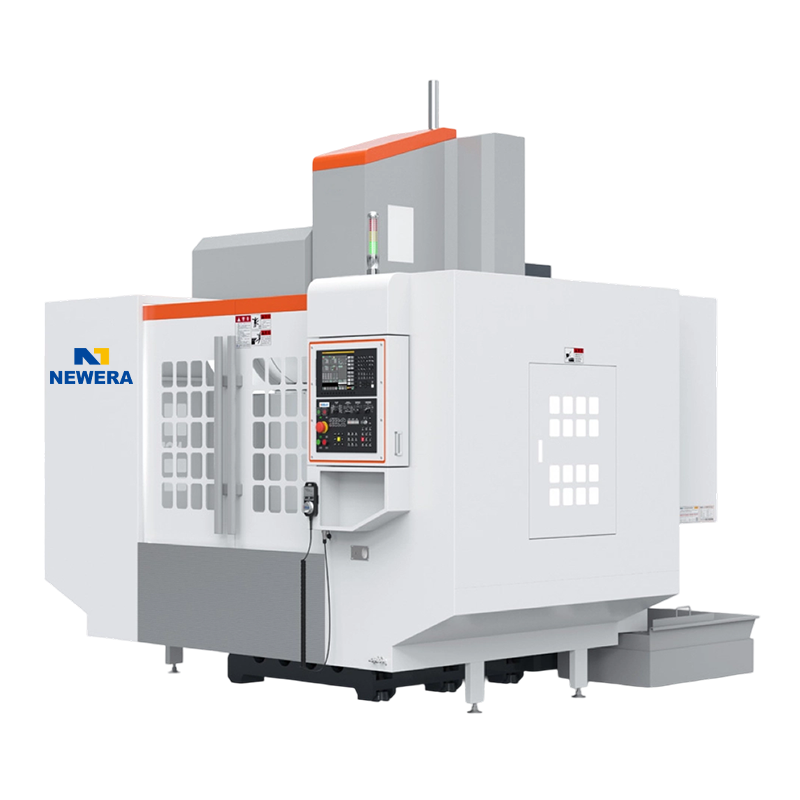

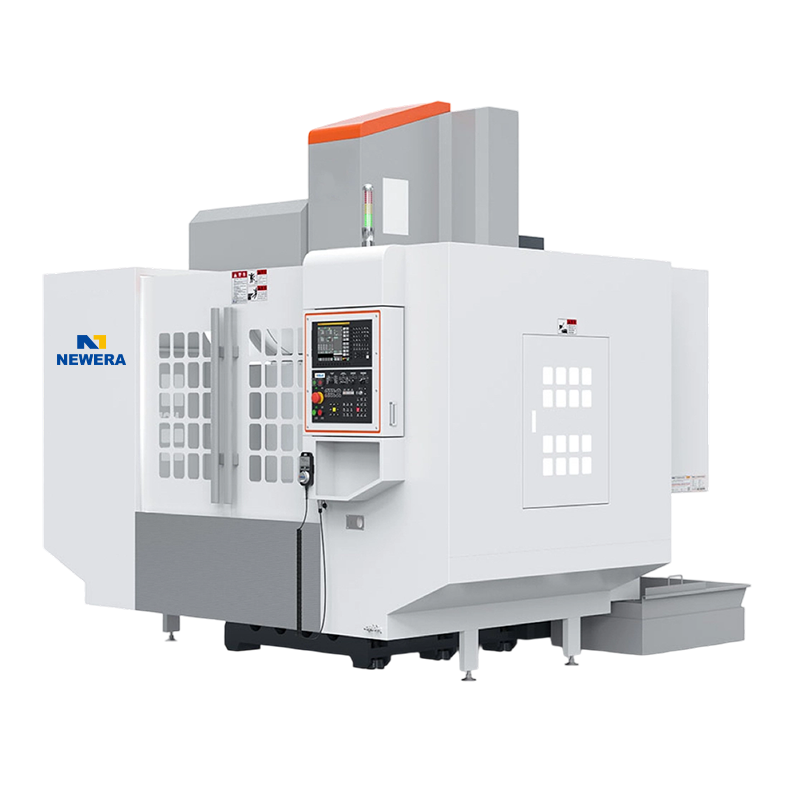

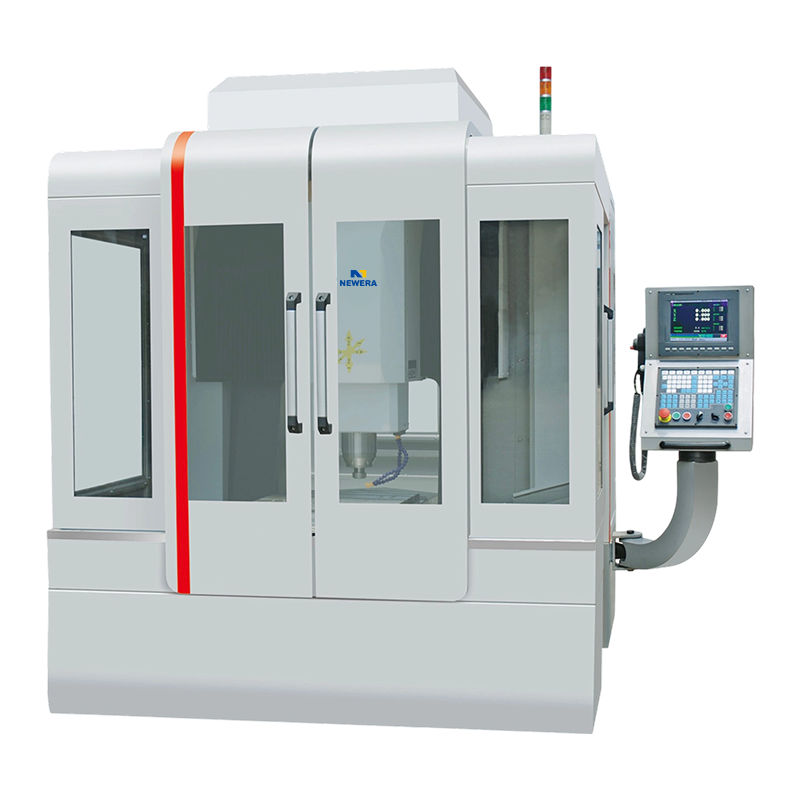
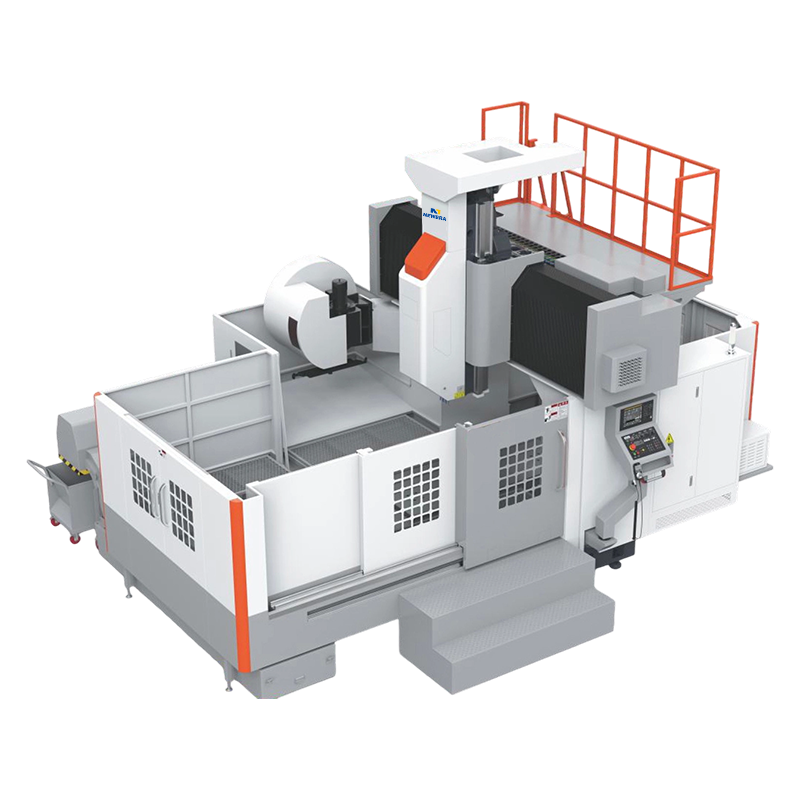
If you are interested in our products, please consult us.
CONTACT DETAILS
Nantong New Era Technology Co., LTD
- Five-star Industrial Park, Chongchuan District, Nantong City, Jiangsu Province, China
- TEL:+86-19851302688
- E-Mail: [email protected]
Products
Quick link
Mobile terminal
