

 русский
 عربى
عربى
Industry News
What Should You Check Before Buying a Die Sinker EDM Machine?
 2026.08.06
 Industry News
Content
- 1 The Direct Answer: Core Checkpoints Before You Buy a Die Sinker EDM Machine
- 2 Understanding How a Die Sinking EDM Machine Removes Material
- 3 Checking the Machine Structure and Build Quality
- 4 Evaluating the Power Supply and Discharge Circuit
- 5 Verifying Machining Precision and Repeatability
- 6 Matching Discharge Current Settings to Electrode Material
- 7 Electrode Material Compatibility for EDM Die Sinking
- 8 Dielectric Fluid System, Filtration and Tank Design
- 9 Control System, Automation and Software Features to Look For
- 10 Worktable Size, Travel Range and Workpiece Capacity
- 11 Common Applications for a Die Sinking EDM Machine
- 12 Sinker EDM Versus Wire EDM: Key Differences to Understand
- 13 Choosing a Reliable Sinker EDM Manufacturer and Supplier
- 14 Final Pre-Purchase Checklist Summary
- 15 Frequently Asked Questions About Sinker EDM and Die Sinking Machines
- 15.1 What is sinker EDM
- 15.2 What is die sinking EDM
- 15.3 How does sinker EDM work
- 15.4 What is a die sinker machine
- 15.5 What is EDM machining used for
- 15.6 What is the difference between sinker EDM and wire EDM
- 15.7 What materials can a sinker EDM machine work with
- 15.8 What are the advantages of sinker EDM
- 15.9 What are the disadvantages of sinker EDM
The Direct Answer: Core Checkpoints Before You Buy a Die Sinker EDM Machine
Before committing to a Die Sinking EDM Machine, the checks that matter most are the power supply and discharge circuit design, servo and gap control response speed, tank and frame rigidity, electrode holding compatibility, dielectric filtration capacity, control software stability, and the technical support that the manufacturer actually provides after installation. These seven areas determine whether a Sinker EDM unit will hold tight tolerances across years of daily production, not just during a short demonstration cut. The sections below break each point down so a buyer can compare machines feature by feature rather than relying on a single number printed on a spec sheet.
- Confirm the pulse generator range, peak current limits and gap control response time
- Check the tank, column and base rigidity along with guideway protection
- Verify achievable positioning tolerance and repeatability under load
- Match electrode clamping and material compatibility to your typical cavity work
- Review dielectric fluid capacity, filtration rating and flushing options
- Examine the control system, automation features and program storage
- Assess the reputation, response time and spare parts support of the EDM machine manufacturer
Understanding How a Die Sinking EDM Machine Removes Material
EDM die sinking is a non contact thermal erosion process. A shaped electrode and the workpiece are both submerged in a dielectric fluid, and controlled electrical discharges jump across a small gap between them. Each discharge melts and vaporizes a tiny amount of material, and the eroded particles are flushed away by the circulating dielectric before the next spark occurs. A single die sinking operation can generate anywhere from around 500 to 30000 individual sparks per second, which is why the surface finish on a sinker EDM part looks like a fine, consistent matte texture rather than tool marks left by a rotating cutter.
Why the Electrode Shape Matters
The electrode is machined as a mirrored and slightly undersized image of the cavity that needs to be produced. As the electrode is slowly lowered, or sunk, into the workpiece, the machine maintains a stable spark gap and erodes a cavity that reflects the electrode geometry. The gap between the electrode surface and the finished cavity wall is called overcut, and depending on whether the operation is roughing or finishing, this overcut commonly falls somewhere between 5 and 100 microns. This is one reason electrode design experience matters as much as the machine itself.
Where a Die Sinker Machine Fits Among Machining Methods
Because the process is non contact, there is no cutting force and no tool deflection, which allows a Die Sinker EDM Machine to hold geometry in deep, narrow cavities and sharp internal corners that a milling cutter simply cannot reach. This makes an EDM machine the practical choice for hardened tool steel mold cavities, deep ribs and fine detail work regardless of the material hardness, since spark erosion does not rely on mechanical shear strength the way conventional cutting does.
Checking the Machine Structure and Build Quality
The physical structure of a die sinker machine sets the ceiling for every other performance number on the spec sheet. A flexible column or a thin base will show up as chatter marks, inconsistent gap control and premature guideway wear long before the electronics reach their limits. The diagram below labels the main structural groups worth inspecting in person or on video before an order is placed.
What to Physically Inspect
Ask for the base and column material, since a cast iron base with aged and stress relieved castings resists vibration far better than a lightly ribbed weldment. Check that the guideways are covered or sealed against dielectric fluid and debris, that the ram moves smoothly across its full travel with no perceptible play, and that the worktank is welded cleanly with no weeping at the seams. A machine that feels stiff and dead quiet when moved by hand is generally a better long term investment than one that feels light even if the two look similar on paper.
Evaluating the Power Supply and Discharge Circuit
The pulse power supply is the heart of any Die Sinking EDM Machine. It controls peak current, pulse on time, pulse off time and polarity, and together these settings determine material removal rate, electrode wear ratio and surface finish. A well designed discharge circuit paired with a fast servo feedback loop keeps the spark gap stable even as debris concentration changes inside a deep cavity, which prevents secondary arcing and short circuiting during long unattended cycles.
Practical Questions to Ask a Sinker EDM Manufacturer
Ask what the maximum peak current output is and whether it can be finely stepped down for finishing work, not just for roughing. Ask how the servo responds when debris briefly interrupts the gap, since a sluggish response causes arcing marks on the finished cavity wall. Also confirm whether the generator supports both positive and negative polarity switching, because polarity selection changes electrode wear behavior depending on whether copper or graphite is being used.
Verifying Machining Precision and Repeatability
Positioning accuracy is usually quoted as a single number, but the achievable tolerance in real production depends heavily on machine class, servo quality and how well the gap is controlled during long burns. General purpose sinker EDM machines commonly hold positioning tolerances in the region of plus or minus 0.02 millimeters, standard CNC controlled machines typically tighten this to around 0.01 millimeters, high precision machines can reach roughly 0.005 millimeters in stable conditions, and specialized ultra precision or micro EDM configurations are capable of a few microns under carefully optimized parameters, according to industry technical resources such as IQS Directory and jlccnc's process notes on sinker EDM.
Tolerance Classes at a Glance
| Machine Tier | Typical Tolerance | Typical Use |
|---|---|---|
| General Purpose | Around 0.02 mm | Standard tooling and general die work |
| Standard CNC | Around 0.01 mm | Injection mold cavities and stamping dies |
| High Precision | Around 0.005 mm | Fine detail cavities and connector tooling |
| Ultra Precision / Micro EDM | A few microns | Micro features and small electronics tooling |
Surface finish follows a similar pattern. Finishing passes run at lower current and higher frequency, and this can bring the surface roughness down to roughly Ra 0.2 to 0.8 micrometers according to published sinker EDM process notes, while roughing passes intentionally leave a coarser texture because the goal at that stage is removal rate rather than finish quality.
Matching Discharge Current Settings to Electrode Material
Discharge current capacity should be checked against the electrode material a shop actually plans to use, since copper and graphite behave very differently under load. Recommended amperage is generally described as roughly 50 to 65 amps per square inch of electrode surface in contact with the workpiece, and according to Modern Machine Shop, copper electrodes are typically limited to around 100 amps total, while graphite electrodes can accept discharge current up to around 600 amps because graphite tolerates higher thermal loading without breaking down as quickly.
Higher amperage and longer pulse duration increase material removal rate but also generate larger erosion debris, sometimes called swarf, which is why dielectric flushing and filtration become more important as roughing current increases. On a well built Die Sinking EDM Machine, the power supply parameters are adjusted automatically through feedback so that both aggressive roughing and gentle finishing can be run on the same job without manual guesswork.
Electrode Material Compatibility for EDM Die Sinking
Most sinker EDM electrode work comes down to two materials, copper and graphite, and the choice changes how the entire burn behaves rather than being a minor detail. Graphite is generally easier to machine into the electrode shape, holds sharp edges well, and handles higher discharge energy without degrading quickly, which makes it a common default for roughing and for complex geometries, and its lighter weight helps stability in larger electrodes. Copper is slower to machine but produces a smoother, more stable discharge, which is why it is frequently chosen for finishing passes where surface quality matters more than removal speed, though copper's thermal expansion behavior makes it less suited to very large electrodes.
Electrode Comparison Table
| Property | Graphite | Copper |
|---|---|---|
| Machinability of Electrode | Easier, lighter weight | Slower, denser material |
| Best Suited Stage | Roughing, complex geometry | Finishing, fine surfaces |
| Large Electrode Behavior | Stable, lighter in mass | Thermal expansion is a factor |
Dielectric Fluid System, Filtration and Tank Design
The dielectric fluid insulates the gap until breakdown, cools the electrode and workpiece, and carries eroded debris away from the spark zone through a filtered circulation loop. Sinker and ram EDM machines commonly run hydrocarbon based dielectric oil, which suits deep cavity work and finer surface finish requirements, while filtration is frequently handled with 5 micron rated filter cartridges, with some machines using 10 micron cartridges depending on the application, according to EDM filtration equipment documentation. Restricted or dirty filtration reduces cooling efficiency and destabilizes spark conditions, which shows up directly as inconsistent surface finish and faster electrode wear.
Filtration and Tank Checklist
| Item | What to Confirm |
|---|---|
| Filter Rating | Micron rating of standard filter cartridges supplied |
| Tank Capacity | Fluid volume relative to typical workpiece size |
| Pump and Flushing | Availability of side, up and down flushing options |
| Fluid Level Sensing | Automatic tank fill and drain safety interlocks |
Routine servicing also matters for long term precision. Daily checks generally cover dielectric fluid level, electrode condition and flushing performance, while weekly or monthly servicing covers tank cleaning, guideway lubrication and verification of axis movement accuracy, since periodic calibration keeps both dimensional precision and pulse performance stable over the life of the machine.
Control System, Automation and Software Features to Look For
A modern EDM machine control system should do more than start and stop the burn. Look for the following capabilities when comparing control packages, since they directly affect unattended run time and part consistency.
- Adaptive spark control that adjusts current and gap voltage automatically as burn depth increases
- Orbiting or planetary electrode movement for expanding a cavity without changing electrodes
- C axis rotation for electrode indexing on multi feature cavities
- Multi electrode changer support for unattended roughing and finishing sequences
- Stored parameter libraries for common electrode and workpiece material pairings
- Remote monitoring or diagnostic support for faster troubleshooting
These features matter most for shops running long, unattended cycles overnight, since a control system that reacts poorly to a change in flushing conditions can turn a routine finishing pass into a scrapped cavity.
Worktable Size, Travel Range and Workpiece Capacity
Machine capacity should be checked against the largest and heaviest workpieces a shop expects to run, not just an average job. Undersized travel or table capacity forces awkward fixturing and repositioning, which introduces its own accuracy risk.
| Specification | Why It Matters |
|---|---|
| X, Y and Z Travel | Determines maximum cavity depth and reach |
| Worktable Size | Sets fixturing options for large dies |
| Maximum Workpiece Weight | Protects table and guideway life |
| Maximum Electrode Weight | Affects ram stability and servo response |
Common Applications for a Die Sinking EDM Machine
A Die Sinker EDM Machine is chosen specifically when a cavity is deep, geometrically complex, or made from hardened material that is difficult to reach with rotating cutting tools. Typical uses include the following.
- Injection mold cavities with sharp internal corners and textured surfaces
- Die casting dies for aluminum and zinc components
- Stamping and forging dies made from hardened tool steel
- Connector and electronics housing cavities requiring fine detail
- Deep rib and blind hole features that a milling cutter radius cannot reach
This range of applications is why demand for a reliable EDM machine for die making and an EDM machine for precision molds remains steady across mold shops, tool rooms and precision component manufacturers.
Sinker EDM Versus Wire EDM: Key Differences to Understand
Buyers occasionally confuse the two EDM branches, so it helps to compare them directly before deciding which machine, or which combination of machines, fits a given shop.
| Aspect | Sinker EDM | Wire EDM |
|---|---|---|
| Tool | Shaped solid electrode | Continuously fed thin wire |
| Feature Type | Blind cavities, 3D shapes | Through cuts and profiles |
| Dielectric | Hydrocarbon oil, typically | Deionized water, typically |
| Start Point | Can start anywhere in the material | Requires a start hole or edge |
Choosing a Reliable Sinker EDM Manufacturer and Supplier
Machine specifications only tell part of the story. The long term value of a Die Sinking EDM Machine also depends on the manufacturer standing behind it. Before ordering, ask a prospective sinker EDM manufacturer or sinker EDM supplier about typical spare parts lead time, whether commissioning and operator training are included, and how technical questions are handled once the machine is running production. A dependable die sinking EDM machine supplier should be able to walk through electrode holder options, tank sizing and control software customization for a specific application rather than offering a single fixed configuration.
Nantong New Era Technology Co., LTD has specialized in developing, designing and producing numerical control machines and CNC machine tools for more than 20 years, supported by a dedicated team across technology development, manufacturing and sales service. As a professional OEM EDM Machine Manufacturer and ODM die sinking EDM manufacturer, New Era continues to draw on advanced technical achievements from both domestic and international sources, and has grown into a manufacturer with a complete production and assembly center. The company works to provide practical solutions and dependable equipment and service for shops that need a die sinker machine manufacturer capable of supporting die making, mold work and general tooling production over the long term.
Final Pre-Purchase Checklist Summary
| Checkpoint | Why It Matters |
|---|---|
| Power Supply Range | Controls removal rate and finish quality |
| Structural Rigidity | Sets the ceiling for repeatable accuracy |
| Achievable Tolerance | Should match your typical part requirements |
| Electrode Compatibility | Affects tooling cost and cycle planning |
| Filtration System | Protects surface finish and electrode life |
| Manufacturer Support | Determines uptime over the machine lifespan |
Frequently Asked Questions About Sinker EDM and Die Sinking Machines
What is sinker EDM
Sinker EDM is a machining process that uses controlled electrical sparks between a shaped electrode and a workpiece submerged in dielectric fluid to erode a cavity matching the electrode shape.
What is die sinking EDM
Die sinking EDM refers to the same process, named for its common use in sinking cavities into die and mold blocks through spark erosion rather than mechanical cutting.
How does sinker EDM work
The electrode is lowered toward the workpiece while a controlled gap is maintained, and rapid electrical discharges melt and vaporize material, which the dielectric fluid then flushes away.
What is a die sinker machine
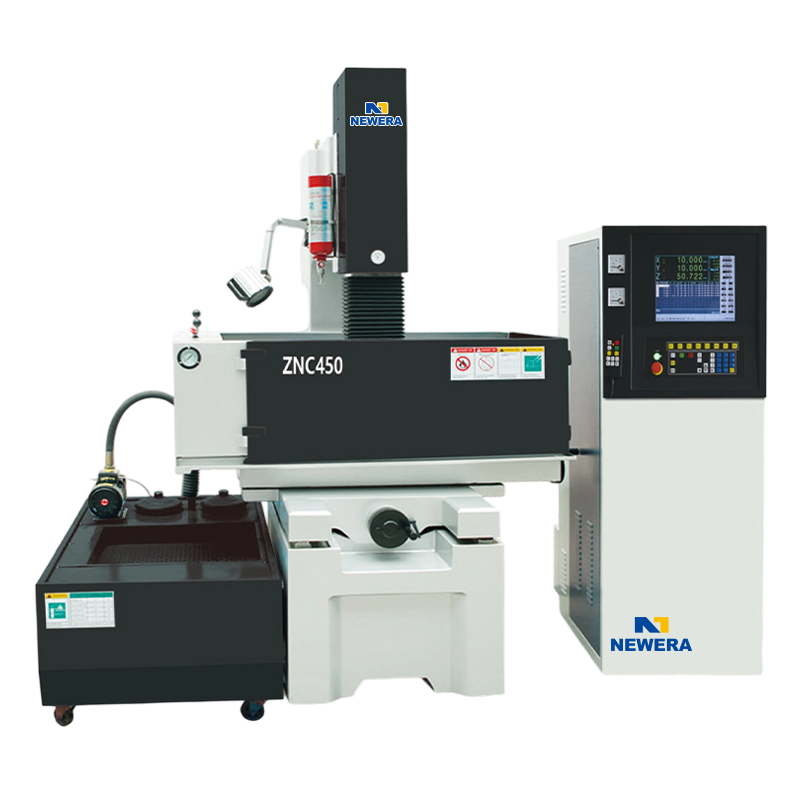
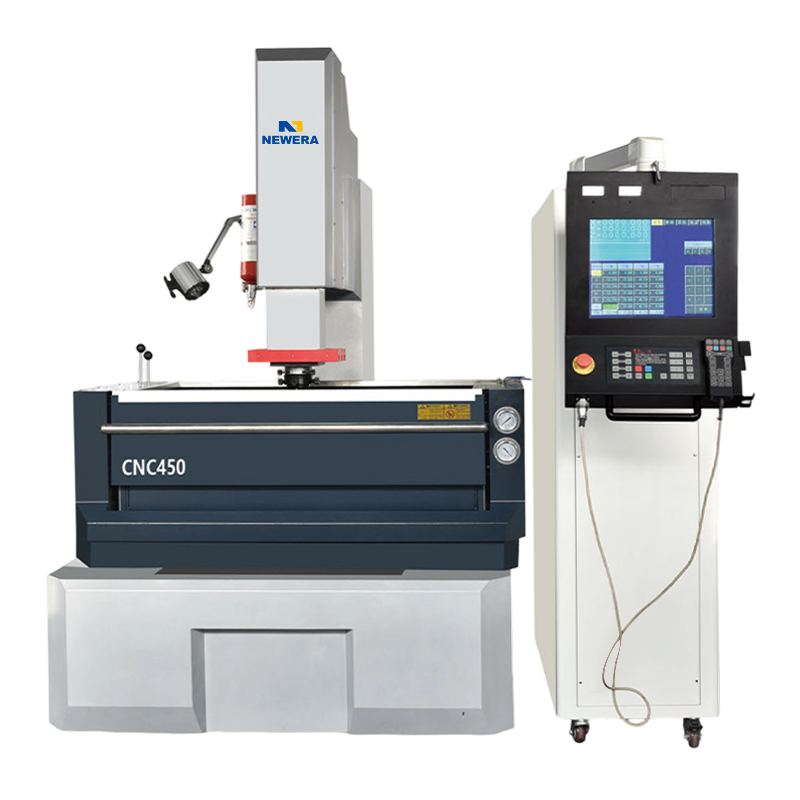
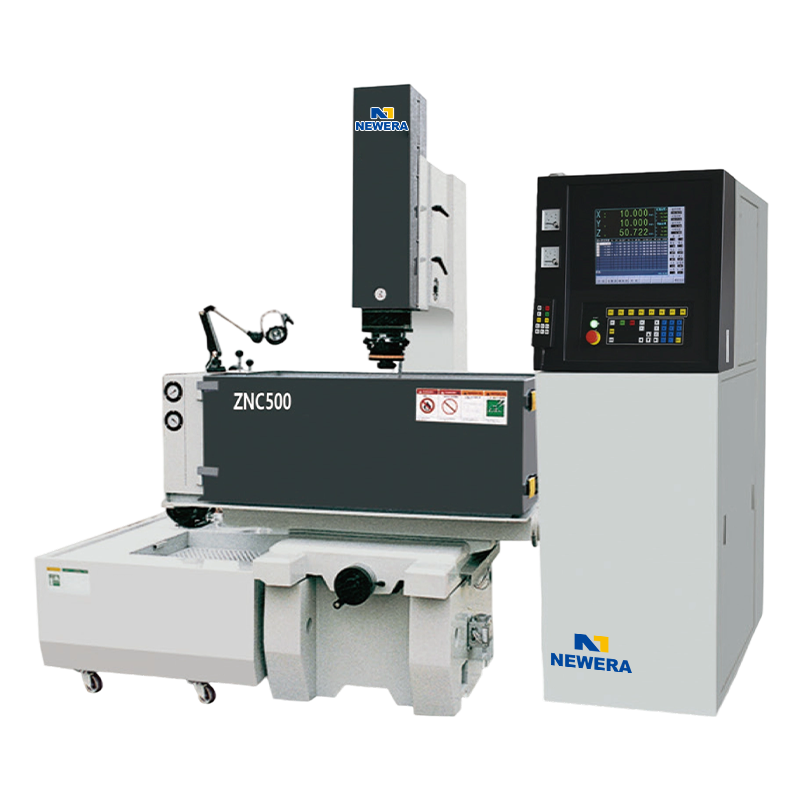
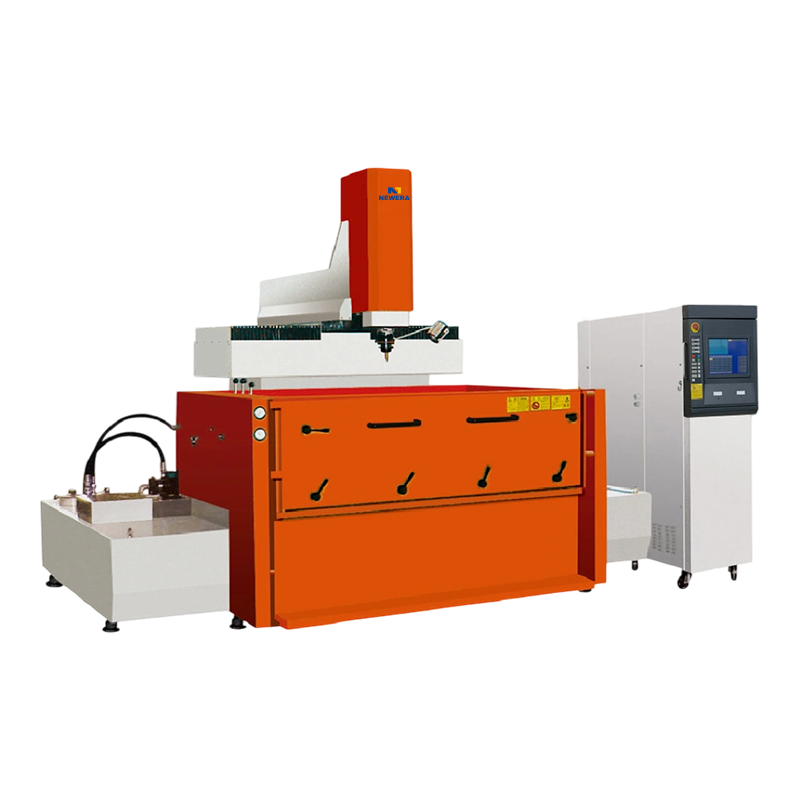
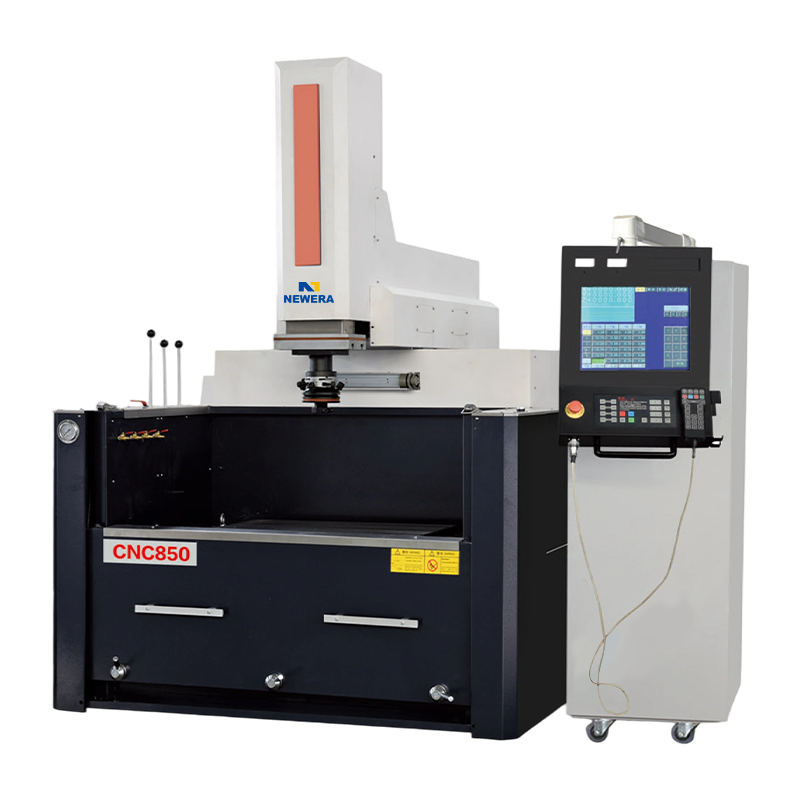
A die sinker machine is the equipment that houses the power supply, servo controlled ram, dielectric tank and control system used to perform sinker EDM operations.
What is EDM machining used for
EDM machining is used to produce complex cavities, hardened tool steel dies, deep ribs and fine detail features that are difficult or impossible to reach with conventional cutting tools.
What is the difference between sinker EDM and wire EDM
Sinker EDM uses a shaped electrode for blind cavities and 3D features, while wire EDM uses a continuously fed wire for through cuts and profile shapes.
What materials can a sinker EDM machine work with
Any electrically conductive material can be processed, including hardened tool steel, carbide, titanium and other alloys, regardless of their hardness.
What are the advantages of sinker EDM
Sinker EDM produces no cutting force, so there is no tool deflection, and it can reach sharp internal corners and deep blind cavities that milling cannot easily achieve.
What are the disadvantages of sinker EDM
The process generally has a lower material removal rate compared to conventional machining, and it requires custom electrodes that add setup and process planning time.
If you are interested in our products, please consult us.
CONTACT DETAILS
Nantong New Era Technology Co., LTD
- Five-star Industrial Park, Chongchuan District, Nantong City, Jiangsu Province, China
- TEL:+86-19851302688
- E-Mail: [email protected]
Products
Quick link
Mobile terminal
