

 русский
 عربى
عربى
Industry News
Home / News / Industry News / CNC Milling Machines Explained: Types, Key Specs, and a Practical Buying Guide
CNC Milling Machines Explained: Types, Key Specs, and a Practical Buying Guide
 2026.08.13
 Industry News
Two shops can buy vertical machining centers that look similar on paper, yet one produces consistent parts for years while the other fights chatter, thermal drift and repeated control faults. The difference is rarely the sticker price. It sits in the machine structure, spindle specification, axis travels and control system - the components hidden under the sheet metal.
This guide explains how CNC milling machines are classified, which specifications deserve a careful look, and how to match a machine to the parts you actually cut. Use it to shortlist models with confidence instead of relying on brochure claims.
Content
- 1 What a CNC milling machine does
- 2 Structure first: vertical, horizontal or gantry
- 3 Five specifications that matter more than marketing
- 4 Match the machine to material, complexity and volume
- 5 Total cost and purchasing risks
- 6 When CNC EDM complements milling
- 7 CNC milling machine FAQ
- 7.1 Q1. CNC milling machine vs CNC router: what is the difference?
- 7.2 Q2. How much does a CNC milling machine cost?
- 7.3 Q3. What materials can a CNC milling machine cut?
- 7.4 Q4. What is the difference between 3-axis, 4-axis and 5-axis?
- 7.5 Q5. Vertical vs horizontal milling machine: what is the difference?
- 7.6 Q6. What is the accuracy of a CNC milling machine?
What a CNC milling machine does
A CNC milling machine removes material with a rotating multi-point cutter. The workpiece is clamped to a table while the spindle follows programmed X, Y and Z coordinates to produce flat faces, slots, pockets, holes and complex contours in metal, plastic and composites.
Because every move follows digital coordinates, the machine replaces manual skill with repeatable accuracy: a part cut in the morning is identical to a part cut in the afternoon as long as the machine stays rigid and thermally stable. That stability is determined by the structural layout below.
Typical vertical machining center layout: the load path runs from the base through the column and spindle head, and from the base through the table to the workpiece.
Every gram of vibration between the tool and the workpiece shows up on the surface finish. That is why structure comes before features: a heavier base, properly ribbed castings and high-quality linear guideways matter more than a long options list.
Structure first: vertical, horizontal or gantry
Before comparing brands, decide the machine structure. It defines the parts you can make, the production rate and the floor space you need.
Vertical machining centers
VMCs mount the spindle vertically and are the most common class. They offer the widest versatility: easy setup, good accessibility and a compact footprint. Typical X-axis travel ranges from about 500 mm in compact machines to 1300 mm in large-stroke models, which covers flat plates, mold inserts and housings. For most job shops, a VMC is the correct starting point.
Horizontal machining centers
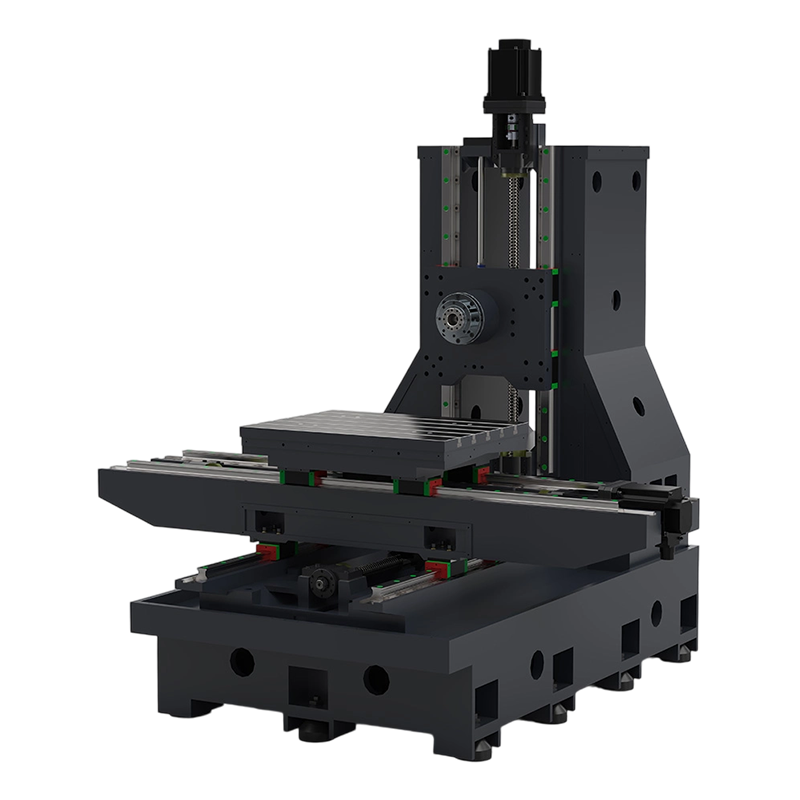
HMCs position the spindle horizontally. Chips fall away from the cut, and the closed-frame structure provides high rigidity for heavy-duty milling. Prismatic parts that need machining on four sides benefit from a rotary table or pallet changer, which reduces setups. Production-focused shops choose this class when repeatable positioning and high throughput matter. For a deeper look, read why a horizontal machining center is chosen for precision machining. A palletized HMC80 horizontal machining center brings multiple faces into reach within a single cycle.
 HMC80 Horizontal Machining Center Manufacturers, Company - Nantong New Era TechnNantong New Era Technology Co., Ltd is China OEM/ODM HMC80 Horizontal Machining Center manufacturers and company, Pursuit of UsabilityEm...View Product →
Gantry machining centers
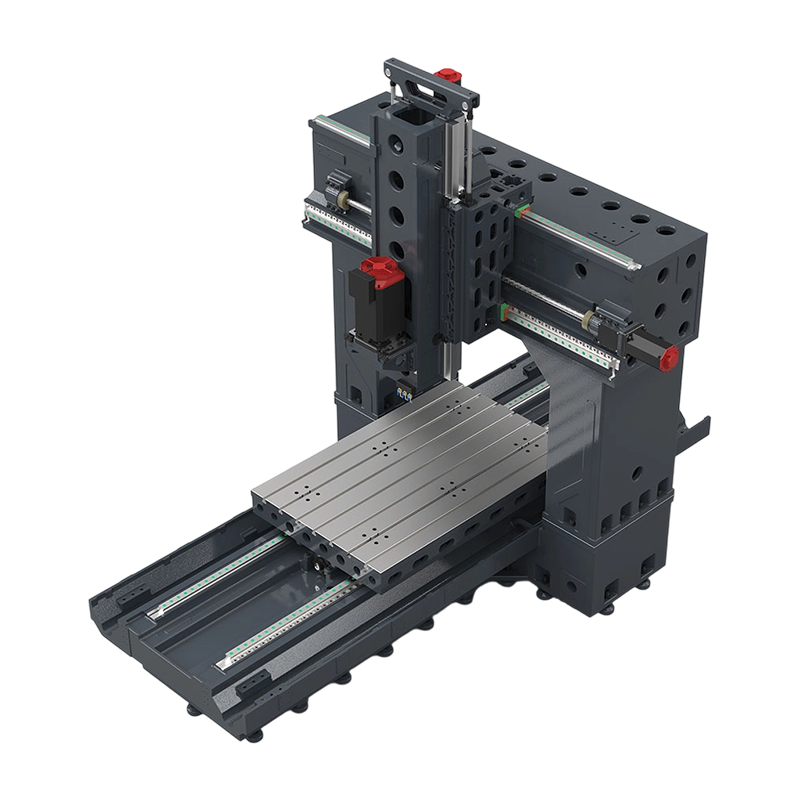
Instead of a moving column, a gantry machine carries the spindle on a crossbeam supported by two columns. That structure handles very large workpieces: long spacing plates, big dies, structural and aerospace parts. A PL2016 gantry machining center provides an X-axis travel of about 2000 mm and a Y-axis travel of about 1600 mm, which translates directly into the largest part you can load in one setup. The architecture is explained in more detail in our article on what a gantry machining center is.
 PL2016 Gantry Machining Center Manufacturers, Company - Nantong New Era TechnoloNantong New Era Technology Co., Ltd is China OEM/ODM PL2016 Gantry Machining Center manufacturers and company, Pursuit of UsabilityEmplo...View Product →
| Structure | Typical X travel | Best suited for | Floor space and setup |
|---|---|---|---|
| Vertical machining center | 500-1300 mm | Flat parts, mold inserts, housings, general jobbing | Compact; simple setup |
| Horizontal machining center | 500-1000 mm | Prismatic parts, high production, multi-face work | Larger with pallet system |
| Gantry machining center | 1500-4000 mm | Large dies, long plates, structural parts | Largest footprint |
Five specifications that matter more than marketing
Axis travel: match the envelope, do not oversize
The X, Y and Z travels define the maximum workpiece envelope. A simple rule: choose the smallest envelope that fits your parts with room for tooling and fixtures, because larger machines cost more, consume more power and occupy more floor space.
X-axis travel determines the maximum part length you can machine in one setup. Values are indicative of common classes; verify exact figures against the builder's datasheet.
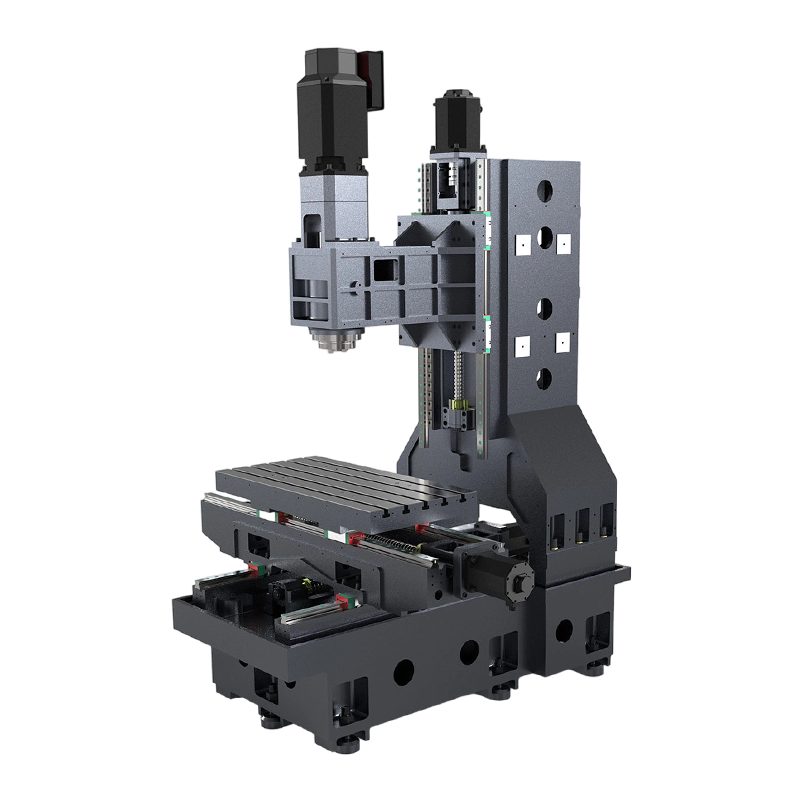
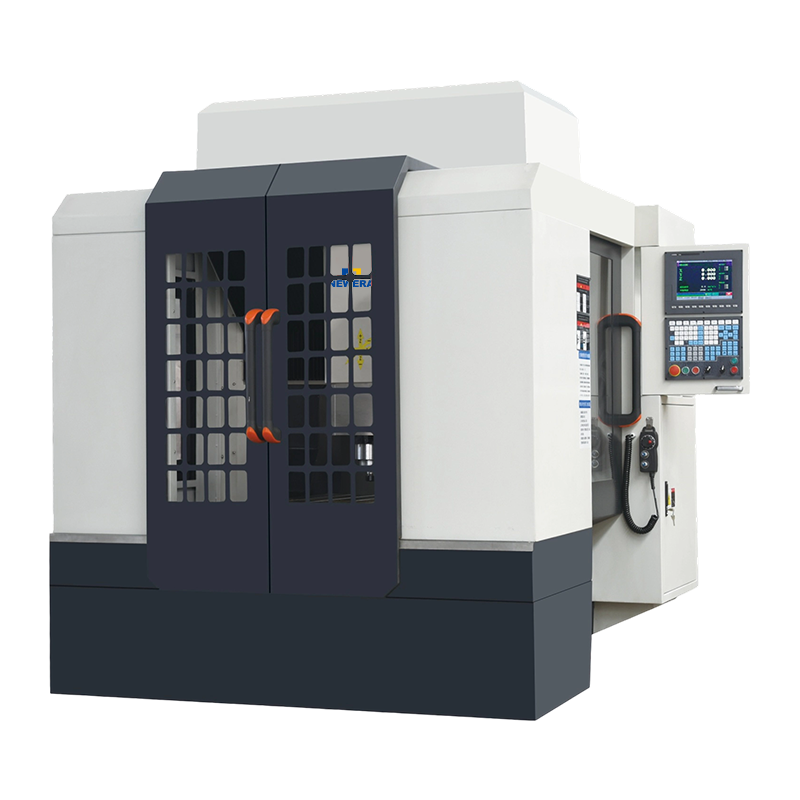
If your largest part fits inside roughly 850 mm by 500 mm, an economical EV850 vertical machining center keeps the envelope honest without paying for a larger table.
 Economical VMC EV850 Manufacturers, Company - Nantong New Era Technology Co., LtNantong New Era Technology Co., Ltd is China OEM/ODM Economical VMC EV850 manufacturers and company, Pursuit of UsabilityEmploys a sophi...View Product →
Spindle taper, power and speed
The spindle is the heart of the machine. BT40 spindles handle light-to-medium milling at speeds up to about 10,000-12,000 rpm; BT50 spindles deliver more torque and rigidity for heavy cuts in steel and titanium at lower speeds. Match the spindle to the material: high speed helps aluminum; high torque at low rpm matters for steel.
Positioning accuracy and repeatability
Most new standard VMCs declare positioning accuracy in the range of 0.005-0.02 mm, with repeatability around 0.003-0.01 mm. Treat the datasheet as a baseline, not a guarantee. Ask the builder for laser calibration results and request a test cut under real cutting conditions. Accuracy is a property of the complete machine system, not a single component.
Control system, tooling and options
Check the CNC control for ease of programming, memory size and canned cycles. A tool magazine with 20-30 pockets covers most jobs. Through-spindle coolant and a chip conveyor are not luxury options; they reduce cycle time and extend tool life.
Match the machine to material, complexity and volume
Material
Aluminum and plastics allow high spindle speeds and aggressive feed rates. Steel and stainless steel demand torque and rigidity. Hardened materials above about 50 HRC generally require grinding or EDM rather than milling. A machine that cuts aluminum efficiently will not necessarily cut steel well.
Part complexity
Three-axis machines handle flat faces, pockets and holes - the majority of machining work. A fourth axis adds indexed rotation for parts that need machining on several faces. Five-axis machines excel at complex contoured surfaces, but their cost and programming requirements are higher. Fine-detail mold work and graphite machining belong to a separate class of high-speed machines, whose working principles and applications of engraving and milling machines we have covered separately.
Production volume
Job shops with low volumes benefit from a flexible VMC. High-volume producers prefer an HMC with pallet automation to reduce idle time. Large single-piece work belongs on a gantry machine. The radar chart below compares the three structures across the criteria that matter most in practice.
Relative capability comparison of machine structures. Scores are indicative guidance, not measured values.
Total cost and purchasing risks
Total cost of ownership
The purchase price is only part of the story. In the first year, rigging and installation, tooling and workholding, coolant and chip management, training and preventive maintenance can add a substantial share to the initial investment. A machine that costs more upfront but holds accuracy longer is often cheaper over five years.
The most common buying mistakes
- Choosing a spindle that is underpowered for the hardest material you cut.
- Buying an envelope that is too small for future work.
- Ignoring chip control and coolant capacity for high-volume jobs.
- Skipping accuracy verification and accepting datasheet values at face value.
- Overlooking spare parts lead time and local service availability.
Buy from a builder you can inspect and talk to directly. Confirm spare parts availability, warranty terms and installation support in writing before signing.
When CNC EDM complements milling
Milling cannot reach every geometry. Deep cavities, sharp internal corners and hardened materials are the domain of sinker EDM. Many mold shops run both processes side by side: the milling machine roughs the shape, and the EDM finishes the details. If your work involves complex mold cavities, a CNC EDM machine is a complementary investment, not a competitor to milling.
CNC milling machine FAQ
Q1. CNC milling machine vs CNC router: what is the difference?
A milling machine is built for metal: rigid castings, a high-torque spindle and tight tolerances. A router is lighter and faster, designed for wood, plastics and soft materials. If you cut steel or aluminum daily, you need a milling machine.
Q2. How much does a CNC milling machine cost?
Economical vertical machining centers typically start in the USD 30,000-60,000 range. High-performance machines cost more, and gantry or horizontal systems depend heavily on size and options. Always compare the total installed cost.
Q3. What materials can a CNC milling machine cut?
Aluminum, steel, stainless steel, titanium, brass, plastics and composites are common. Softer materials allow high speeds; harder materials require torque, rigidity and lower feed rates.
Q4. What is the difference between 3-axis, 4-axis and 5-axis?
3-axis machines move in X, Y and Z. 4-axis adds a rotary axis for indexed or continuous rotation. 5-axis adds two rotary axes for complex contoured surfaces. Most everyday parts are 3-axis work.
Q5. Vertical vs horizontal milling machine: what is the difference?
A vertical machine points the spindle down at the table - easy setup and very versatile. A horizontal machine places the spindle parallel to the table, giving better chip evacuation and rigidity for production work.
Q6. What is the accuracy of a CNC milling machine?
Standard new machines typically declare positioning accuracy of 0.005-0.02 mm and repeatability of 0.003-0.01 mm. Verify the values with laser calibration results and a test cut before accepting delivery.
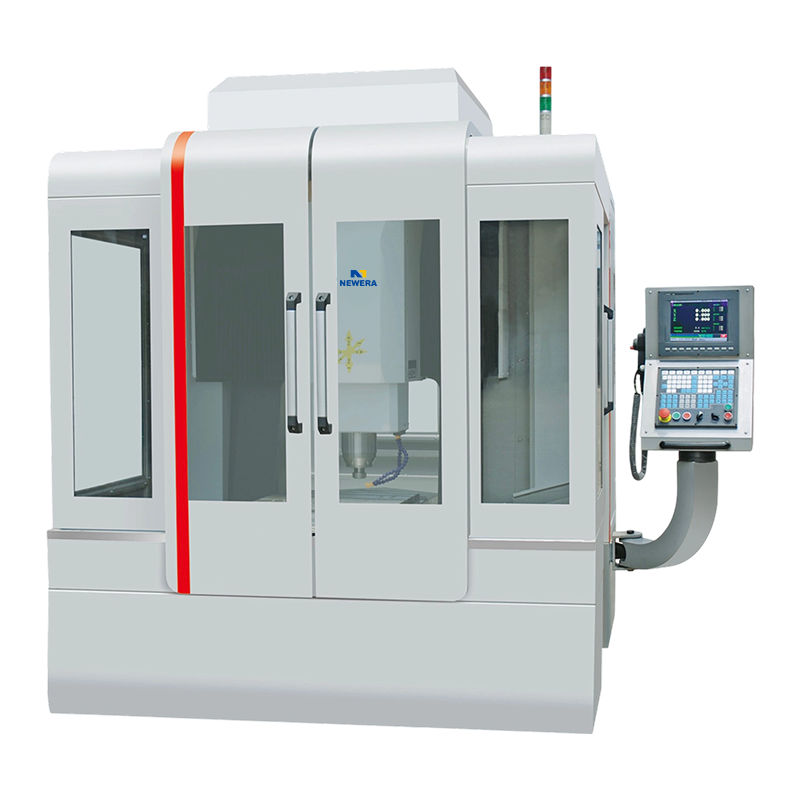
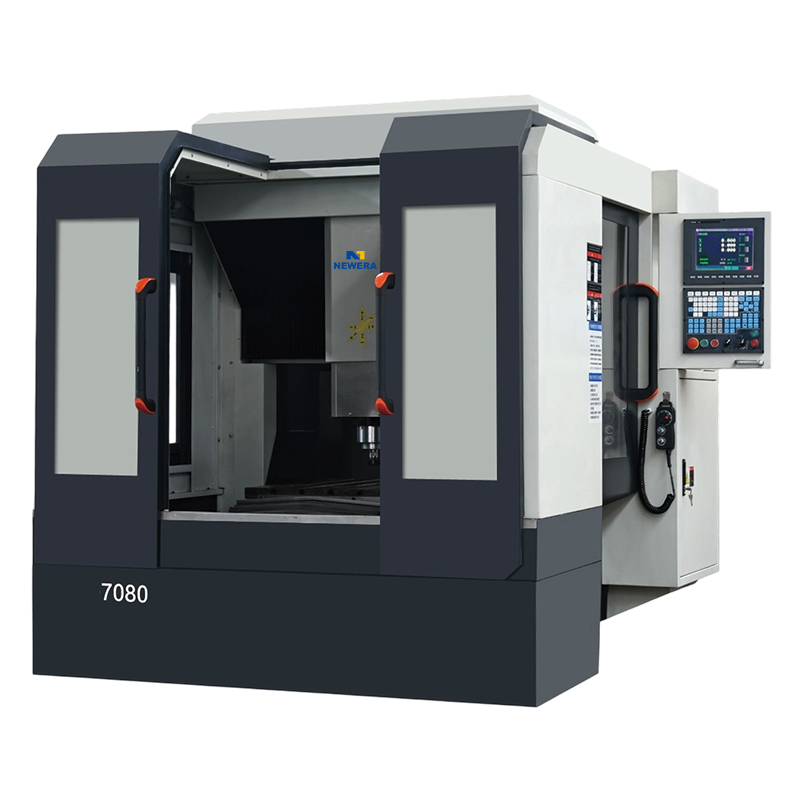
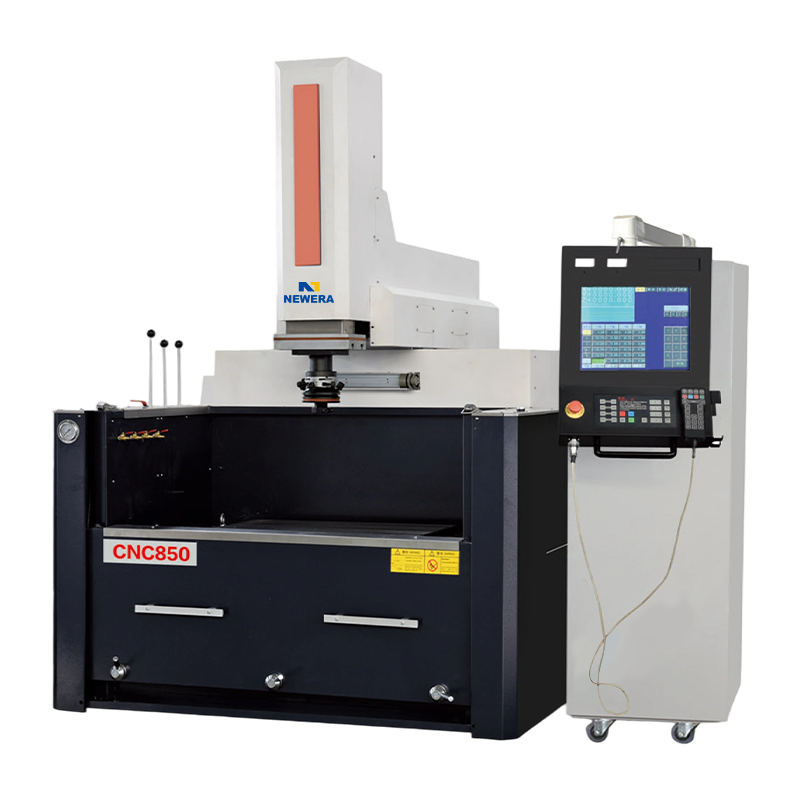
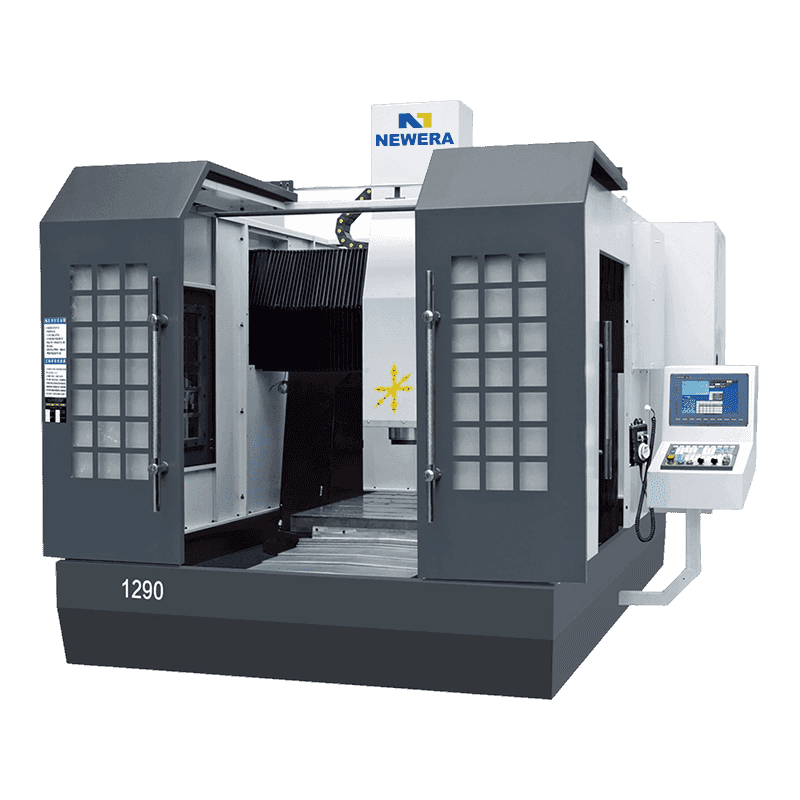
If you are interested in our products, please consult us.
CONTACT DETAILS
Nantong New Era Technology Co., LTD
- Five-star Industrial Park, Chongchuan District, Nantong City, Jiangsu Province, China
- TEL:+86-19851302688
- E-Mail: [email protected]
Products
Quick link
Mobile terminal
