

 русский
 عربى
عربى
Industry News
What is the difference between VMC and HMC?
 2026.06.17
 Industry News
Content
- 1 VMC vs HMC: The Key Difference in One Sentence
- 2 How Spindle Orientation Shapes Machine Performance
- 3 VMC vs HMC: Side-by-Side Feature Comparison
- 4 What Is a Vertical Machining Center and How Does It Work?
- 5 Where Vertical Machining Centers Excel
- 6 Where Horizontal Machining Centers Excel
- 7 How Accurate Is a Vertical Machining Center?
- 8 Choosing the Right Vertical Machining Center for Your Application
- 9 About Nantong New Era Technology Co., LTD
- 10 Frequently Asked Questions
VMC vs HMC: The Key Difference in One Sentence
The core difference between a vertical machining center (VMC) and a horizontal machining center (HMC) comes down to spindle orientation: a VMC holds its cutting tool in a spindle that points straight down, perpendicular to the worktable, while an HMC holds its spindle horizontally, parallel to the worktable. That single difference in geometry changes how chips fall away from the cutting zone, how easily a part can be machined on multiple sides without manual repositioning, and how each machine is typically arranged on a shop floor.
In practical terms, a CNC vertical machining center tends to be easier to program, load, and monitor, since the cutting zone is visible from above and the control layout is generally more straightforward. A horizontal machining center, by contrast, is built around rotary pallet or trunnion systems that let a part be machined on several faces in a single setup, which suits high-volume, multi-side production. The rest of this guide breaks down how these differences play out in real shop environments, along with practical guidance on choosing the right vertical milling center for common manufacturing needs.
How Spindle Orientation Shapes Machine Performance
Spindle orientation is not just a layout detail; it influences nearly every operational characteristic of a machining center. A vertical spindle gives the operator a clear line of sight into the cutting zone, which makes a VMC machine generally easier to set up and supervise, especially for shops running varied, lower-volume jobs. A horizontal spindle lets chips drop away from the cutting area by gravity rather than collecting around the tool, which supports longer unattended cutting cycles on an HMC.
This radar chart compares a vertical machining center and a horizontal machining center across six operational factors using an illustrative composite rating rather than a single fixed measurement, since real-world performance depends on the specific machine and application. A VMC rates higher on operator visibility, programming simplicity, and footprint efficiency, which is why many general machining and mold-making shops choose a vertical machining center as their first or primary machine. An HMC rates higher on multi-side machining and continuous-run automation, reflecting its strength in high-volume production where a part needs several faces machined without manual repositioning. Chip evacuation also favors the HMC slightly, since gravity carries chips away from a horizontal spindle more readily than from a vertical one.
VMC vs HMC: Side-by-Side Feature Comparison
The table below summarizes how a typical CNC vertical machining center and a typical horizontal machining center compare across the features that matter most when planning a shop floor layout or a new machining process.
| Feature | Vertical Machining Center (VMC) | Horizontal Machining Center (HMC) |
|---|---|---|
| Spindle Orientation | Vertical, perpendicular to the table | Horizontal, parallel to the table |
| Operator Visibility | Clear top-down view of the cutting zone | More limited direct view of the cutting zone |
| Multi-Side Machining | Typically needs repositioning for multiple faces | Pallet or trunnion systems allow several faces in one setup |
| Chip Evacuation | Chips can collect on the table or fixture | Chips generally fall away from the cutting zone |
| Typical Footprint | Generally more compact | Generally larger, especially with pallet pools |
| Common Applications | Mold and die work, prototyping, general engineering | High-volume production, multi-face automotive and industrial parts |
What Is a Vertical Machining Center and How Does It Work?
A vertical machining center is a CNC machine tool that uses a vertically oriented spindle to drive a rotating cutting tool down into a workpiece secured on a worktable beneath it. Movement along the X, Y, and Z axes is controlled by the CNC program, allowing the tool to follow precise paths to mill, drill, bore, or tap features into metal or other materials. Most vertical machining centers include an automatic tool changer, which lets the machine switch between multiple cutting tools during a single program without operator intervention.
How a VMC Processes a Typical Job
- The workpiece is loaded and secured to the worktable using a fixture or vise.
- The CNC controller loads the program and the automatic tool changer selects the first required tool.
- The spindle rotates the tool while the X, Y, and Z axes move according to the programmed toolpath.
- Coolant is applied to manage heat and clear chips from the cutting area as material is removed.
- The tool changer swaps tools automatically as the program moves between milling, drilling, or tapping operations.
- Once the program finishes, the finished part is inspected and removed from the worktable.
Core Components of a Vertical Machining Center
- Spindle: holds and rotates the cutting tool along the vertical axis.
- Column and base: provide the rigid structure that supports accuracy under cutting load.
- Worktable or saddle: holds the workpiece and moves along the programmed axes.
- Automatic tool changer (ATC): stores and swaps cutting tools during the program.
- Ball screws and linear guides: translate motor rotation into precise linear axis movement.
- CNC controller: reads the program and coordinates spindle speed, axis movement, and tool changes.
- Coolant system: manages heat and assists chip removal during cutting.
Where Vertical Machining Centers Excel
A vertical machining center tends to be the more common starting point for shops handling varied work, since it is generally easier to program, set up, and supervise than a horizontal machine. The chart below illustrates how adoption of VMC machines tends to vary across several common manufacturing sectors.
This horizontal bar chart reflects how commonly a vertical machining center is used across several manufacturing sectors, based on general industry patterns rather than a single dataset. Mold and die making rates highest, since a VMC's clear operator visibility and flexible tool access suit the detailed, often one-off geometry found in tooling work. Automotive components and general engineering also show strong adoption, reflecting how widely a CNC machining center for automotive parts is used for brackets, housings, and other mid-complexity components. Aerospace and electronics work still relies on vertical machining centers, though these sectors more frequently combine VMCs with other specialized equipment depending on tolerance and material requirements.
Where Horizontal Machining Centers Excel
An HMC is generally the stronger choice once production volume rises and parts need machining on multiple faces. Pallet pools and trunnion tables let an HMC index a workpiece automatically between operations, which reduces manual handling and supports longer unattended running. This makes horizontal machining centers a common fit for high-volume automotive, industrial equipment, and heavy machinery components where the same multi-face part is produced repeatedly.
- Multiple faces of a part can often be machined in a single setup using rotary indexing.
- Gravity-assisted chip evacuation supports longer, less interrupted cutting cycles.
- Pallet systems allow one part to be machined while another is loaded, supporting continuous production.
How Accurate Is a Vertical Machining Center?
Vertical machining centers are generally classified as precision equipment, and a properly maintained, well-calibrated VMC machine is commonly used for tolerances in the low micron to thousandths-of-a-millimeter range, depending on the specific machine, tooling, and material. Achievable accuracy depends on factors including ball screw and linear guide quality, thermal stability of the structure, spindle runout, and how the CNC controller compensates for these variables during cutting.
This line chart illustrates a general industry trend rather than the specification of any single machine: typical positioning accuracy achievable on CNC machining centers has improved across recent decades as ball screws, linear guides, thermal compensation, and controller algorithms have advanced. Modern high-precision vertical machining centers commonly operate in a tighter accuracy band than machines built a few decades ago, which has expanded the range of parts that can be produced without secondary finishing operations. Actual accuracy on any specific machine still depends on proper calibration, regular maintenance, and matching the machine to the tolerance the application requires. A vertical machining center can process a wide range of materials within these tolerances, including aluminum, steel, stainless steel, cast iron, and various engineering plastics, provided spindle speed, feed rate, and tooling are matched to the material being cut.
Choosing the Right Vertical Machining Center for Your Application
Once a shop has decided a vertical machining center fits its production needs, the next step is matching the configuration to the work envelope and spindle requirements of the job. A 3 axis vertical machining center covers most general milling, drilling, and tapping work, while a BT40 vertical machining center spindle taper is a common choice balancing tool rigidity with a wide selection of standard tooling. Shops working with larger molds or extended workpieces typically look toward large-stroke or Y-axis 4-way configurations instead of a compact standard model.
This column chart compares relative work envelope size across common vertical machining center product series, using an illustrative index rather than exact travel measurements, since specific dimensions vary by model. A compact series suits smaller, detail-focused parts and shops with limited floor space, while a large-stroke series is built around an extended work envelope for bigger molds or oversized industrial components. A Y-axis 4-way configuration sits between the two, offering extended travel along one axis to support wider workpieces or multi-fixture setups without the full footprint of a large-stroke machine. The table below outlines how a typical vertical machining center product lineup is organized by configuration and best-suited use case.
| Model | Configuration | Best Suited For |
|---|---|---|
| VF85 | High-performance 3-axis, compact footprint | General precision machining, mold and die work |
| VF116 | High-performance 3-axis, larger work envelope | Larger precision components, automotive and general engineering |
| EV850 | Streamlined 3-axis configuration | General machining and entry-level production |
| EV1060 | Streamlined 3-axis, larger table | General machining with a bigger part footprint |
| VL85 | Box-way construction, universal Z-axis | Heavy cutting loads, rigid mold and die applications |
| VF138 | Large-stroke 3-axis | Large molds, oversized automotive and industrial parts |
| V127L | Large-stroke 3-axis | Long or oversized workpieces needing extended travel |
| V158F | Y-axis 4-way configuration | Wide-format parts, multi-fixture production |
| V138L | Y-axis 4-way configuration | Extended Y-travel for wide or multi-part setups |
About Nantong New Era Technology Co., LTD
Nantong New Era Technology Co., LTD has specialized in developing, designing, and producing numerical control machines and CNC machine tools for more than 20 years, supported by a dedicated team across technology development, manufacturing, and sales service. The company operates as a vertical machining center manufacturer and CNC vertical machining center supplier, working with a complete in-house production and assembly process.
As an OEM vertical machining center manufacturer and ODM VMC machine company, Nantong New Era supports international clients seeking an OEM CNC machining center built to specific configuration requirements, including 3 axis and Y-axis 4-way vertical machining center options. The company's product range, spanning compact, standard, and large-stroke series, is intended to give shops sourcing from a VMC machine manufacturer in China a range of industrial vertical machining center configurations suited to mold making, automotive parts production, and general precision engineering.
Frequently Asked Questions
| Q1: What is a vertical machining center? A vertical machining center is a CNC machine tool that uses a vertically oriented spindle to mill, drill, bore, or tap features into a workpiece secured on a worktable below it. It typically includes an automatic tool changer and is controlled by a CNC program that directs movement along the X, Y, and Z axes. |
Q2: How does a vertical machining center work? It works by rotating a cutting tool in a vertical spindle while the CNC controller moves the workpiece or spindle along programmed axes. The automatic tool changer swaps tools as needed so milling, drilling, and tapping operations can run in sequence without manual intervention. |
| Q3: What is the difference between CNC milling and VMC? CNC milling is a general process of removing material using a rotating cutting tool, while a VMC is a specific type of CNC milling machine built with a vertical spindle, an automatic tool changer, and an enclosed work area. In practice, a vertical machining center is one common machine used to perform CNC milling. |
Q4: What are the components of a vertical machining center? Main components include the spindle, column and base, worktable, automatic tool changer, ball screws and linear guides, CNC controller, and coolant system. Together these parts control tool movement, accuracy, and chip and heat management during cutting. |
| Q5: What industries use vertical machining centers? Mold and die making, automotive components, general engineering, aerospace sub-components, and electronics manufacturing all commonly use vertical machining centers. The exact mix of equipment varies by sector, but a VMC remains a common base machine across these industries. |
Q6: What materials can a VMC machine process? A vertical machining center can typically process aluminum, steel, stainless steel, cast iron, and various engineering plastics, with spindle speed, feed rate, and tooling adjusted to suit each material. Material hardness and required surface finish often determine the specific tooling and cutting parameters used. |
| Q7: How accurate is a vertical machining center? A well-maintained, properly calibrated vertical machining center commonly achieves tolerances in the low micron to thousandths-of-a-millimeter range, depending on the machine and application. Accuracy depends on factors such as ball screw quality, thermal stability, spindle condition, and regular calibration. |

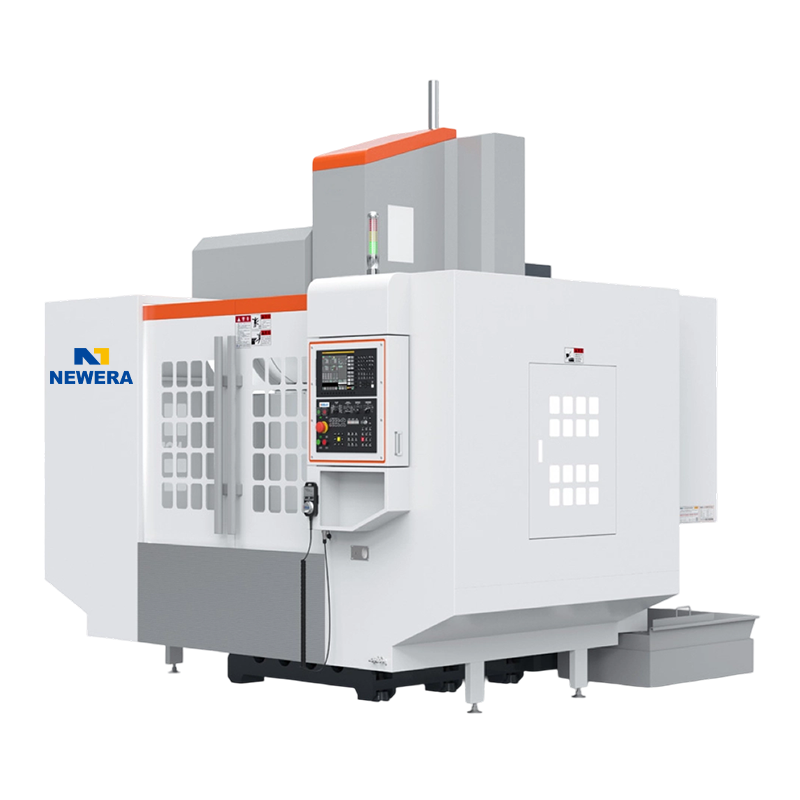
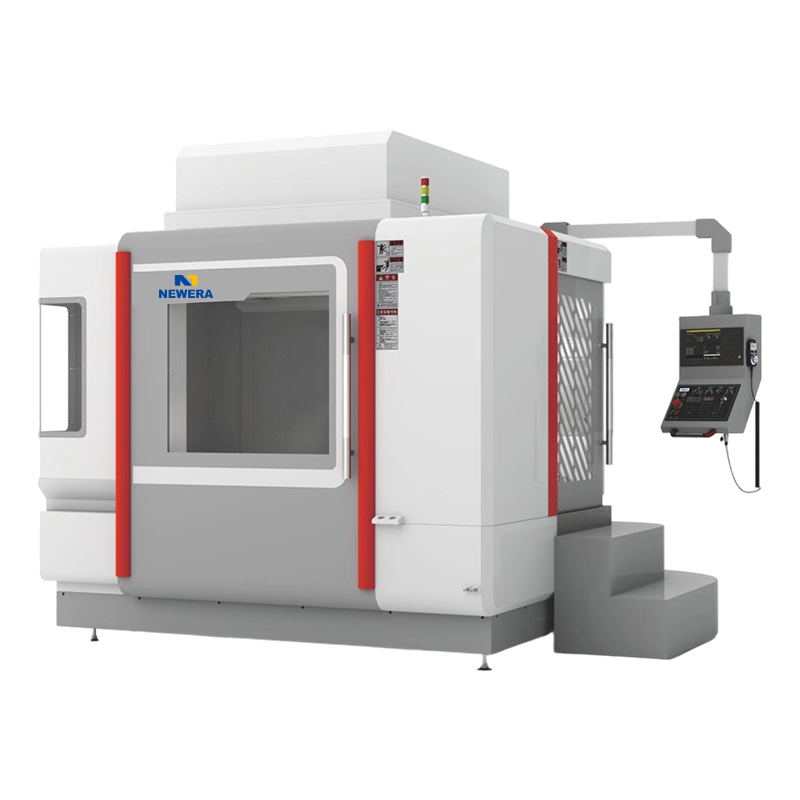

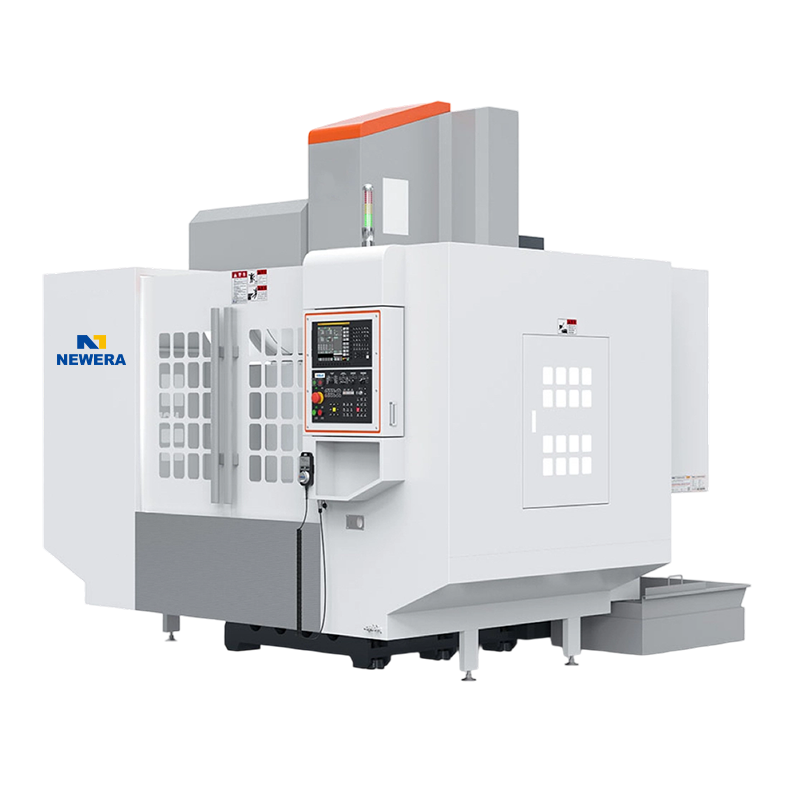
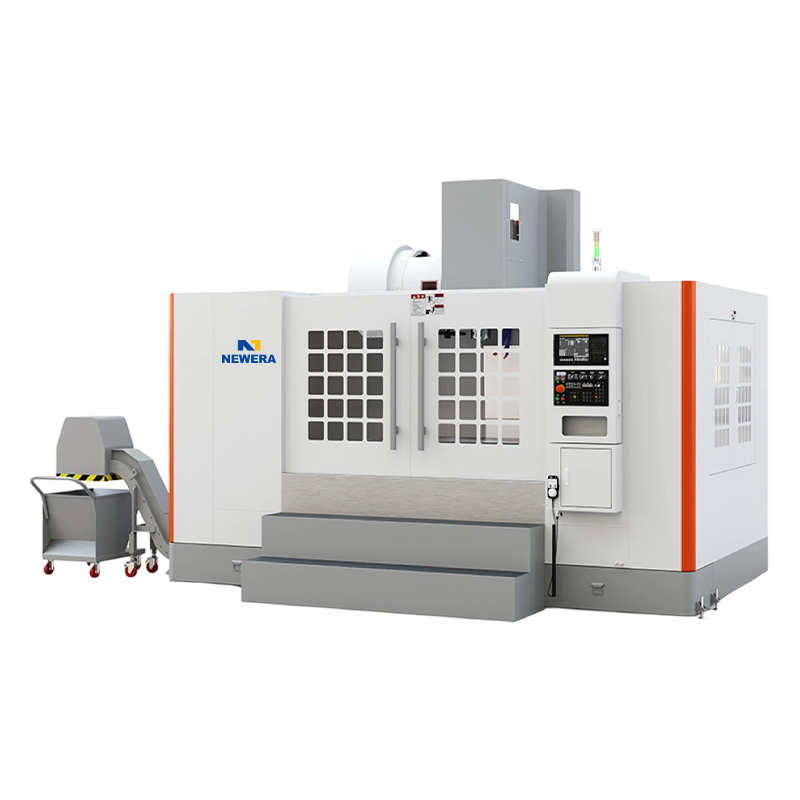
If you are interested in our products, please consult us.
CONTACT DETAILS
Nantong New Era Technology Co., LTD
- Five-star Industrial Park, Chongchuan District, Nantong City, Jiangsu Province, China
- TEL:+86-19851302688
- E-Mail: [email protected]
Products
Quick link
Mobile terminal
