

 русский
 عربى
عربى
Industry News
How to Choose the Right EDM Machine for Your Factory?
 2026.06.23
 Industry News
The short answer: to choose the right EDM machine for your factory, match the machine type to your workpiece material, cavity complexity, required surface finish, and production volume — then evaluate the manufacturer's CNC control capabilities, after-sales support, and compliance with your industry's precision standards. A CNC EDM die sinking machine is not a one-size-fits-all investment; the wrong selection results in poor surface quality, excessive electrode wear, and prolonged cycle times that erode profitability.
This guide walks through every critical decision factor — from workpiece requirements and machine specifications to application-specific selection criteria — so that factory managers, procurement teams, and tooling engineers can make an informed, defensible purchasing decision. Whether you are sourcing a high precision EDM die sinking machine manufacturer for mold production or evaluating an industrial EDM sinker machine supplier in China for your toolroom, the framework below applies directly.
Content
- 1 Understanding the Core: What Is a CNC EDM Die Sinking Machine and How Does It Work?
- 2 Key Technical Specifications to Evaluate Before Buying
- 3 EDM vs. CNC Milling: When Die Sinking EDM Is the Superior Choice
- 4 Materials That CNC EDM Machining Can Process
- 5 Industry Applications: Who Uses EDM Die Sinking Machines and Why
- 6 How to Reduce EDM Machining Time Without Sacrificing Quality
- 7 Evaluating EDM Machine Manufacturers and Suppliers: A Practical Checklist
- 8 About Nantong New Era Technology: OEM CNC EDM Die Sinking Machine Factory
- 9 Frequently Asked Questions
Understanding the Core: What Is a CNC EDM Die Sinking Machine and How Does It Work?
A CNC EDM die sinking machine — also known as a ram EDM or sinker EDM — removes material from a conductive workpiece through controlled electrical discharge between a shaped electrode (the tool) and the workpiece. The process does not involve mechanical cutting force. Instead, each discharge erodes a microscopic crater from both the electrode and the workpiece surface, producing a cavity that mirrors the electrode geometry with high accuracy.
The key components of a modern automatic CNC EDM die sinking system include: a dielectric fluid reservoir and circulation system (typically using deionized water or oil), a servo-controlled Z-axis ram, a CNC controller managing discharge parameters, and an orbital or multi-axis movement system that refines surface finish without changing electrodes. Modern CNC controllers can execute thousands of adaptive discharge cycles per second, adjusting gap voltage, pulse duration, and current in real time to optimize material removal rate (MRR) while minimizing electrode wear.
The fundamental difference between wire EDM and die sinking EDM lies in the electrode: wire EDM uses a continuously fed thin wire to cut profiles, while die sinking EDM uses a pre-shaped 3D electrode to sink a cavity. For injection mold production, complex internal geometries, and hardened steel machining, die sinking EDM is the dominant choice.
The EDM die sinking process begins with electrode fabrication — typically from graphite or copper — and proceeds through CNC parameter programming, dielectric fluid management, controlled spark erosion, and final surface quality inspection. Each stage directly affects the dimensional accuracy and Ra surface finish of the finished cavity. Understanding this flow is essential before evaluating machine specifications, because the quality of the CNC control system, dielectric flushing capacity, and servo response speed determines how well each stage is executed. Factories processing injection mold cavities with tight tolerances of ±0.003 mm or better require machines where all five stages are tightly integrated and CNC-managed.
Key Technical Specifications to Evaluate Before Buying
Not all EDM machine specifications are equally important for every application. The following parameters are the ones that most directly determine whether a given machine is suitable for your factory's workload. Evaluate each one against your most demanding production requirements, not your average job.
1. Machining Accuracy and Positioning Repeatability
For precision mold EDM machining service applications, positional accuracy should be ±0.001 mm to ±0.005 mm, depending on the part tolerance requirement. High-end machines equipped with linear scale feedback achieve positioning repeatability of ±0.001 mm. Machines intended for general toolroom use may operate at ±0.01 mm — adequate for electrodes but not for finished cavity surfaces on injection molds.
2. Generator Technology: Transistor vs. MOSFET vs. Digital Pulse
The generator is the electrical heart of the EDM machine. Digital pulse generators with adaptive control represent the current state of the art, enabling precise control of discharge energy, pulse-on time (Ton), pulse-off time (Toff), and peak current (Ip). MOSFET-based generators offer better surface finish capability (Ra values down to 0.1–0.2 µm) compared to conventional transistor-based systems (Ra ≥ 0.4 µm). For EDM machine for hardened steel machining, generator stability under varying workpiece conductivity is a critical differentiator.
3. Work Tank Capacity and Maximum Workpiece Weight
For EDM die sinking machine for injection mold production, work tank dimensions must accommodate the largest anticipated mold base. Typical mid-range machines handle work tables from 400×300 mm to 800×600 mm, with maximum workpiece weights from 300 kg to 3,000 kg. Always specify the largest job you anticipate, then select a machine rated 20–30% above that requirement to avoid future capacity constraints as your product range expands.
4. Electrode Changer and Automation Level
Automatic electrode changers (AEC) are standard on high-end machines, enabling unattended overnight operation. An automatic CNC EDM die sinking system with a 20- to 40-position tool magazine can complete multi-electrode roughing, semi-finishing, and finishing cycles without operator intervention. For high-volume mold shops, this is not a luxury — it is a requirement for competitive cycle times.
| Parameter | Entry-Level | Mid-Range | High-Precision |
|---|---|---|---|
| Positioning Accuracy | ±0.01 mm | ±0.005 mm | ±0.001 mm |
| Best Surface Finish (Ra) | ≥ 0.8 µm | 0.4 µm | 0.1–0.2 µm |
| Generator Type | Transistor | MOSFET | Digital Adaptive |
| Electrode Changer | Manual | Optional (up to 12) | Auto (up to 40+) |
| Max Workpiece Weight | 200–500 kg | 500–1,500 kg | 1,500–5,000 kg |
| Typical Application | Toolroom / Prototype | Mid-volume Mold | Aerospace / Medical |
EDM vs. CNC Milling: When Die Sinking EDM Is the Superior Choice
One of the most common questions factory managers face is whether to invest in EDM capacity or expand CNC milling capability. The answer depends on the workpiece. For soft or annealed materials with simple geometries, CNC milling is faster and more cost-effective. But in a significant range of mold-making and tooling scenarios, a CNC EDM die sinking machine for mold making delivers outcomes that milling cannot achieve at any spindle speed.
Key scenarios where EDM is the preferred or only viable process:
- Hardened steel machining above 55 HRC — CNC milling tools wear rapidly or deflect; EDM has no contact force and is unaffected by material hardness.
- Narrow slots, deep ribs, and sharp internal corners — a milling cutter always leaves a radius; EDM can produce corners approaching 0.1 mm radius depending on electrode design.
- Mirror or matte surface textures on mold cavities — EDM achieves consistent Ra values from 0.1 µm to 3.2 µm in a single setup without the scallop marks inherent to ball-nose milling.
- Thin-wall features and fragile workpieces — the absence of cutting force eliminates deflection and vibration that would distort thin sections in milling.
- Complex 3D cavity shapes requiring uniform surface texture — EDM replicates the electrode geometry with uniform surface quality across the entire cavity, including undercuts when using orbital motion.
This comparison illustrates the capability advantage of EDM die sinking over CNC milling across the most common mold-making evaluation criteria. EDM dominates in hardened steel machining, deep cavity work, and surface finish quality, while CNC milling retains a clear speed advantage on soft materials and standard open geometries. The chart reinforces a core principle of process selection: EDM and CNC milling are not competing technologies but complementary ones — the most efficient factories deploy both, routing each job to the appropriate process based on material hardness, geometry complexity, and required surface quality. An industrial EDM sinker machine supplier in China can advise on which jobs in your specific product portfolio would benefit most from EDM routing.
Materials That CNC EDM Machining Can Process
One of the defining advantages of EDM is that material hardness is irrelevant to the process — the only requirement is that the workpiece be electrically conductive. This opens EDM to a broader range of engineering materials than conventional cutting processes. The following materials are routinely processed on CNC EDM die sinking machines:
- Tool steels (D2, H13, P20, S7, M2) — the most common materials in injection mold and die casting tooling, typically in the 55–65 HRC range after heat treatment
- Stainless steels (420, 316L, 17-4PH) — used in medical device molds and food-contact tooling where corrosion resistance is required
- Titanium alloys (Ti-6Al-4V) — common in aerospace and medical implant tooling; difficult to mill but processed cleanly by EDM
- Tungsten carbide — extremely hard stamping dies and cutting inserts where no other process can produce sharp internal features
- Inconel and superalloys — aerospace turbine components and high-temperature tooling
- Copper and copper alloys — primarily used as electrode material but also workpiece material in electrical components
Non-conductive materials — ceramics, glass, and most polymers — cannot be processed by EDM without conductive coatings, which is a meaningful limitation to understand when evaluating whether EDM is appropriate for a given production scenario.
Tool steel and tungsten carbide rank highest in EDM suitability because EDM was fundamentally designed to process hard, wear-resistant materials that conventional cutting cannot efficiently address. Titanium and Inconel score very high as well, reflecting the strong adoption of EDM in aerospace and medical manufacturing where these alloys are standard. Copper alloy scores lower not because EDM cannot process it, but because softer materials are often more economically machined by conventional methods unless the geometry demands EDM's precision. This chart serves as a quick reference when evaluating whether a new material in your factory's workflow justifies EDM investment or process routing.
Industry Applications: Who Uses EDM Die Sinking Machines and Why
EDM die sinking machines are not confined to a single industry. Their ability to machine complex cavities in hardened materials makes them indispensable across a wide range of manufacturing sectors. Understanding where EDM is most heavily deployed helps factory managers contextualize their own requirements against established industry practice.
Injection Mold Manufacturing
This is the single largest application for CNC EDM die sinking machine for mold making globally. Injection mold cavities require precise internal geometry, consistent surface texture, and dimensional stability after millions of cycles. EDM is used to produce rib slots, core pins, gate details, and complex parting surface features that cannot be milled after hardening. The global injection mold market was valued at over USD 27 billion in 2023 and continues to expand, driven by automotive lightweighting and consumer electronics production.
Automotive Tooling and Die Casting
Automotive mold production relies on EDM for large die casting dies used in aluminum structural components and for stamping dies used in body panel production. The EDM die sinking machine for injection mold and die casting applications in automotive must handle large work tables, high electrode wear rates, and consistent dimensional output across extended production runs. The shift toward electric vehicle (EV) platforms is increasing demand for larger, more complex aluminum die casting molds — a trend that directly increases EDM machine utilization.
Aerospace Precision Parts
Aerospace components demand tolerances often below ±0.005 mm on materials like titanium alloys, Inconel, and hardened stainless steel. EDM is used for turbine blade cooling hole profiles, fuel system components, and structural fittings where stress-free machining is required. Unlike milling, EDM introduces no residual stress or micro-cracks in the surface layer when parameters are correctly managed — a critical requirement for fatigue-sensitive aerospace parts.
Medical Device Manufacturing
Implantable device molds, surgical instrument tooling, and microfluidic device molds all rely on precision mold EDM machining service capabilities. Medical manufacturing imposes strict requirements on surface cleanliness and dimensional repeatability. EDM's clean process (no coolant contamination of the workpiece, no mechanical stress) makes it particularly compatible with the biocompatibility standards of ISO 13485-compliant manufacturing environments.
Injection mold manufacturing represents the dominant end market for EDM die sinking machines, capturing nearly 40% of global machine utilization. Automotive tooling is the second largest segment, driven by the combination of large mold sizes and high hardness requirements in production dies. The aerospace and medical sectors, while smaller by volume, represent the highest value-per-part applications — these are typically the segments where the highest-specification precision mold EDM machining service platforms are deployed. Electronics manufacturing, while eighth in share, is a growing segment driven by demand for micro-mold tooling for connector and enclosure components.
How to Reduce EDM Machining Time Without Sacrificing Quality
EDM machining time is the most common operational concern raised by production managers evaluating or already using CNC EDM die sinking machines. The process is inherently slower than milling for material removal rate, but several strategies can substantially reduce total cycle time without compromising surface quality or dimensional accuracy.
- Use multi-stage electrode strategies: Program separate roughing, semi-finishing, and finishing electrodes. Roughing removes the bulk of material at high current; finishing achieves the required Ra with minimal removal. Trying to achieve a fine finish in one electrode pass dramatically increases time.
- Optimize dielectric flushing: Poor flushing allows debris to re-deposit in the gap, creating secondary discharges that waste energy and time. Pressurized internal electrode flushing for deep cavities, combined with adequate flow rates, can reduce cycle time by 20–35% compared to static bath conditions.
- Select graphite electrodes for roughing: Graphite removes material faster than copper at equivalent current settings. Copper electrodes are preferred for fine finishing due to lower wear, but for bulk roughing, graphite's higher MRR reduces total machine hours.
- Use automatic electrode changers: Machines with AEC capability allow unattended overnight operation. A job requiring 3 electrode changes can run completely unattended if programmed correctly — doubling effective machine utilization without additional labor.
- Pre-machine the workpiece before EDM: CNC milling out the bulk of the cavity before EDM reduces the volume EDM must remove, concentrating EDM time only on the hardened, final-geometry features that require it.
Factories implementing all five of these strategies typically report total cycle time reductions of 30–50% compared to single-pass, manually-managed EDM operations, without any compromise in finished part accuracy.
This line chart demonstrates the cumulative impact of applying five optimization strategies sequentially to an EDM machining workflow. Each strategy independently reduces cycle time, and when applied together, the total reduction reaches approximately 50% of the baseline — meaning a job that previously required 20 hours of machine time can be completed in approximately 10 hours with a fully optimized process. The steepest single improvement comes from adding automatic electrode changers combined with pre-milling, both of which address the largest sources of non-productive machine time. Factories evaluating an automatic CNC EDM die sinking system should factor these potential efficiency gains into their return-on-investment calculations.
Evaluating EDM Machine Manufacturers and Suppliers: A Practical Checklist
Selecting a machine is only half the decision. The manufacturer or supplier behind the machine determines the long-term total cost of ownership, availability of spare parts, quality of technical support, and software upgrade path. When evaluating a high precision EDM die sinking machine manufacturer or an industrial EDM sinker machine supplier in China, apply the following criteria systematically.
A comprehensive supplier evaluation should cover six dimensions equally: machine accuracy, after-sales support, spare parts availability, CNC software quality, industry certifications, and delivery reliability. Certifications and machine accuracy are the two dimensions where compromise has the longest-lasting consequences — a machine that cannot hold stated tolerances or lacks proper CE/ISO compliance creates production and regulatory problems that are expensive to resolve after purchase. After-sales support becomes equally critical over the machine's operational lifetime; a supplier who provides rapid remote diagnostics and on-site service significantly reduces downtime costs. Factories sourcing through a wholesale or OEM channel should request third-party inspection reports and customer references in comparable applications before committing.
Practical checklist items for supplier evaluation:
- ISO 9001 certification for quality management system
- CE marking (required for EU import) or equivalent safety certification
- Documented accuracy test reports for the specific model (not just category claims)
- Availability of trained local service engineers or certified regional partners
- Commitment to spare parts availability for a minimum of 10 years post-purchase
- CNC software update roadmap and backward compatibility policy
- Reference customers operating in your specific application (mold making, automotive, aerospace, etc.)
- Clear installation, training, and acceptance testing protocols
About Nantong New Era Technology: OEM CNC EDM Die Sinking Machine Factory
Nantong New Era Technology Co., Ltd. has specialized in developing, designing, and producing numerical control machines and CNC machine tools for more than 20 years. As a professional OEM CNC EDM Die Sinking Machine supplier and ODM CNC EDM machine factory, New Era has continuously incorporated advanced scientific and technological achievements from domestic and international sources, evolving into a professional manufacturer with a complete production and assembly center.
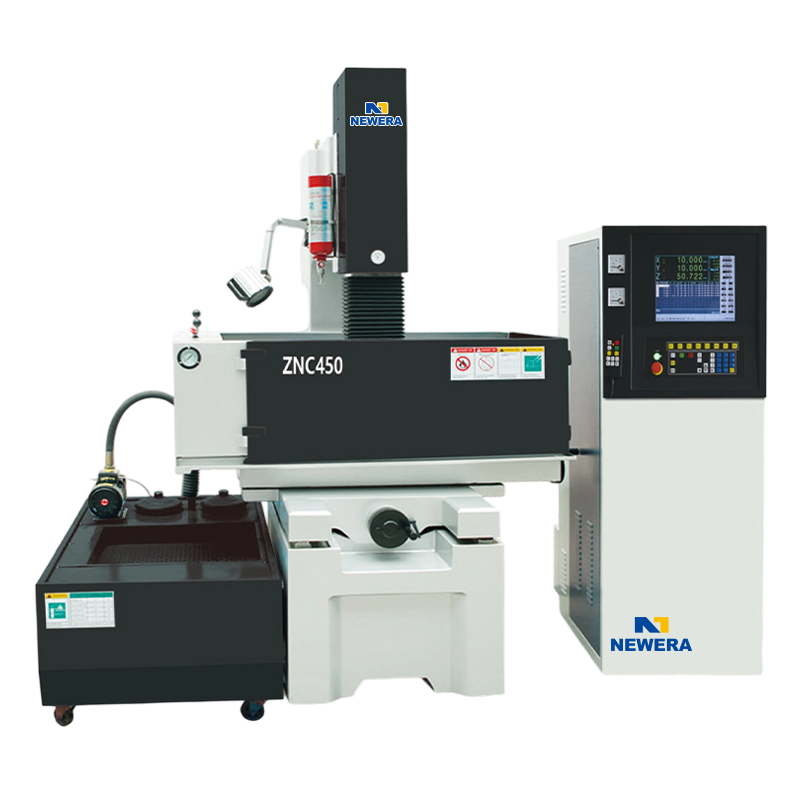
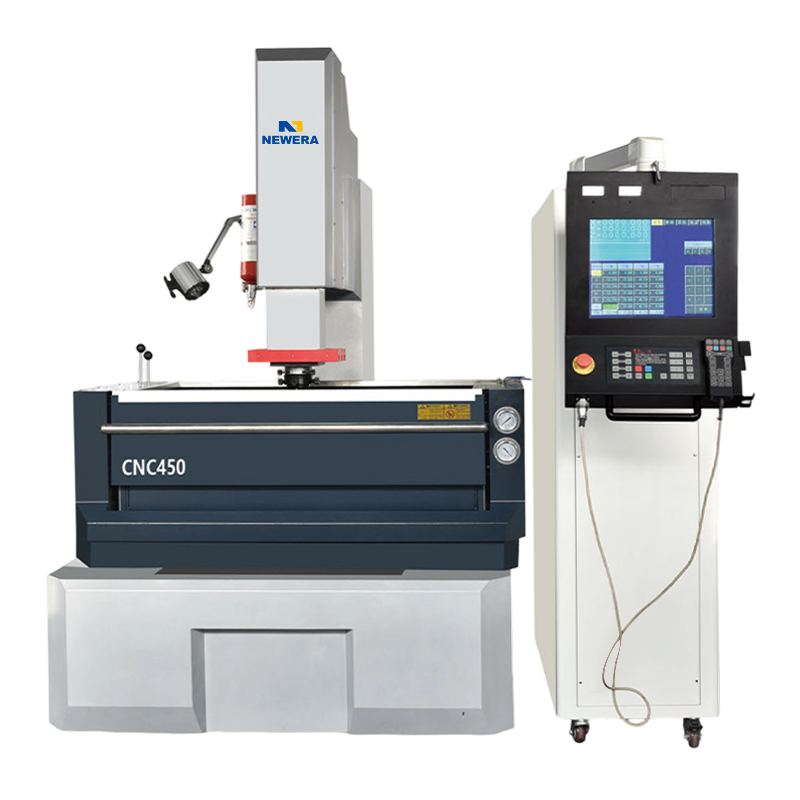
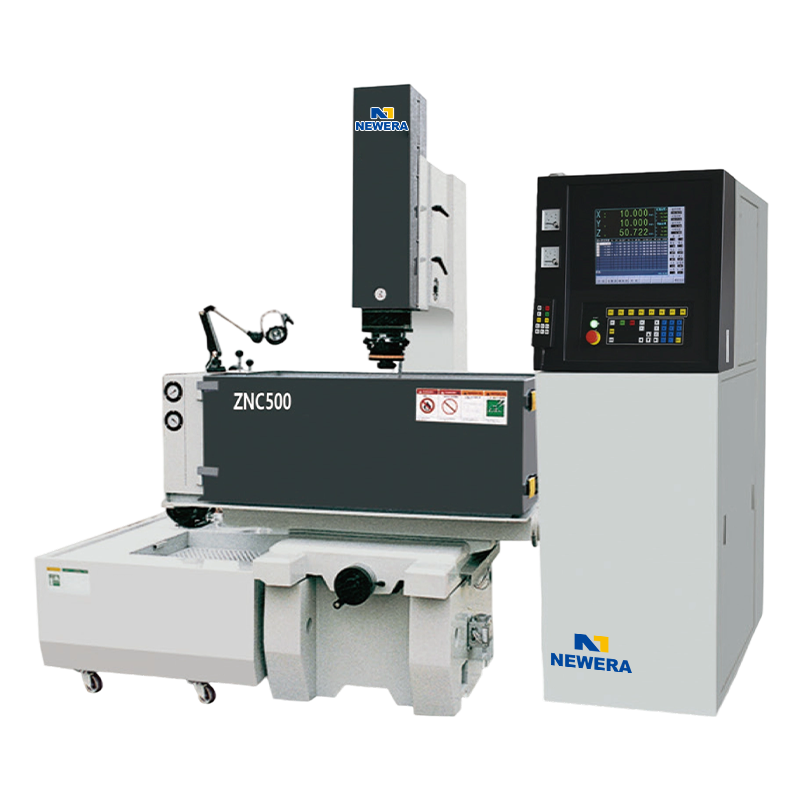
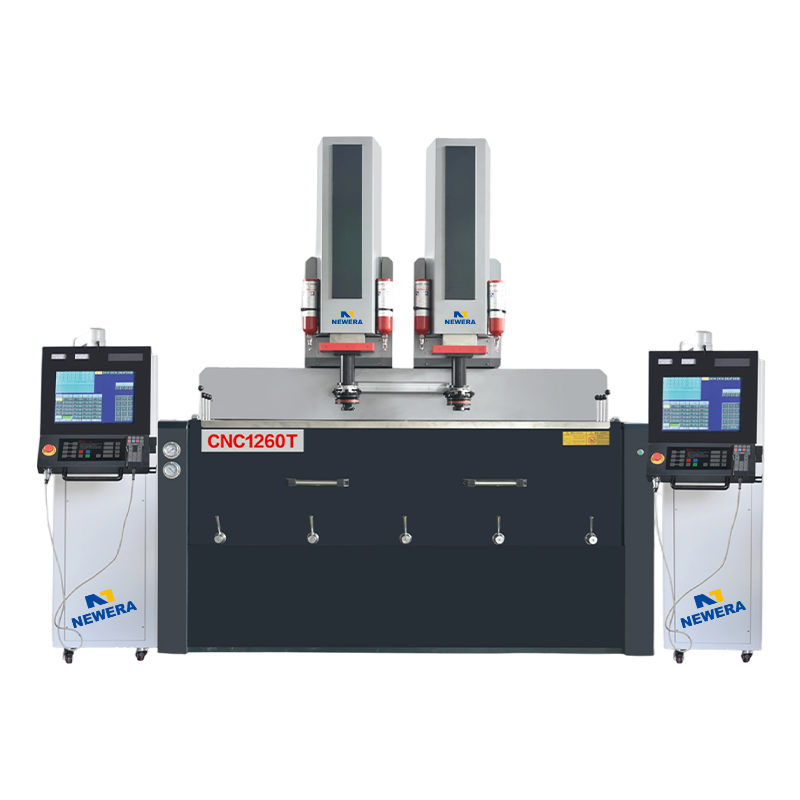
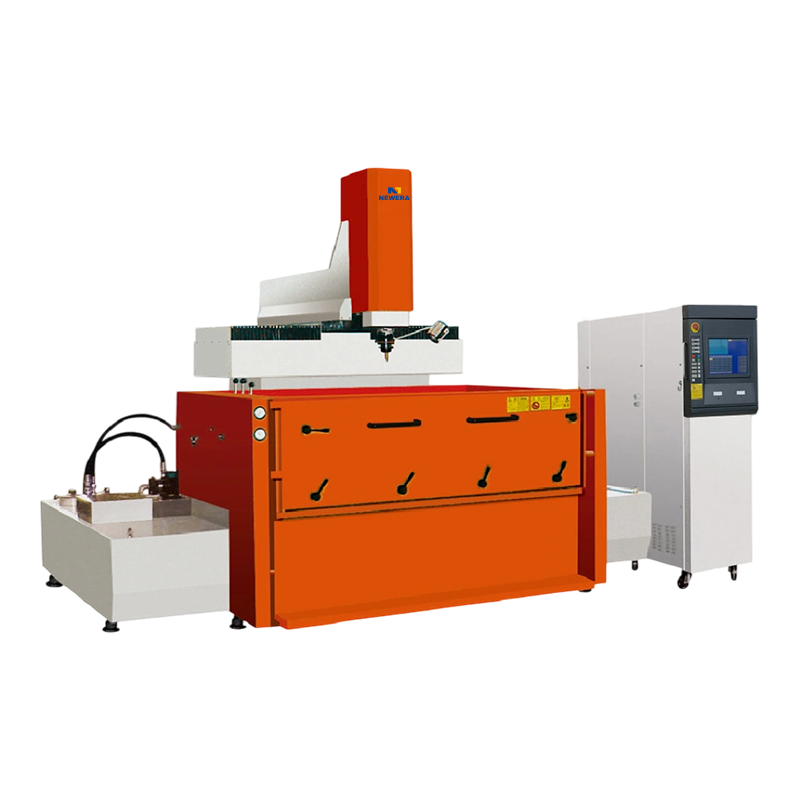
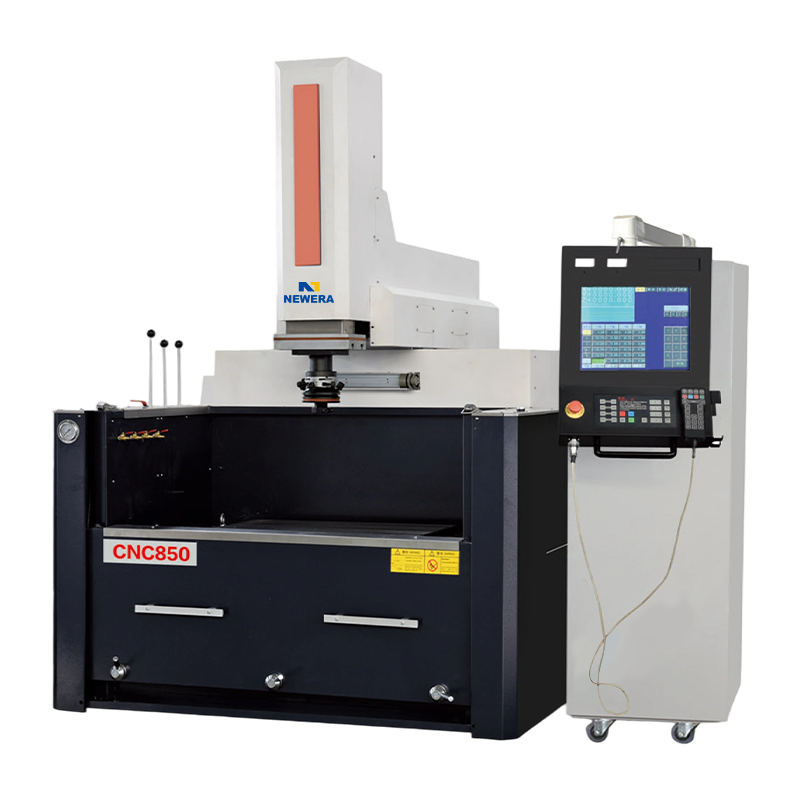
New Era's product range covers the full spectrum of CNC EDM die sinking machine configurations — from compact toolroom machines for prototype and small-batch applications to high-capacity automatic CNC EDM die sinking systems for industrial mold production. The company's professional teams in technology development, manufacturing, and sales services are structured to provide customers with complete solutions from initial requirement analysis through after-sales support.
With OEM and ODM manufacturing capabilities, New Era supports international brands seeking a reliable industrial EDM sinker machine supplier in China that can meet the technical, quality, and compliance standards required for global market deployment. New Era's commitment is to create maximum value for each customer through high-quality products and well-structured service systems.
Frequently Asked Questions
Q1: What is a CNC EDM die sinking machine?
A CNC EDM die sinking machine is a precision manufacturing system that uses controlled electrical discharges to erode material from a conductive workpiece, producing cavities that mirror a pre-shaped electrode. The CNC controller manages all discharge parameters automatically, enabling consistent, repeatable results on hardened steels, titanium, and other difficult-to-cut materials without applying any mechanical cutting force.
Q2: What materials can EDM machining process?
Any electrically conductive material can be processed by EDM, regardless of hardness. Common materials include tool steels (D2, H13), stainless steels, titanium alloys, Inconel, tungsten carbide, and copper alloys. EDM is especially valued for materials above 55 HRC that would rapidly wear conventional cutting tools.
Q3: What is the difference between wire EDM and die sinking EDM?
Wire EDM uses a continuously fed thin wire electrode to cut through-profiles and 2D shapes. Die sinking EDM uses a pre-shaped 3D electrode to create cavity geometries, including deep ribs, sharp internal corners, and complex 3D textures. For injection mold production and stamping dies, die sinking EDM is the standard process.
Q4: Is EDM better than CNC milling for molds?
For hardened steel molds with complex internal geometries, EDM is the preferred process. Milling cannot achieve internal sharp corners, cannot machine post-hardening without tool wear, and cannot match EDM's surface finish consistency on cavity surfaces. In practice, most mold shops use both: milling for bulk material removal and EDM for final cavity geometry in hardened steel.
Q5: Can EDM be used for automotive mold production?
Yes. Automotive mold production is one of the largest application segments for CNC EDM die sinking machines. Die casting dies for aluminum structural components and stamping dies for body panels both rely heavily on EDM for final cavity geometry, surface texture, and features machined after heat treatment. The growing EV sector is increasing demand for larger, more complex aluminum casting molds where EDM capability is essential.
Q6: Is EDM suitable for aerospace precision parts?
EDM is widely used in aerospace manufacturing for titanium alloy structures, Inconel turbine components, and fuel system tooling. The key advantage for aerospace is EDM's stress-free material removal — no cutting force means no residual stress or micro-cracks in fatigue-sensitive components. High-specification EDM machines achieving ±0.001 mm accuracy are standard equipment in aerospace precision parts manufacturing environments.
If you are interested in our products, please consult us.
CONTACT DETAILS
Nantong New Era Technology Co., LTD
- Five-star Industrial Park, Chongchuan District, Nantong City, Jiangsu Province, China
- TEL:+86-19851302688
- E-Mail: [email protected]
Products
Quick link
Mobile terminal
