

 русский
 عربى
عربى
Industry News
What Is a PNC EDM Die Sinking Machine Used For?
 2026.03.12
 Industry News
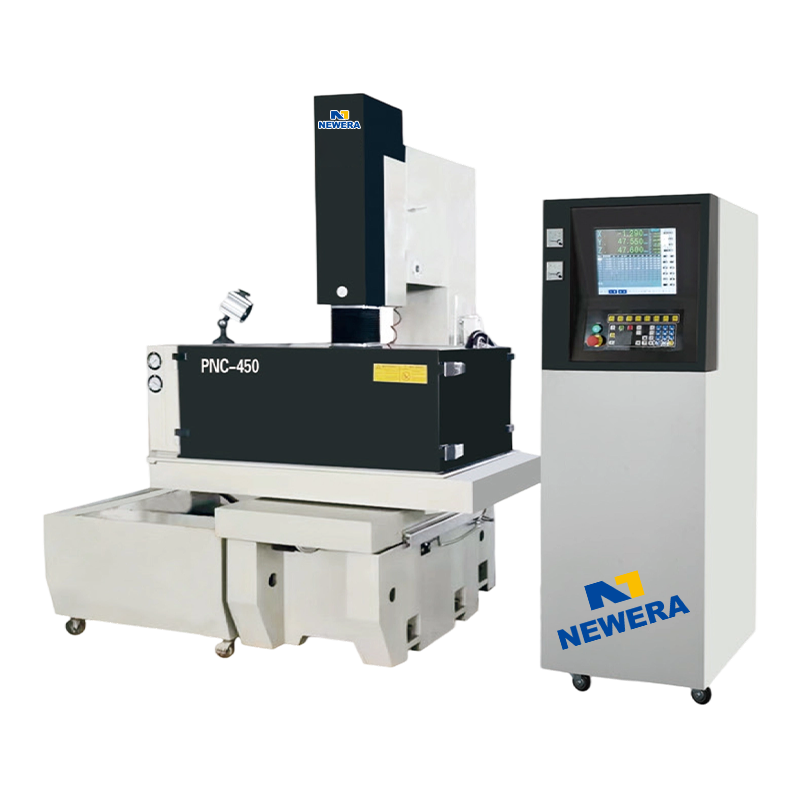
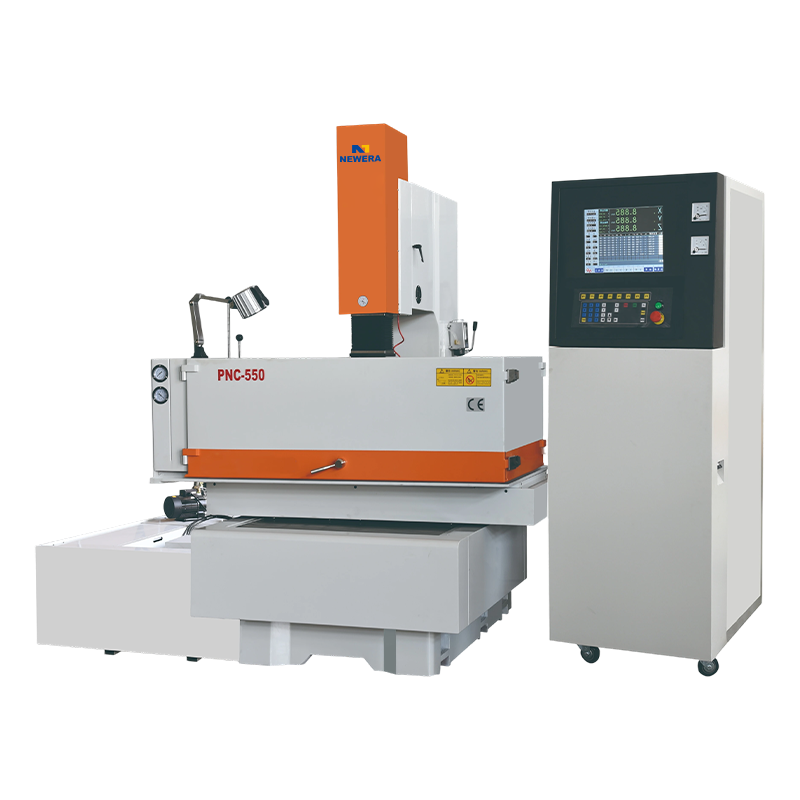
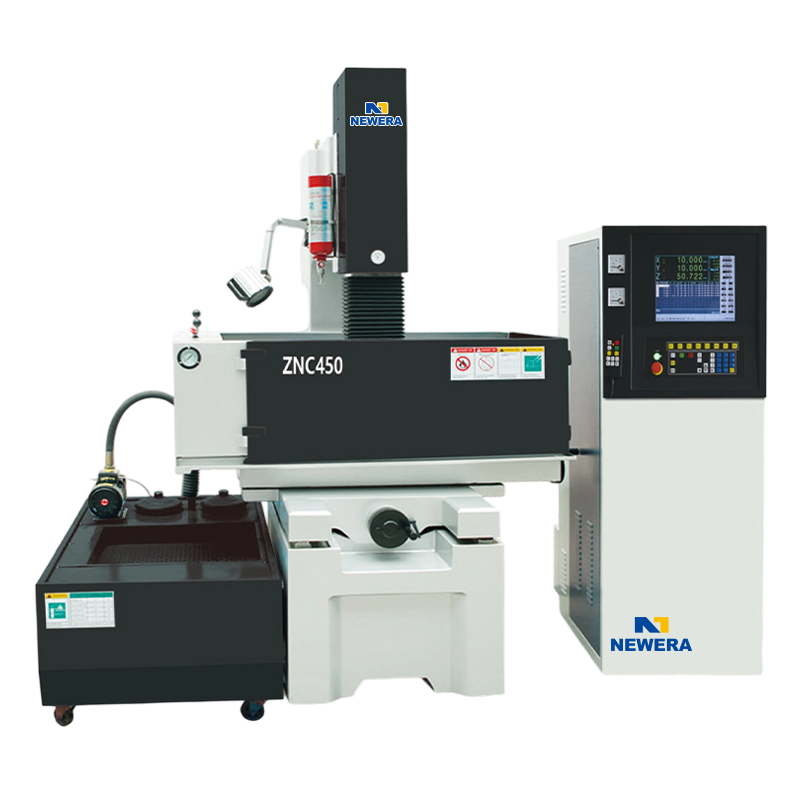
A PNC EDM Die Sinking Machine is used to erode precise cavities, complex profiles, and fine surface details into hardened metal workpieces using controlled electrical discharge — without any physical cutting contact. It is primarily deployed in mold making, die manufacturing, and tooling applications where conventional machining cannot achieve the required geometry, surface finish, or material hardness. Industries ranging from automotive and aerospace to medical device manufacturing and consumer electronics rely on die sinking EDM to produce injection molds, forging dies, stamping tools, and precision components with tolerances as tight as ±0.002 mm.
Content
- 1 How a PNC EDM Die Sinking Machine Works
- 2 Primary Industrial Applications
- 3 PNC vs CNC EDM: Understanding the Control Difference
- 4 Die Sinker EDM for Small Workshops: Practical Capabilities
- 5 Achievable Tolerances and Surface Finish Parameters
- 6 Electrode Materials and Their Effect on Results
- 7 Frequently Asked Questions
How a PNC EDM Die Sinking Machine Works
Die sinking EDM operates on the principle of electrical discharge machining: a shaped electrode — typically made from graphite or copper — is brought close to the workpiece surface within a dielectric fluid bath. A controlled electrical spark jumps the gap between electrode and workpiece, eroding microscopic amounts of material from both surfaces with each discharge pulse. By repeating this process at frequencies of 1,000 to over 500,000 pulses per second, the electrode shape is progressively transferred into the workpiece with extreme accuracy.
The term "PNC" refers to a positioning and numerical control system that governs the electrode movement along multiple axes. PNC control enables the machine to maintain a precise servo-regulated gap between electrode and workpiece throughout the erosion process, automatically compensating for electrode wear and material removal depth in real time.
Key Components in the Process
- Electrode (tool) — machined to the inverse of the desired cavity shape; graphite is preferred for complex geometries, copper for fine surface finish
- Dielectric fluid — typically hydrocarbon oil or deionized water; flushes eroded particles, cools the work zone, and controls discharge conditions
- Spark generator — delivers precisely timed electrical pulses; generator settings determine material removal rate, surface finish, and electrode wear ratio
- PNC servo system — maintains the discharge gap automatically and executes programmed electrode paths with micron-level repeatability
Primary Industrial Applications
The defining strength of die sinking EDM is its ability to machine any electrically conductive material — regardless of hardness — into shapes that would be impossible or impractical to achieve through conventional cutting. This makes the High Precision EDM Die Sinking Machine essential across several core manufacturing sectors.
Injection Mold Manufacturing
Plastic injection molds require deep, narrow cavities with polished internal surfaces that cannot be reached by milling cutters. A CNC EDM Mold Making Machine sinks the electrode into hardened P20 or H13 tool steel to create these cavities after heat treatment, eliminating distortion that would occur if machining were done before hardening. Typical cavity surface roughness achieved ranges from Ra 0.1 to Ra 1.6 µm depending on generator settings.
Forging and Stamping Die Production
Forging dies must withstand extreme impact loads while maintaining precise dimensional profiles. EDM die sinking produces the complex three-dimensional cavities in fully hardened die steel (typically 55 to 62 HRC) without the risk of cracking or deformation associated with post-machining heat treatment processes.
Aerospace and Medical Component Tooling
Turbine blade dies, orthopedic implant molds, and surgical instrument tooling demand tolerances that leave no margin for error. The High Precision EDM Die Sinking Machine delivers repeatable accuracy in superalloys, titanium, and hardened stainless steels — materials that rapidly wear conventional cutting tools but are eroded at consistent rates by electrical discharge.
Figure 1: Share of die sinking EDM application usage across major manufacturing sectors (industry survey data)
PNC vs CNC EDM: Understanding the Control Difference
Both PNC and CNC refer to numerical control systems that automate axis movement, but they represent different levels of capability and programming architecture.
| Feature | PNC EDM Die Sinking Machine | CNC EDM Mold Making Machine |
|---|---|---|
| Control architecture | Positioning numerical control (servo-based) | Full computer numerical control (G-code / proprietary) |
| Axis count | 3 axes standard (X, Y, Z) | 3 to 5 axes; orbital and rotation options |
| Programming complexity | Simpler; parameter-driven setup | Higher; supports complex multi-electrode routines |
| Typical positioning accuracy | ±0.005 mm | ±0.001–0.002 mm |
| Best suited for | Single-cavity dies, repair work, small workshops | Multi-cavity molds, complex profiles, production runs |
For many toolroom applications — particularly single-cavity mold repair, prototype die work, and lower-volume production — the PNC EDM Die Sinking Machine provides sufficient accuracy at a more accessible level of operational complexity than a full CNC system.
Die Sinker EDM for Small Workshops: Practical Capabilities
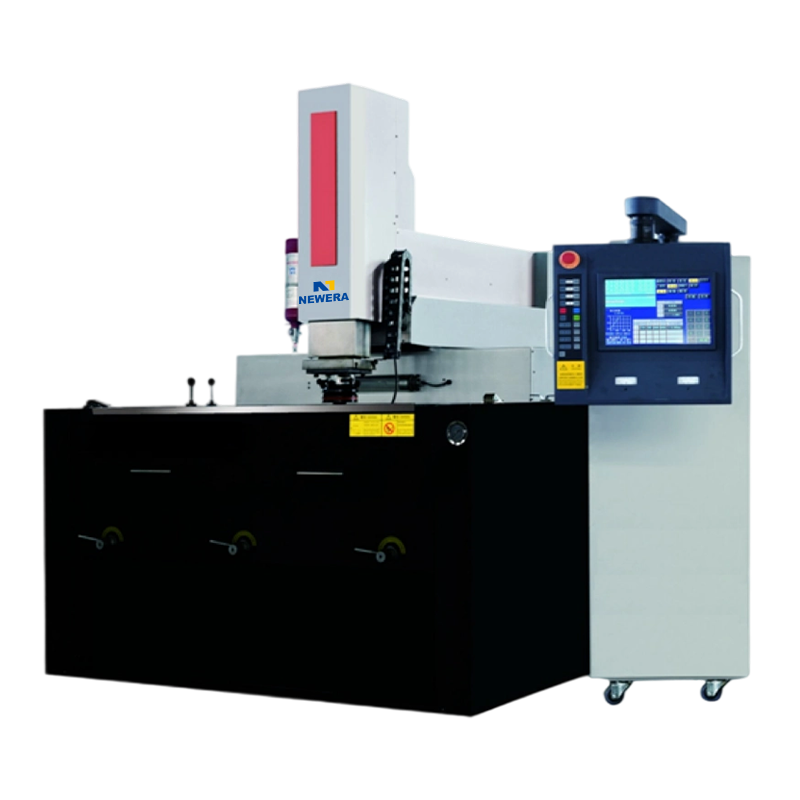
The perception that die sinking EDM is exclusively a large-factory technology is outdated. A Die Sinker EDM for Small Workshops is a compact, self-contained machine that brings the same erosion physics to a toolroom or job shop environment — with a footprint as small as 1.2 m × 1.0 m and single-phase power requirements in many entry-level models.
Small workshop die sinkers are particularly valuable for:
- Mold repair and modification — adding textures, deepening cavities, or correcting dimensional errors in existing hardened molds without full remachining
- Prototype tooling — producing one-off dies for product development without the lead time or cost of outsourcing to a full-scale EDM facility
- Broken tap and drill removal — eroding stuck tools from workpieces without damaging the surrounding material, a common workshop maintenance task
- Lettering and texture application — machining logos, part numbers, and surface textures directly into hardened mold surfaces
- Deep narrow slot and blind cavity work — geometries that no end mill can access due to tool length-to-diameter ratio limitations
Achievable Tolerances and Surface Finish Parameters
One of the primary reasons manufacturers specify a High Precision EDM Die Sinking Machine is the combination of dimensional accuracy and surface quality achievable through generator parameter selection alone — without changing the electrode or workpiece setup.
Figure 2: Relationship between EDM generator current setting, material removal rate (mm³/min), and achievable surface roughness (Ra µm)
| Machining Mode | Material Removal Rate | Surface Roughness (Ra) | Typical Use |
|---|---|---|---|
| Roughing | 300–800 mm³/min | Ra 6.3–12.5 µm | Cavity bulk removal |
| Semi-finishing | 30–150 mm³/min | Ra 1.6–3.2 µm | Dimensional accuracy pass |
| Finishing | 1–20 mm³/min | Ra 0.4–1.6 µm | Mold cavity walls |
| Mirror finishing | <1 mm³/min | Ra 0.05–0.2 µm | Optical and medical tooling |
A single electrode can progress through roughing, semi-finishing, and finishing passes in an automated cycle by adjusting generator parameters between stages — a key productivity advantage of the CNC EDM Mold Making Machine in production environments.
Electrode Materials and Their Effect on Results
Electrode selection directly determines machining efficiency, surface quality, and total electrode consumption cost. The two dominant electrode materials in die sinking EDM are graphite and copper, each with specific advantages for different applications.
- Graphite electrodes — machine faster, are lighter and easier to produce by milling, and perform well in roughing and semi-finishing. Fine-grain graphite grades (ISO grain size 4 to 8 µm) can achieve Ra values below 1.0 µm. Wear ratio is higher than copper but total cycle time is typically lower.
- Copper electrodes — offer lower wear ratios (as low as 0.1% in no-wear conditions), making them the choice for finishing passes where dimensional accuracy is critical. Better suited for small, intricate features where maintaining electrode geometry throughout the cycle is essential.
- Copper tungsten electrodes — used for applications requiring extreme wear resistance, particularly when machining cemented carbide or producing very deep, narrow features where electrode replacement mid-cycle is impractical.
Frequently Asked Questions
Q1: What materials can a PNC EDM Die Sinking Machine process?
Any electrically conductive material can be eroded by die sinking EDM — including hardened tool steels (up to 70 HRC), cemented carbides, titanium alloys, Inconel, copper alloys, and aluminum. Material hardness does not affect erosion rate, which is why EDM is used after heat treatment rather than before it.
Q2: How does a Die Sinker EDM for Small Workshops differ from a wire EDM machine?
Die sinking EDM uses a shaped solid electrode to erode three-dimensional cavities into the workpiece — it works vertically downward into the material. Wire EDM uses a continuously moving thin wire to cut through-profiles and contours like a saw. Die sinkers create blind cavities and complex 3D shapes; wire EDM is used for 2D through-cuts, punches, and extrusion dies.
Q3: What surface finish can a High Precision EDM Die Sinking Machine achieve?
Surface roughness ranges from Ra 12.5 µm in roughing mode down to Ra 0.05 µm in mirror-finish mode using fine generator settings and high-quality graphite or copper electrodes. Mirror finishing requires very low discharge energy and long machining time but produces surfaces suitable for optical tooling and high-gloss plastic molds without manual polishing.
Q4: How long does electrode wear affect dimensional accuracy in a CNC EDM Mold Making Machine?
Modern CNC EDM Mold Making Machines use automatic electrode wear compensation built into the servo control system. The machine continuously calculates electrode consumption based on discharge energy data and adjusts the Z-axis depth accordingly. In near-zero-wear conditions — achievable with copper electrodes at optimized parameters — wear compensation can maintain dimensional accuracy within ±0.002 mm across a full cavity depth without electrode changes.
Q5: Is a Die Sinker EDM for Small Workshops suitable for first-time EDM operators?
Yes, particularly PNC-controlled models with parameter-driven setup interfaces. These machines use application-specific preset tables — the operator selects material type, electrode material, and desired finish, and the machine calculates recommended generator settings automatically. The learning curve for basic die sinking operations is typically 2 to 4 weeks for an operator with a background in conventional machining.


If you are interested in our products, please consult us.
CONTACT DETAILS
Nantong New Era Technology Co., LTD
- Five-star Industrial Park, Chongchuan District, Nantong City, Jiangsu Province, China
- TEL:+86-19851302688
- E-Mail: [email protected]
Products
Quick link
Mobile terminal
