

 русский
 عربى
عربى
Industry News
Is a Die Sinker Machine Still Used in Modern Manufacturing?
 2026.03.19
 Industry News
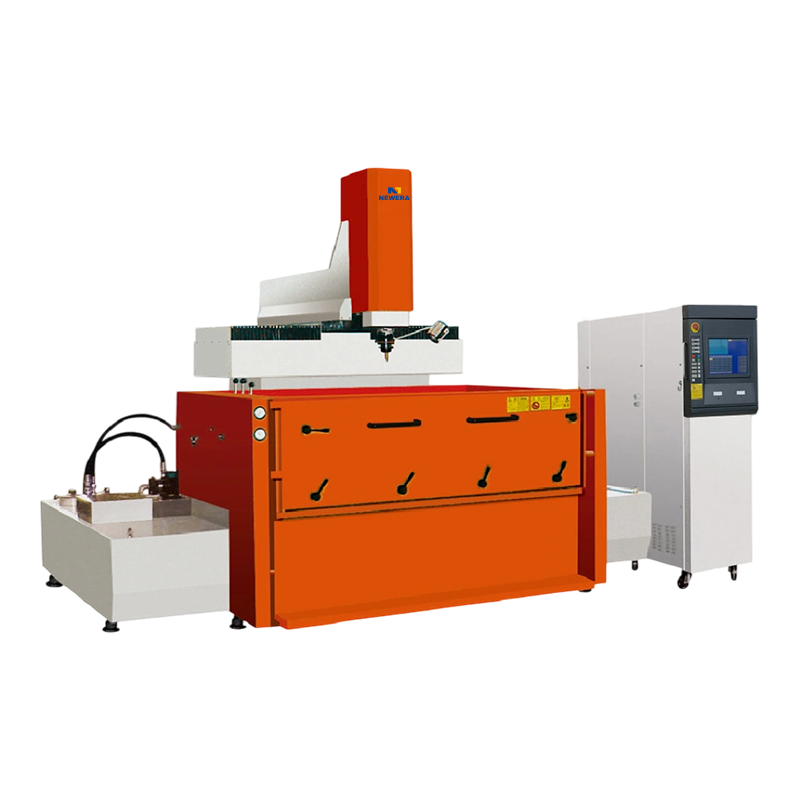
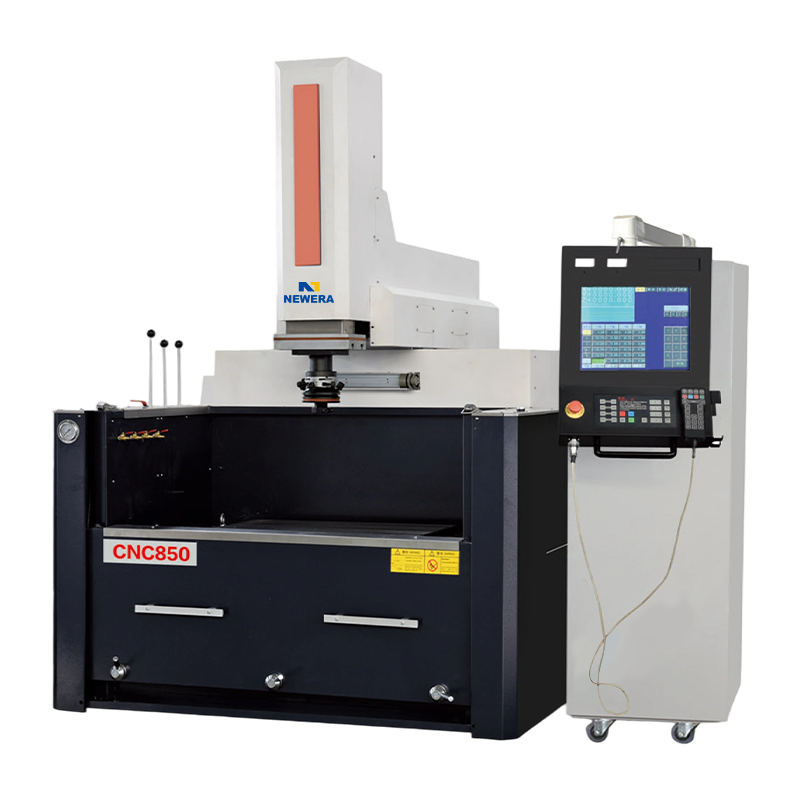
Yes — the die sinker machine remains firmly embedded in modern manufacturing. Far from being displaced by newer machining technologies, it has evolved into a precision-critical tool that handles geometries and material hardnesses that milling, grinding, and laser cutting simply cannot match. Today's CNC die sinker EDM machine for mold making combines decades of electrical discharge machining principles with full CNC control, adaptive generator technology, and automated electrode management — making it indispensable in aerospace, automotive tooling, medical device manufacturing, and precision mold production worldwide. This article examines exactly where and why the die sinker machine remains irreplaceable.
Content
- 1 What a Die Sinker Machine Does and How It Works
- 2 Why the Die Sinker Machine Cannot Be Replaced by Milling or Grinding
- 3 CNC Die Sinker EDM Machine for Mold Making: Key Industry Applications
- 4 Global Die Sinker EDM Market: Usage Trends 2019–2026
- 5 How CNC Transformed the Die Sinker Machine
- 6 Electrode Materials: Graphite vs. Copper in Modern Die Sinker EDM
- 7 Die Sinker EDM Usage Share by Industry Sector
- 8 Practical Considerations When Specifying a CNC Die Sinker EDM Machine
- 9 Frequently Asked Questions
What a Die Sinker Machine Does and How It Works
A die sinker machine — also called a sinker EDM, ram EDM, or cavity-type EDM — removes material from a conductive workpiece through controlled electrical discharges between a shaped electrode (the "ram") and the workpiece, both submerged in a dielectric fluid. Each discharge vaporizes a microscopic amount of material, and by repeating this process thousands of times per second, the machine erodes a precise cavity that mirrors the electrode shape with exceptional fidelity.
The electrode — typically machined from graphite or copper — never physically contacts the workpiece. This means zero cutting forces act on the part during machining, which is the foundational advantage that makes die sinker EDM uniquely suited to hardened steels, thin-walled components, and blind cavities that would deflect, crack, or become inaccessible under conventional cutting.
Core Process Parameters
- Discharge frequency: Modern generators operate at up to 500,000 discharges per second in fine finishing modes, producing surface finishes as smooth as Ra 0.1 µm.
- Gap control: The servo system maintains a spark gap of 0.01–0.5 mm depending on energy setting, adjusting position in real time to prevent short circuits.
- Dielectric fluid: Hydrocarbon oil or deionized water flushes debris, cools the gap, and restores dielectric strength between pulses.
- Electrode wear: Advanced CNC die sinker machines compensate for electrode wear automatically through wear-ratio compensation algorithms, maintaining dimensional accuracy without manual intervention.
Why the Die Sinker Machine Cannot Be Replaced by Milling or Grinding
A common question in manufacturing engineering is whether high-speed milling (HSM) has made sinker EDM redundant. The data says otherwise. The two processes are complementary, not competitive — and there are specific conditions under which the die sinker machine is the only viable process.
| Capability | Die Sinker EDM | High-Speed Milling | Grinding |
|---|---|---|---|
| Hardened steel (>60 HRC) | Excellent | Limited | Good (flat surfaces only) |
| Sharp internal corners (R < 0.1 mm) | Excellent | Not feasible | Not feasible |
| Deep narrow blind cavities | Excellent | Poor (tool deflection) | Not feasible |
| Surface finish Ra < 0.4 µm | Excellent | Good (with polishing) | Good (flat surfaces only) |
| Thin-walled fragile parts | Excellent | Poor (cutting forces) | Poor |
| Complex 3D cavity (single setup) | Excellent | Good (5-axis) | Limited |
| Material removal rate | Moderate | High | Low–Moderate |
The decisive factors are internal corner radius and workpiece hardness. When a mold or die design calls for internal radii below 0.3 mm in steel hardened above 55 HRC, sinker EDM is not just preferred — it is the only process that delivers the geometry without cracking the workpiece or destroying tooling.
CNC Die Sinker EDM Machine for Mold Making: Key Industry Applications
The CNC die sinker EDM machine for mold making serves as the backbone of cavity finishing across several high-precision industries. In each case, the process is chosen specifically because the required geometry or material hardness rules out conventional alternatives.
Injection Mold Tooling
Injection molds for plastic parts — particularly those with fine surface texture, deep ribs, or small gate geometries — rely on sinker EDM for cavity finishing after rough milling. A typical automotive interior trim mold may require 40–60% of total cavity work to be completed by sinker EDM, with milling handling only the bulk stock removal. Textured cavity surfaces (leather grain, matte finishes) are often produced entirely by EDM using pre-textured graphite electrodes.
Stamping Dies and Progressive Dies
Progressive stamping dies used in electronics, automotive body panels, and connector manufacturing require punch and die clearances as tight as 0.01–0.02 mm per side in hardened D2 or carbide tool steel. Achieving these tolerances after hardening — without the distortion risk of machining before heat treatment — is precisely the application where sinker EDM excels.
Aerospace and Turbine Components
Nickel superalloys and titanium used in turbine blades, fuel system components, and structural aerospace parts are notoriously difficult to machine conventionally. Their high strength-to-weight ratios and work-hardening tendencies make die sinker EDM a preferred finishing process for intricate internal features. Aerospace sinker EDM work typically demands positional accuracy of ±0.005 mm or better.
Medical Device and Implant Tooling
Molds and dies for surgical instruments, implantable device housings, and microfluidic components demand both extreme precision and biocompatible surface finishes that meet ISO 13485 standards. CNC sinker EDM machines with adaptive finishing modes achieve Ra values below 0.2 µm without post-process polishing on many geometries, reducing contamination risk during secondary operations.
Global Die Sinker EDM Market: Usage Trends 2019–2026
Despite the expansion of additive manufacturing and 5-axis milling, global demand for die sinker EDM machines has continued to grow, driven by increasing complexity in mold and die geometries and the proliferation of hard-to-machine advanced materials.
Figure 1: Global die sinker EDM machine market has grown consistently since 2020, reaching an estimated USD 5.4 billion in 2026, driven by demand in Asia-Pacific mold making and aerospace tooling.
How CNC Transformed the Die Sinker Machine
The transition from manual and NC sinker EDM to full CNC control fundamentally changed what the machine can accomplish. A modern CNC die sinker EDM machine for mold making is not simply an automated version of its predecessor — it is a categorically more capable system.
- Orbital and planetary motion: CNC axes allow the electrode to follow complex orbital paths — circular, helical, conical — enabling uniform flushing, reducing electrode wear by up to 30%, and achieving cavity geometries impossible with simple Z-axis plunge motion.
- Adaptive generator control: Modern pulse generators adjust discharge energy, on-time, and off-time in real time based on gap conditions, optimizing material removal rate and surface finish simultaneously without operator input.
- Automatic electrode changer (AEC): High-end CNC systems support electrode magazines holding 20–60 electrodes, enabling fully unattended multi-electrode machining cycles that run through rough, semi-finish, and finish operations without an operator present.
- Integrated CMM probing: Some CNC sinker EDM platforms include on-machine touch probing for automatic workpiece alignment and electrode qualification, eliminating manual setup errors and reducing setup time by 50–70% compared to manual alignment.
- Digital twin and simulation: Process simulation software previews electrode paths, predicts cycle times, and identifies flushing conflicts before any spark is struck — reducing trial-and-error on expensive hardened workpieces.
Electrode Materials: Graphite vs. Copper in Modern Die Sinker EDM
The choice of electrode material directly affects machining speed, surface finish quality, and electrode wear — all of which determine the overall efficiency of the die sinker process. Both graphite and copper remain widely used, with selection driven by application requirements.
| Property | Graphite | Copper |
|---|---|---|
| Machinability | Excellent (4–5× faster than copper) | Good |
| Surface finish capability | Ra 0.3–1.6 µm typical | Ra 0.1–0.8 µm (finer finish) |
| Electrode wear (rough) | Low (1–3%) | Very low (<1%) |
| Weight | Light (1.7–1.9 g/cm³) | Heavy (8.9 g/cm³) |
| Best application | Large cavities, rough to semi-finish | Fine detail, mirror finish, deep narrow slots |
| Industry preference (2024–2026) | ~70% of electrode use globally | ~30% of electrode use globally |
The trend toward graphite has been driven by improvements in fine-grain and ultra-fine-grain graphite (particle size below 5 µm), which now achieves surface finishes previously only attainable with copper, while retaining the significant machining speed advantage. Copper-tungsten remains the preferred choice for ultra-fine detail work and cemented carbide EDM where thermal conductivity at the electrode tip is critical.
The chart below illustrates the distribution of die sinker EDM machine usage across key manufacturing sectors, based on global industry survey data from 2025.
Figure 2: Injection mold making accounts for the largest share of die sinker EDM usage at 34%, followed by stamping die production at 22%.
Practical Considerations When Specifying a CNC Die Sinker EDM Machine
Selecting the right CNC die sinker EDM machine for mold making requires matching machine specifications to the specific workpiece envelope, material, and finish requirements of your production environment. The following parameters are the most consequential:
- Table size and workpiece capacity: Verify that the machine's X-Y-Z travel and maximum workpiece weight accommodate your largest anticipated mold base. Overspecifying table size wastes capital; underspecifying forces expensive workarounds.
- Generator peak current: Machines range from 20 A to 160 A peak current. Higher current enables faster rough cutting but requires more electrode and workpiece surface area to distribute thermal load. Match generator range to your typical roughing vs. finishing ratio.
- Minimum corner radius achievable: Confirm the machine's minimum achievable internal corner radius specification, which is directly tied to the minimum electrode dimensions the spindle and AEC system can handle.
- Axis repeatability: For high-precision mold work, specify machines with axis repeatability of ±0.002 mm or better. Lower-grade machines with ±0.005 mm repeatability are adequate for stamping die work but insufficient for optical or medical mold cavities.
- Dielectric system capacity: Ensure the dielectric tank volume and filtration capacity are matched to your electrode and workpiece sizes. Inadequate flushing is one of the leading causes of inconsistent surface finish and electrode wear in sinker EDM.
- Software and CAM integration: Confirm compatibility between the machine's CNC controller and your electrode design and toolpath software. Seamless data transfer reduces setup errors and enables accurate cycle time simulation.
Frequently Asked Questions
Q1: What is the difference between a die sinker machine and a wire EDM machine?
A1: A die sinker machine uses a 3D-shaped electrode (graphite or copper) that plunges into the workpiece to erode a cavity matching the electrode profile — ideal for blind cavities, mold cores, and complex 3D impressions. Wire EDM uses a continuously fed thin wire as the electrode to cut through the workpiece along a 2D or 4-axis contour path, making it suited for through-cuts, punches, and extrusion dies. Both use electrical discharge, but they serve fundamentally different geometry types.
Q2: What materials can a CNC die sinker EDM machine for mold making process?
A2: Any electrically conductive material can be machined by a die sinker EDM — hardness is irrelevant to the process. Common workpiece materials include hardened tool steels (D2, H13, P20, S7), stainless steels, cemented carbide (WC-Co), titanium alloys, nickel superalloys (Inconel, Hastelloy), and copper alloys. Non-conductive materials such as ceramics, glass, and polymers cannot be processed by EDM.
Q3: How accurate is a modern CNC die sinker EDM machine?
A3: High-precision CNC die sinker EDM machines achieve dimensional accuracy of ±0.002–0.005 mm and surface finishes as fine as Ra 0.1 µm in mirror-finish mode. Axis repeatability on premium machines reaches ±0.001 mm. These figures place CNC sinker EDM among the most accurate material removal processes available for 3D cavity work, comparable to precision grinding but applicable to far more complex geometries.
Q4: How long does it take to machine a typical injection mold cavity by die sinker EDM?
A4: Cycle time depends heavily on cavity volume, required surface finish, and material. A small precision cavity (e.g., 50 × 50 × 30 mm) in hardened P20 steel to Ra 0.4 µm typically requires 4–10 hours using a multi-stage roughing-to-finishing sequence with graphite electrodes. Larger automotive mold cavities with complex textures may require 40–80 hours of EDM time. CNC machines with automatic electrode changers run these cycles unattended overnight, significantly improving effective throughput.
Q5: Is the die sinker machine being replaced by additive manufacturing for mold making?
A5: Not in high-volume production tooling. Additive manufacturing (metal 3D printing) is increasingly used for conformal cooling channel inserts and prototype mold components, but cannot currently match the dimensional accuracy, surface finish, or material density of EDM-finished hardened steel cavities required for production injection molds. In practice, additive manufacturing and die sinker EDM are often combined — printed inserts are finish-machined by EDM to achieve the required cavity precision.
Q6: What maintenance does a CNC die sinker EDM machine require?
A6: Key maintenance tasks include daily dielectric fluid level and contamination checks, weekly filter replacement or cleaning depending on workload, monthly inspection of the dielectric pump, electrode spindle runout verification, and axis drive lubrication per the manufacturer's schedule. The dielectric fluid itself should be fully replaced or reconditioned every 6–12 months depending on usage intensity, as degraded fluid reduces machining consistency and can cause abnormal electrode wear.
If you are interested in our products, please consult us.
CONTACT DETAILS
Nantong New Era Technology Co., LTD
- Five-star Industrial Park, Chongchuan District, Nantong City, Jiangsu Province, China
- TEL:+86-19851302688
- E-Mail: [email protected]
Products
Quick link
Mobile terminal
