

 русский
 عربى
عربى
Industry News
Home / News / Industry News / What are the advantages of CNC EDM die sinking machines in complex die processing?
What are the advantages of CNC EDM die sinking machines in complex die processing?
 2026.03.05
 Industry News
Content
- 1 The Verdict: CNC EDM Die Sinking Machines Are the Gold Standard for Complex Die Processing
- 2 How a CNC EDM Die Sinking Machine Works
- 3 Key Advantages of CNC EDM Die Sinking Machines in Complex Die Processing
- 3.1 Ability to Machine Any Electrically Conductive Material Regardless of Hardness
- 3.2 Exceptional Dimensional Accuracy and Repeatability
- 3.3 Zero Cutting Force Eliminates Workpiece Distortion
- 3.4 Perfect Sharp Internal Corners and Complex Cavity Geometries
- 3.5 Superior Surface Finish Directly from the Machine
- 3.6 Achievable Surface Roughness by Machining Process
- 3.7 Fully Automated, Unattended Machining Capability
- 4 CNC EDM Die Sinking vs Conventional Machining: A Direct Comparison
- 5 Industries and Applications Where CNC EDM Die Sinking Excels
- 6 Key Specifications to Evaluate When Selecting a CNC EDM Die Sinking Machine
- 7 Electrode Material Selection: Graphite vs Copper for Die Sinking
- 8 Frequently Asked Questions About CNC EDM Die Sinking Machines
- 8.1 1. What materials can a CNC EDM die sinking machine process?
- 8.2 2. How does EDM die sinking affect the surface metallurgy of the workpiece?
- 8.3 3. How long does electrode wear last before replacement is needed?
- 8.4 4. Can CNC EDM die sinking be used for large die cavities?
- 8.5 5. How does CNC EDM sinker compare to wire EDM for die work?
- 8.6 6. What maintenance does a CNC EDM die sinking machine require?
The Verdict: CNC EDM Die Sinking Machines Are the Gold Standard for Complex Die Processing
When it comes to machining complex dies with deep cavities, sharp internal corners, hardened materials, or fine surface finishes, CNC EDM die sinking machines are the superior choice. Unlike conventional cutting tools, they use controlled electrical discharge erosion—making physical contact with the workpiece unnecessary. This allows manufacturers to achieve tolerances as tight as ±0.001 mm on tool steels, carbide, and exotic alloys that would destroy conventional cutters.
According to industry data from the Electrical Discharge Machining Association, EDM processes account for over 60% of complex die and mold cavity production in precision manufacturing sectors globally—a figure that reflects the technology's irreplaceable role where conventional machining simply cannot compete.
How a CNC EDM Die Sinking Machine Works
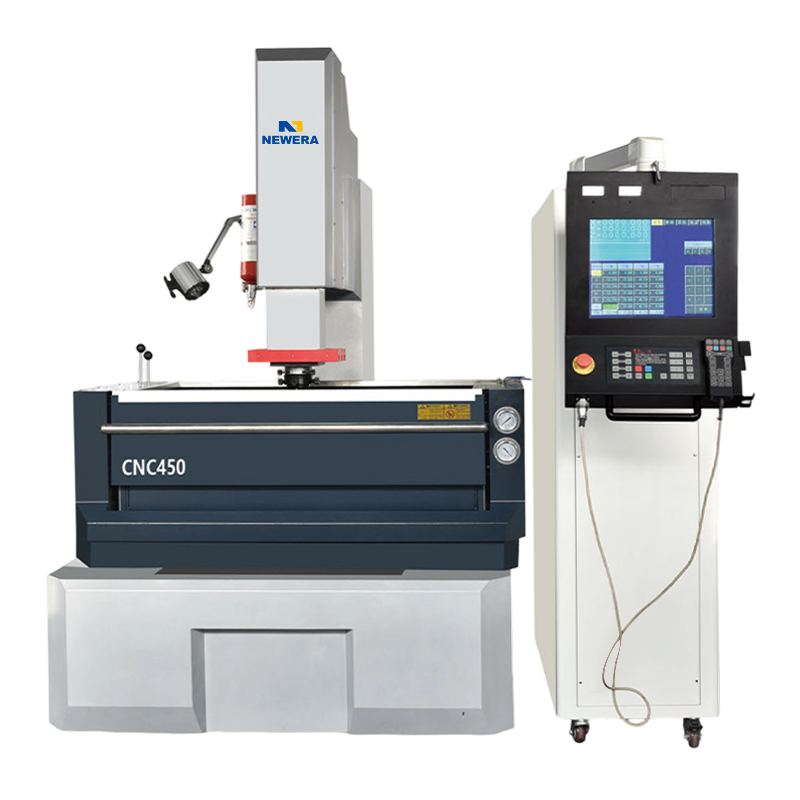
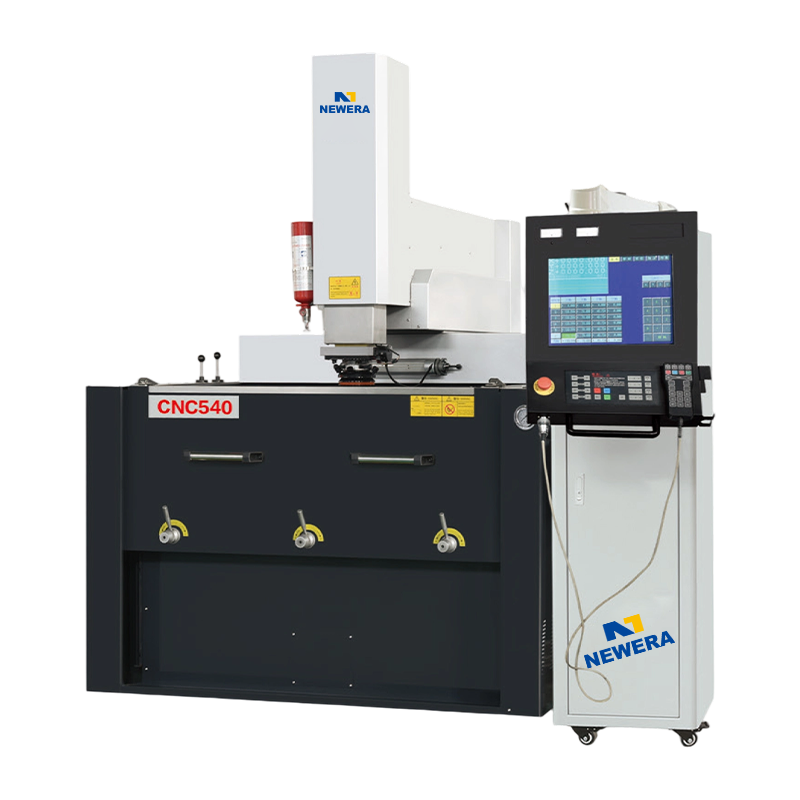
A CNC EDM die sinking machine—also called a sinker EDM or ram EDM—erodes material from a conductive workpiece using rapid, precisely controlled electrical sparks. A shaped electrode (typically graphite or copper) is advanced toward the workpiece while submerged in dielectric fluid. Sparks jump the gap between electrode and workpiece at frequencies of 2,000–500,000 pulses per second, vaporizing microscopic amounts of material with each discharge.
The CNC control system governs electrode position, spark energy, pulse duration, and gap distance in real time—enabling automated, unattended machining of complex 3D cavities directly into hardened steel without any mechanical cutting force applied to the workpiece.
Core Components of a CNC EDM Die Sinking System
- Shaped electrode: Graphite (most common) or copper, pre-machined to the inverse of the desired cavity geometry.
- Dielectric fluid system: Mineral oil or deionized water flushes away eroded particles and controls the discharge gap.
- Servo-controlled Z-axis: Maintains the spark gap with micron-level precision throughout the erosion cycle.
- CNC controller: Executes multi-axis movement, orbital patterns, and adaptive pulse control for optimal material removal and surface finish.
- Automatic tool changer (ATC): On advanced models, enables unattended switching between roughing and finishing electrodes.
Key Advantages of CNC EDM Die Sinking Machines in Complex Die Processing
Ability to Machine Any Electrically Conductive Material Regardless of Hardness
Hardness is irrelevant to EDM. Whether the workpiece is soft annealed steel or fully hardened D2 tool steel at 62 HRC, tungsten carbide at 1,500 HV, or titanium alloy, the EDM process erodes it at the same fundamental level. This eliminates the costly and distortion-prone practice of machining dies soft and then heat treating—manufacturers can now machine dies to final dimensions after hardening, achieving superior dimensional accuracy and virtually zero heat distortion.
Exceptional Dimensional Accuracy and Repeatability
CNC EDM die sinking machines routinely achieve tolerances of ±0.002–0.005 mm in production environments, with high-end machines capable of ±0.001 mm under controlled conditions. Crucially, this precision is repeatable across production runs—critical in die manufacturing where matched cavity pairs must align precisely. A leading automotive stamping die manufacturer reported reducing cavity-to-cavity matching errors from 0.02 mm to under 0.003 mm after switching to CNC EDM sinker processing.
Zero Cutting Force Eliminates Workpiece Distortion
Because EDM involves no mechanical contact between electrode and workpiece, there are no cutting forces, vibrations, or clamping stresses transmitted to the die. This is critical for thin-walled die sections, fragile rib structures, and deeply undercut profiles that would flex, chatter, or fracture under conventional milling. Mold makers processing thin core pins with aspect ratios exceeding 20:1 depth-to-width routinely rely on EDM sinkers for this reason.
Perfect Sharp Internal Corners and Complex Cavity Geometries
Conventional end mills leave a minimum corner radius equal to their tool radius. EDM is constrained by no such geometry—electrodes can be machined with internal corner radii below 0.1 mm, and complex profiles including blind pockets, re-entrant features, and intricate textured surfaces are reproduced with full fidelity. This is why EDM sinkers dominate in progressive die tooling, injection mold coring, and forging die production where corner geometry directly affects part quality.
Superior Surface Finish Directly from the Machine
By adjusting discharge energy and pulse parameters, modern CNC EDM sinkers can produce surface finishes ranging from rough stock removal at Ra 6.3 µm down to mirror-quality finishing at Ra 0.05–0.1 µm—all without polishing. This is particularly valuable in plastic injection mold cavities, where surface texture directly transfers to the final part, and in precision stamping dies where surface roughness affects galling resistance and tool life.
Achievable Surface Roughness by Machining Process
Conventional Milling
Ra 0.8–6.3 µm
Grinding
Ra 0.2–1.6 µm
EDM Sinker (Roughing)
Ra 1.6–6.3 µm
EDM Sinker (Finishing)
Ra 0.1–0.4 µm
EDM Sinker (Mirror)
Ra 0.05–0.1 µm
Lower Ra = smoother surface. CNC EDM sinkers achieve mirror finish without manual polishing.
Fully Automated, Unattended Machining Capability
Advanced CNC EDM die sinking machines feature automatic electrode changers, adaptive gap control, and intelligent spark condition monitoring. A single machine can execute a complete roughing-to-finishing sequence across multiple cavities unattended for 16–24 hours. This dramatically reduces labor costs and allows die shops to run "lights-out" night shifts—a productivity advantage that is especially impactful given the long cycle times inherent to complex die production.
CNC EDM Die Sinking vs Conventional Machining: A Direct Comparison
| Criterion | CNC EDM Die Sinking | CNC Milling | Grinding |
|---|---|---|---|
| Hard material capability | Up to 70+ HRC | Up to ~55 HRC (limited) | High hardness OK |
| Internal corner radius | < 0.1 mm achievable | Min. = tool radius | Profile-limited |
| Dimensional tolerance | ±0.001–0.005 mm | ±0.005–0.02 mm | ±0.002–0.005 mm |
| Cutting force on workpiece | Zero | High | Moderate |
| Deep blind cavity | Excellent | Difficult (tool deflection) | Not suitable |
| Best surface finish | Ra 0.05 µm (mirror) | Ra 0.4–0.8 µm | Ra 0.1–0.2 µm |
| Unattended operation | Yes (ATC + adaptive control) | Partially | Partially |
| Material removal rate | Slow–Moderate | Fast | Moderate |
Industries and Applications Where CNC EDM Die Sinking Excels
The CNC EDM die sinking machine's unique capabilities make it indispensable across a wide range of high-precision manufacturing sectors:
Plastic Injection Molds
Deep core/cavity pockets, textured surfaces, thin ribs — EDM handles what mills cannot.
Progressive Stamping Dies
Precise punch/die profiles in hardened D2, M2 steels at tight tolerances across multi-station tooling.
Forging Dies
Complex 3D cavity profiles in H13 hot-work tool steel — machined after hardening for maximum accuracy.
Aerospace & Medical
Titanium, Inconel, and carbide components where tolerance and surface integrity are mission-critical.
Real-World Example: Automotive Stamping Die Production
A Tier 1 automotive supplier producing body panel stamping dies for an EV manufacturer adopted a fleet of 6-axis CNC EDM sinkers for their cavity finishing operations. Results after 12 months: die rework rates dropped from 18% to under 3%, average cavity production time decreased by 22%, and surface finish polishing labor was eliminated entirely on 74% of die faces. The investment in EDM technology paid back in under 18 months.
Key Specifications to Evaluate When Selecting a CNC EDM Die Sinking Machine
| Specification | Entry-Level | Mid-Range | High-End / Precision |
|---|---|---|---|
| Positioning Accuracy | ±0.01 mm | ±0.003–0.005 mm | ±0.001 mm |
| Best Surface Finish | Ra 0.4 µm | Ra 0.2 µm | Ra 0.05 µm |
| Max Material Removal Rate | 200–400 mm³/min | 400–800 mm³/min | 800–2,000 mm³/min |
| Electrode Changer | Manual / None | 6–16 positions ATC | 20–50 position ATC |
| Control System | Basic CNC | Adaptive pulse control | AI-assisted adaptive + IoT |
| Approx. Price Range | $30,000–$80,000 | $80,000–$250,000 | $250,000–$800,000+ |
Electrode Material Selection: Graphite vs Copper for Die Sinking
The electrode is the "tool" in EDM—its material directly affects machining speed, surface finish, wear rate, and cost. The two dominant choices are graphite and copper:
- Graphite: The preferred choice for the majority of die sinking work. Machines 3–5× faster than copper, easier to mill into complex shapes, and achieves excellent wear ratios in roughing. Fine-grain graphite (ISO grain size 4–8 µm) is used for finishing operations requiring Ra ≤ 0.2 µm.
- Copper: Superior for mirror-finish work (Ra ≤ 0.1 µm) and for very fine detail features due to its denser, more uniform structure. Also preferred when machining carbide dies, as graphite wear increases significantly on carbide. Copper is heavier, slower to machine, and more expensive than graphite.
- Copper-tungsten: Used for ultra-fine features in carbide and for applications requiring extremely low electrode wear. Most expensive option; reserved for specialty precision work.
Frequently Asked Questions About CNC EDM Die Sinking Machines
1. What materials can a CNC EDM die sinking machine process?
Any electrically conductive material can be processed by EDM sinker—hardness is not a limiting factor. Common workpiece materials include hardened tool steels (D2, H13, M2, P20), stainless steels, tungsten carbide, titanium alloys, Inconel, copper alloys, and graphite. Non-conductive materials such as ceramics, glass, and plastics cannot be processed by conventional EDM without special preparation techniques.
2. How does EDM die sinking affect the surface metallurgy of the workpiece?
EDM creates a thin recast layer (also called the white layer) on the machined surface—typically 2–25 µm thick depending on discharge energy. This layer is harder and more brittle than the base material. For most die applications, the recast layer is acceptable or beneficial (increased surface hardness). However, for fatigue-critical aerospace components or precision bearing surfaces, the recast layer may require removal by light grinding or polishing. Modern low-energy finishing regimes minimize recast layer thickness to under 5 µm.
3. How long does electrode wear last before replacement is needed?
Electrode wear depends heavily on discharge energy, material pairing, and polarity settings. For graphite electrodes roughing in steel, volumetric wear ratios (workpiece material removed vs electrode consumed) typically range from 10:1 to 30:1—meaning the electrode lasts 10–30 times longer than the volume of steel removed. Advanced adaptive pulse control further reduces electrode wear by optimizing each discharge. For a complex die cavity requiring 50 cm³ of material removal, a quality graphite electrode may last through the entire roughing cycle without replacement.
4. Can CNC EDM die sinking be used for large die cavities?
Yes. Large-format CNC EDM sinkers offer work tank capacities accommodating workpieces exceeding 2,000 × 1,500 × 800 mm and electrode weights of 500 kg or more. These machines are used in large forging die production, die-casting die manufacturing, and heavy automotive tooling. Roughing operations on large sinkers can achieve material removal rates of up to 2,000 mm³/min, making them competitive with milling for heavily hardened large cavities.
5. How does CNC EDM sinker compare to wire EDM for die work?
Wire EDM and die sinking EDM are complementary, not competing technologies. Wire EDM excels at cutting through-profiles, punch blanking dies, and 2D contour work with extrusion from a continuous brass wire. Die sinking EDM is required for 3D blind cavities, textured surfaces, and complex 3D forms that have no through-profile. Most modern die shops use both: wire EDM for punch profiles and die plates, and sinker EDM for cavity work, core pins, and deep pockets.
6. What maintenance does a CNC EDM die sinking machine require?
CNC EDM sinkers require systematic maintenance focused on four areas. First, dielectric fluid management: the fluid filter must be changed every 200–500 machine hours, and fluid conductivity monitored daily to ensure stable spark conditions. Second, flushing system: nozzles and pumps need regular inspection and cleaning. Third, servo axis calibration: positioning accuracy should be verified every 6–12 months using a laser interferometer. Fourth, generator maintenance: pulse generator circuits require periodic inspection; most manufacturers offer annual service contracts that include generator health checks. Properly maintained machines routinely operate for 15–25 years with consistent accuracy.
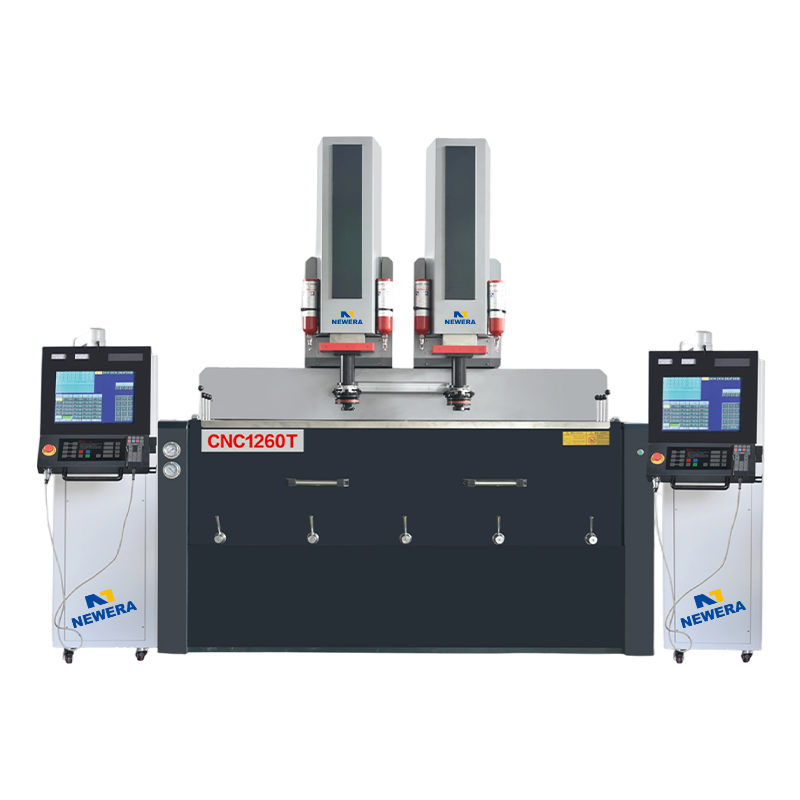
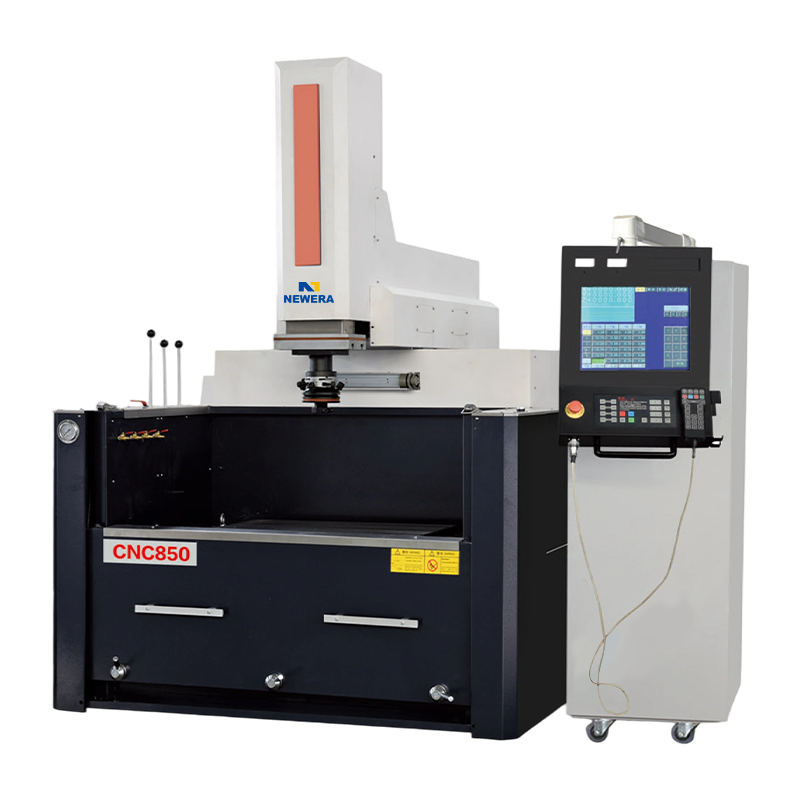
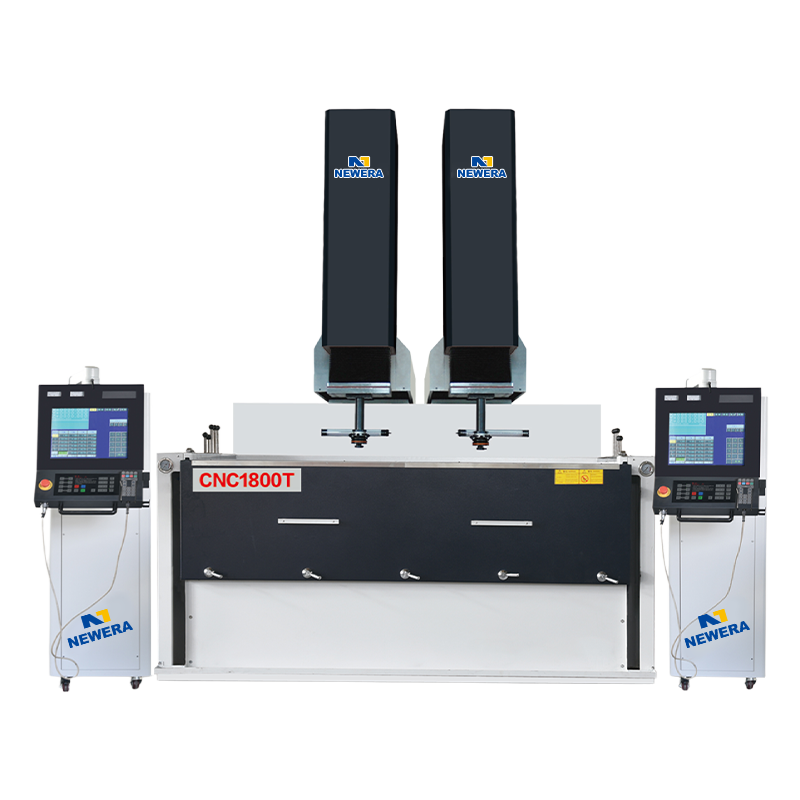
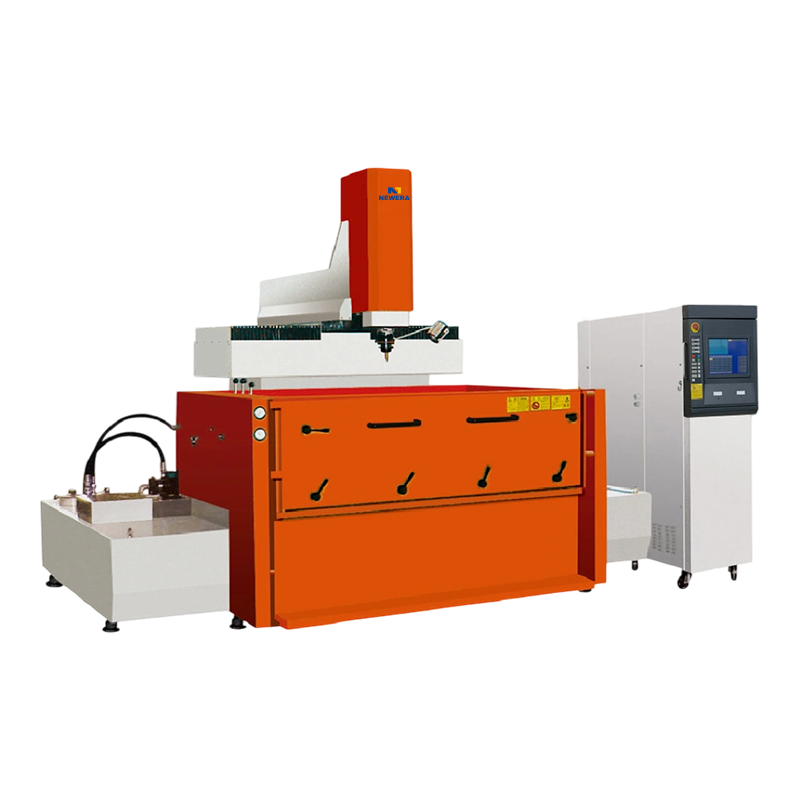
If you are interested in our products, please consult us.
CONTACT DETAILS
Nantong New Era Technology Co., LTD
- Five-star Industrial Park, Chongchuan District, Nantong City, Jiangsu Province, China
- TEL:+86-19851302688
- E-Mail: [email protected]
Products
Quick link
Mobile terminal
