

 русский
 عربى

Industry News
Home / News / Industry News / What Does EDM Stand For in Machining? Electrical Discharge Machining Explained
What Does EDM Stand For in Machining? Electrical Discharge Machining Explained
 2026.10.07
 Industry News
Harden a mold insert to 52 HRC and the milling cutter that shaped it in the soft state stops being an option. The corner radius is 0.3 mm, the rib is 40 mm deep, and the tool simply cannot reach into the cavity. That is the moment EDM enters the conversation.
EDM stands for electrical discharge machining. Nothing touches the workpiece. A shaped electrode and the workpiece sit in a tank of dielectric fluid, a pulsed voltage bridges the gap between them, and thousands of small sparks erode metal away one crater at a time. Because the cutting action is thermal rather than mechanical, material hardness stops being the limiting factor, which is why EDM is still the default process for mold cavities, hardened dies and any geometry a rotating cutter cannot reach.
Content
- 1 What Does EDM Stand For in Machining?
- 2 How Spark Erosion Removes Metal
- 3 The Main Types of EDM
- 4 What EDM Does Well, and Where It Falls Short
- 5 ZNC, PNC and CNC: What the Letters Mean on an EDM Machine
- 6 EDM Against Milling and Grinding: Choose by Geometry, Not Habit
- 7 What to Check Before You Buy an EDM
- 8 FAQ: EDM in Machining
- 8.1 Q1: What does EDM stand for in machining?
- 8.2 Q2: What is the difference between sinker EDM and wire EDM?
- 8.3 Q3: Can an EDM machine cut hardened steel?
- 8.4 Q4: What is the difference between ZNC, PNC and CNC EDM machines?
- 8.5 Q5: Is EDM an expensive machining process?
- 8.6 Q6: What materials can an EDM machine cut?
What Does EDM Stand For in Machining?
EDM is the abbreviation of electrical discharge machining. On older drawings and in shop-floor conversation you will also hear spark machining, spark erosion or spark eroding. Die sinking, sinker EDM, ram EDM and wire EDM are all sub-types of the same process family rather than competing technologies.
The method grew out of research in the 1940s, when controlled electrical erosion was developed into a practical machining process by the Soviet researchers B. R. Lazarenko and N. I. Lazarenko. What turned a laboratory effect into a production tool was servo control: the machine has to hold a gap measured in hundredths of a millimeter while hundreds or thousands of discharges occur every second.
Three conditions define every EDM operation:
- The workpiece must conduct electricity.
- An electrode shaped like the cavity you want must be available, or in wire EDM, a wire.
- The gap between electrode and workpiece must be flooded with clean dielectric fluid.
How Spark Erosion Removes Metal
A die-sinking EDM machine does not cut. It burns. The cycle repeats thousands of times per second:
- The servo head advances the electrode until the gap is small enough for the dielectric to break down.
- A discharge channel forms, current flows, and the plasma temperature at that single point exceeds the melting point of the workpiece.
- A small crater of molten and vaporized metal is ejected from the surface.
- The pulse ends, the dielectric quenches the crater, and the servo retracts slightly so fresh fluid can flush the debris away.
Because the electrode never touches the workpiece, there is no cutting force, no chatter and no tool deflection. That is why EDM can leave a sharp internal corner that a milling cutter, which always carries its own radius, can never produce.
Structure of a die-sinking EDM setup: a shaped electrode erodes a conductive workpiece while both are submerged in dielectric fluid.
The Main Types of EDM
EDM is a family of processes, and the electrode format is what separates the members. A die-sinking machine plunges a shaped electrode into a cavity, a wire machine runs a thin moving wire through a plate, and a small-hole machine uses a rotating tube.
| Type | Electrode | Best geometry | Typical work |
|---|---|---|---|
| Die-sinking (sinker, ram) EDM | Shaped graphite or copper | 3D cavities, sharp internal corners, deep ribs, blind details | Mold cavities, forging and extrusion dies |
| Wire EDM | Brass or coated wire, 0.1 to 0.3 mm | Through-thickness 2D profiles, tapers, tight tolerances | Punches, die plates, precision components |
| Small-hole EDM | Rotating tubular electrode | Start holes and cooling channels from 0.3 to 3 mm | Wire EDM start holes, turbine and injection parts |
If you are weighing the two most common options, the practical split is simple: blind cavities and three-dimensional detail go to a die-sinker, while through-profiles and tight-tolerance plates go to a wire machine. A closer look at sinker EDM and wire EDM shows where the two overlap and where they do not.
What EDM Does Well, and Where It Falls Short
The honest summary is that EDM buys capability with cycle time. Use it where geometry or material rules out conventional cutting.
Strengths
- Machines any conductive material regardless of hardness, including tool steel at 60 HRC, carbide, titanium and nickel alloys.
- No cutting force, so thin walls, slender ribs and delicate features survive the operation.
- Sharp internal corners and deep narrow slots that no rotating cutter can produce.
- Fine finishes with dedicated generator circuits, often in the micron range.
Limitations
- The workpiece must conduct electricity, so glass, plastics and most ceramics are out.
- Metal removal rates are lower than milling, so roughing large volumes is expensive.
- The process leaves a recast or white layer that may need removal on fatigue-critical parts.
- Electrodes wear and must be dressed or replaced, and dielectric fluid needs filtration and disposal management.
ZNC, PNC and CNC: What the Letters Mean on an EDM Machine
Machine labels on a die-sinking EDM use three acronyms. They describe how much of the machine is under numerical control, and that is the single biggest driver of price and of who can operate the machine.
Typical controlled-axis configuration by EDM machine class. Actual axis counts vary by builder and model.
ZNC: Z-axis numerical control
On a ZNC machine the Z axis, which is the electrode plunge, is servo-controlled, while X and Y are positioned by hand with handwheels and dials. These are the workhorses of straightforward mold and die work: quick to set up for one-off cavities and undemanding for the operator. A typical example is the 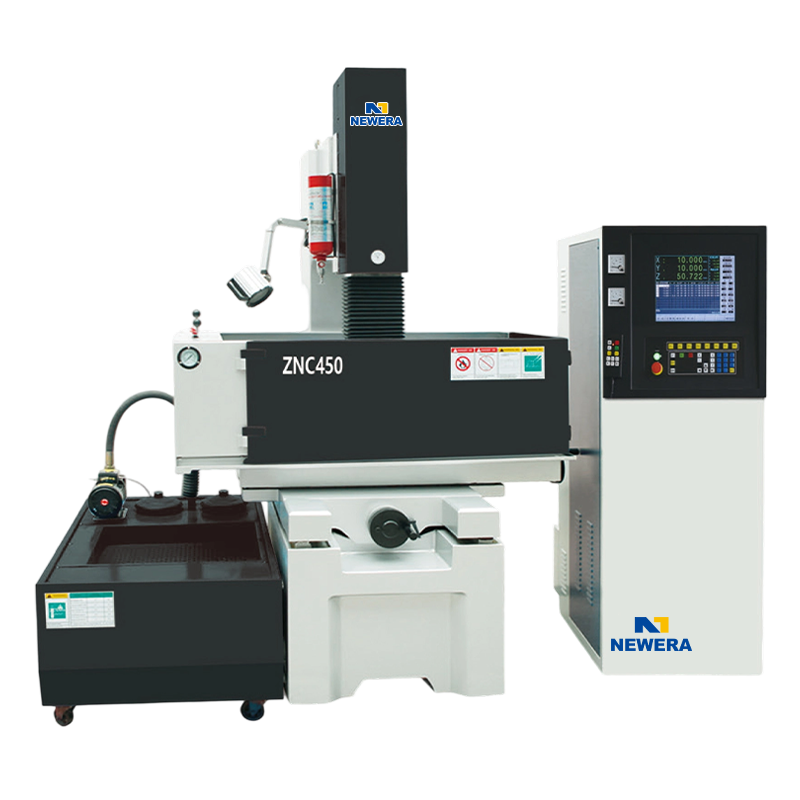 ZNC 450 EDM Die Sinking Machine/Sinker EDMOptional: EDM Control CabinetView Product → ZNC-450 class machine, sized for small and medium cavity work.
PNC: programmable numerical control
X, Y and Z are all programmable, so the machine positions the electrode automatically and runs multi-step programs. That covers multi-cavity molds and repetitive work where manual positioning would consume the shift. Machines in this class, such as the 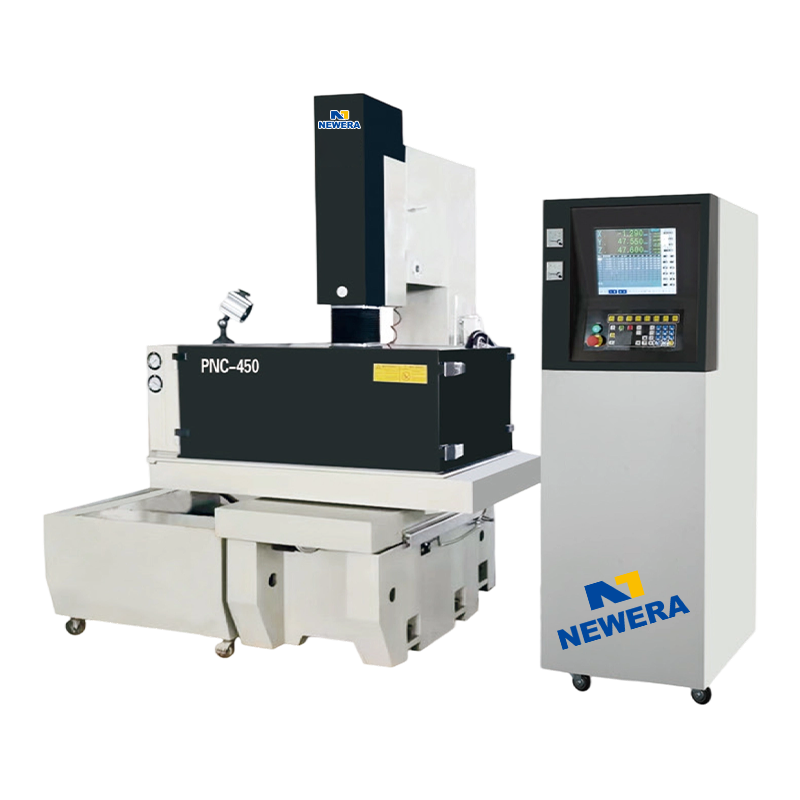 PNC 450 EDM Die Sinking Machine/Sinker EDMOptional: PNC Tungsten Steel Electric Box (DC)View Product → PNC-450, sit between the manual ZNC and the fully programmed CNC in both capability and price.
CNC: computer numerical control
Full CNC adds orbiting, multi-axis interpolation, stored programs and, on larger models, automatic electrode changing. It is the choice for complex three-dimensional cavities, unattended runs and shops that need repeatable results from one shift to the next. Larger work envelopes follow the same logic, which is why a  CNC 650 EDM Die Sinking Machine/Sinker EDMOptional: CNC Electrical Box (AC/Japan Panasonic servo motor)View Product → CNC-650 class machine is usually specified when both detailed cavities and bigger mold blocks have to run on one platform.
EDM Against Milling and Grinding: Choose by Geometry, Not Habit
Process selection usually comes down to three questions: how hard is the material, how deep and narrow is the feature, and how fine must the surface be? Milling wins on removal rate whenever a cutter can physically reach the geometry. Grinding wins when you need flatness and dimensional control on accessible surfaces. EDM wins when the geometry is unreachable or the material is already hardened.
0.5
0.8
0.6
1.6
Sinker EDMWire EDMGrindingCNC milling
Representative mid-range surface finish values in microns Ra from general machining references. Actual results depend on the machine, generator settings, tooling and workpiece material.
The practical consequence is a two-step workflow that most mold shops already run: mill the cavity soft, leaving a uniform stock allowance, then heat treat and finish with EDM. Skipping the EDM step means either accepting a cutter radius in the corner or paying for a smaller cutter and a much longer milling cycle.
What to Check Before You Buy an EDM
Specification sheets look alike; the differences show up in the work envelope and in how the machine behaves on a Friday afternoon. Ask for these numbers before comparing prices:
- Work tank dimensions and maximum workpiece weight, measured with the electrode holder and chuck in place.
- X, Y and Z travel, and whether Z stroke is enough for the electrode lengths you actually run.
- Generator output range, the finest surface finish it can reach, and how many programs can be stored.
- Electrode changer or magazine capacity, if unattended machining is part of the plan.
- Dielectric filtration, cooling and tank capacity, which drive both running cost and finish consistency.
- Spare parts availability and realistic service response time in your region.
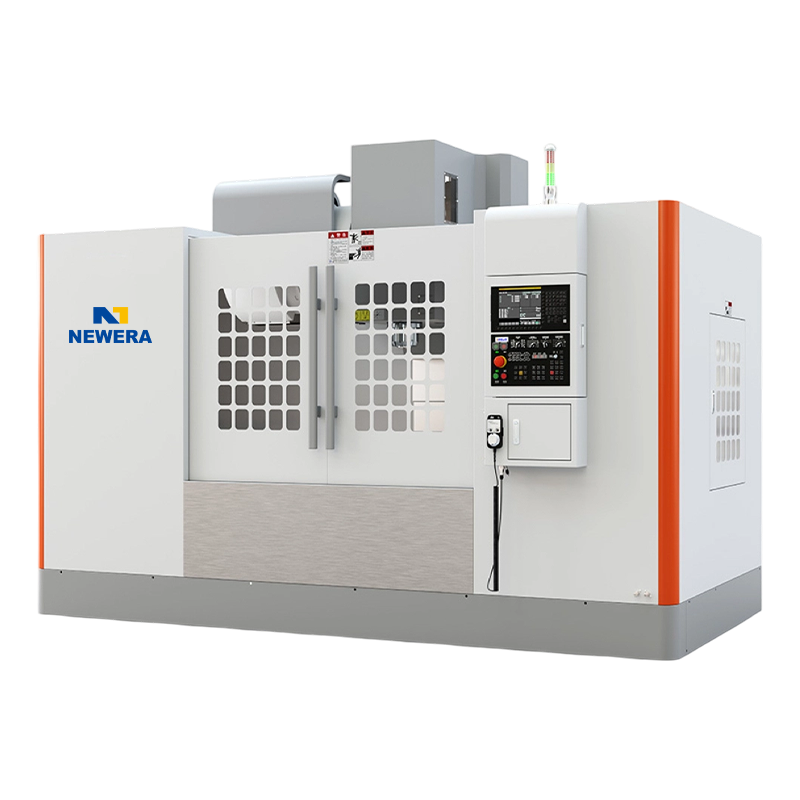
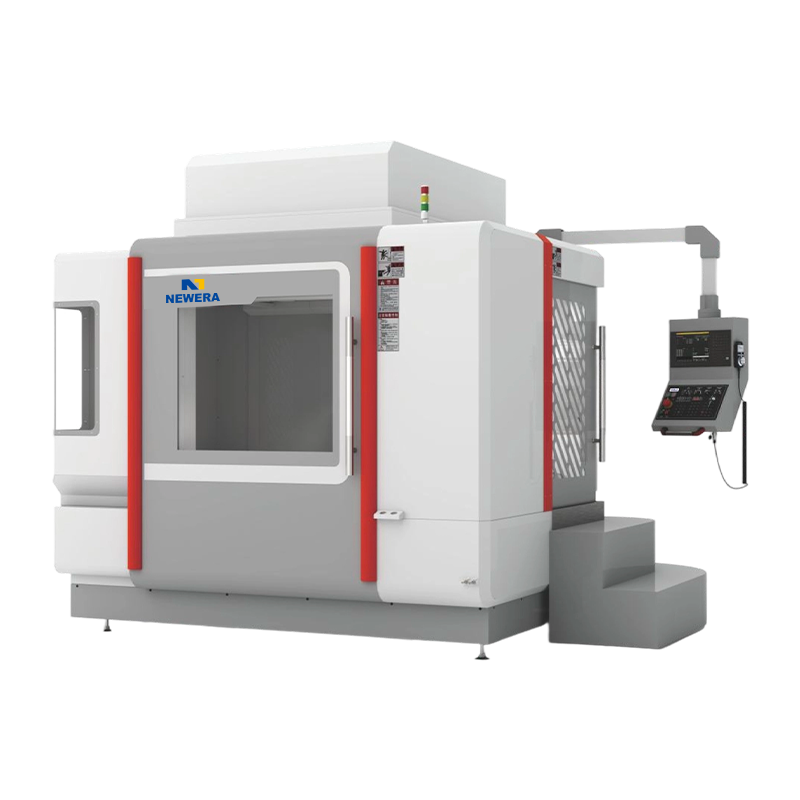
Nantong New Era Technology has been building CNC machine tools for more than 20 years and produces ZNC, PNC and CNC die-sinking machines from small cavity work up to large mold blocks, alongside vertical and horizontal machining centers, surface grinders and engraving machines. If you want to match models against your own part mix, it helps to start with the EDM die-sinking machine range and work outward from the largest cavity you expect to burn.
FAQ: EDM in Machining
Q1: What does EDM stand for in machining?
EDM stands for electrical discharge machining, also called spark machining or spark erosion. It removes metal with controlled electrical discharges between an electrode and a conductive workpiece submerged in dielectric fluid.
Q2: What is the difference between sinker EDM and wire EDM?
Sinker EDM uses a shaped graphite or copper electrode to burn a three-dimensional cavity. Wire EDM uses a thin moving wire to cut two-dimensional profiles through a plate, usually for punches and die plates.
Q3: Can an EDM machine cut hardened steel?
Yes. Because EDM cuts thermally rather than mechanically, it machines tool steel at 60 HRC, carbide, titanium and nickel alloys as readily as soft steel, provided the material conducts electricity.
Q4: What is the difference between ZNC, PNC and CNC EDM machines?
ZNC machines servo-control the Z axis with manual X and Y positioning. PNC machines add programmable X, Y and Z. CNC die-sinking machines add full programming, orbiting, extra axes and often automatic electrode changing.
Q5: Is EDM an expensive machining process?
The hourly rate is usually higher than milling because of electrode production, dielectric management and slower removal rates. It is still cost-effective where geometry rules out milling, such as deep ribs and sharp internal corners.
Q6: What materials can an EDM machine cut?
Any electrically conductive material, including hardened tool steel, stainless steel, carbide, titanium, Inconel, aluminum and copper. Plastics, glass and most technical ceramics cannot be EDM machined.
The three letters on the drawing tell you one thing above all: the part cannot be finished with a rotating cutter, either because the material is too hard or the geometry is too tight. Once that is clear, the remaining decisions are about the electrode, the control class and the work envelope, and those are questions any machine builder should be able to answer with real numbers rather than adjectives.
If you are interested in our products, please consult us.
CONTACT DETAILS
Nantong New Era Technology Co., LTD
- Five-star Industrial Park, Chongchuan District, Nantong City, Jiangsu Province, China
- TEL:+86-19851302688
- E-Mail: [email protected]
Products
Quick link
Mobile terminal
