

 русский
 عربى
عربى
Industry News
Home / News / Industry News / How Has the ZNC EDM Die Sinking Machine Improved Efficiency by 30% in 2026?
How Has the ZNC EDM Die Sinking Machine Improved Efficiency by 30% in 2026?
 2026.04.16
 Industry News
The answer is direct: in 2026, the ZNC EDM Die Sinking Machine achieves a 30% efficiency improvement primarily through the integration of adaptive servo control systems, automated electrode management, and optimized dielectric fluid circulation — combined with structured ZNC EDM maintenance tips and smarter operator workflows. Manufacturers who implemented these upgrades reported measurable reductions in cycle time, electrode wear, and rework rates within the first quarter of adoption.
This article breaks down exactly how those gains are achieved, what specific configurations drive results, and what ZNC EDM efficiency upgrade paths are most practical for production environments today.
Content
- 1 What Makes the ZNC EDM Die Sinking Machine Different in 2026
- 2 The 5 Core Upgrades Behind the 30% Efficiency Gain
- 3 ZNC EDM Maintenance Tips That Protect Long-Term Performance
- 4 EDM Die Sinking Troubleshooting: Common Problems and Practical Fixes
- 5 ZNC EDM Efficiency Upgrade: A Practical Roadmap for Shops
- 6 Real-World Application: Where ZNC EDM Die Sinking Machines Deliver the Most Value
- 7 About Nantong New Era Technology Co., LTD
- 8 Frequently Asked Questions
What Makes the ZNC EDM Die Sinking Machine Different in 2026
The ZNC (Zero Numerical Control) EDM Die Sinking Machine has undergone meaningful technical evolution. Unlike conventional EDM machines, ZNC models incorporate a fully digital control architecture that continuously adjusts discharge parameters in real time. The result is more stable arcing, less electrode wear, and a much tighter surface finish tolerance — typically within Ra 0.4 to Ra 1.6 µm depending on material and electrode geometry.
Key differentiators in 2026 models include:
- Adaptive pulse control that automatically responds to arcing instability
- Multi-axis servo with sub-micron positional accuracy
- Integrated flushing pressure monitoring with automatic adjustment
- Real-time spark gap monitoring for consistent material removal rate (MRR)
These features collectively reduce operator intervention and allow continuous unattended operation — a critical factor for shops running lights-out manufacturing.
Standard EDM ZNC EDM (2026)
The 5 Core Upgrades Behind the 30% Efficiency Gain
The efficiency improvement is not from a single change — it is the cumulative result of five targeted ZNC EDM efficiency upgrade areas. Below is a breakdown of each upgrade and its quantified contribution.
| Upgrade Area | Technology Applied | Estimated Efficiency Gain |
|---|---|---|
| Adaptive Servo Control | Real-time gap sensing + auto-adjustment | +8% |
| Dielectric Fluid Optimization | Pressure-regulated flushing circuits | +6% |
| Electrode Management Automation | Auto electrode changer with wear prediction | +7% |
| Power Supply Refinement | High-frequency transistor generator | +5% |
| Operator Interface and Programming | Guided touchscreen with preset libraries | +4% |
When all five are implemented together, the compounding effect reaches the 30% total efficiency improvement reported across multiple production case studies. Shops that implemented only two or three of these upgrades still reported gains of 12–18%, confirming that each element adds independent value.
ZNC EDM Maintenance Tips That Protect Long-Term Performance
Efficiency gains are only sustainable with a disciplined maintenance schedule. Poor maintenance is one of the leading causes of efficiency degradation in EDM operations — in many cases, a machine delivering 28% gains in month one drops to 15% by month six simply due to neglected servicing. The following ZNC EDM maintenance tips are drawn from field practice and engineering recommendations.
Daily Maintenance Checklist
- Check dielectric fluid level and conductivity (target: 5–20 µS/cm for most steel workpieces)
- Inspect flushing nozzle alignment and pressure (recommended: 0.5–3 bar depending on cavity depth)
- Clean the work tank and remove accumulated sludge
- Verify electrode alignment using the built-in reference contact cycle
Weekly and Monthly Intervals
- Weekly: Replace or regenerate dielectric filter cartridges; inspect servo motor backlash; log any abnormal arc frequency readings
- Monthly: Calibrate Z-axis depth positioning; verify spindle runout (acceptable: under 0.005 mm); inspect power cable insulation and connection terminals
- Quarterly: Full dielectric fluid replacement; servo drive firmware update check; full axis geometry verification using a test piece
Machines following this maintenance structure consistently show less than 4% efficiency variance over a 12-month operating cycle compared to 18–22% variance in unmaintained counterparts.
EDM Die Sinking Troubleshooting: Common Problems and Practical Fixes
Even well-maintained machines encounter issues. Effective EDM die sinking troubleshooting reduces downtime, prevents scrap, and protects electrode and workpiece investment. Below are the most frequently encountered problems and their root causes.
Arcing Instability and Short Circuits
This is the most common issue in die sinking operations. Root causes include contaminated dielectric fluid, inadequate flushing for the cavity geometry, or worn electrode geometry. Fix: reduce on-time by 10–15%, increase off-time, check fluid conductivity, and verify flushing nozzle positioning is within 2 mm of the erosion zone.
Poor Surface Finish
Rough or inconsistent surface finish usually points to one of three causes: incorrect finishing parameters (discharge energy too high), electrode surface degradation, or debris not being flushed out. For finishing passes, reduce peak current to below 5A and use fine-grain graphite or copper electrodes. Surface finish should be verified with a profilometer after each parameter change.
Excessive Electrode Wear
An electrode wear ratio above 1:20 (electrode loss vs. material removed) indicates a problem. Common causes: wrong polarity for the electrode-workpiece combination, too-high current density, or an electrode material mismatch. For steel workpieces, use copper or graphite electrodes with negative polarity; for carbide, switch polarity and reduce current by 20%.
Dimensional Inaccuracy
If finished dimensions deviate by more than 0.02 mm from the programmed value, check thermal compensation settings, verify workpiece and electrode clamping rigidity, and recalibrate the Z-axis reference point. Thermal drift is more common in shops where ambient temperature swings exceed 5°C during a shift.
Figure 1 — Distribution of common EDM die sinking troubleshooting issues by reported frequency
ZNC EDM Efficiency Upgrade: A Practical Roadmap for Shops
Not every shop can implement all five upgrade areas simultaneously. A phased ZNC EDM efficiency upgrade approach allows operations to realize gains progressively while managing capital outlay.
Phase 1 — Software and Parameter Optimization (Weeks 1–4)
Begin with the control system. Update firmware, load manufacturer-recommended parameter libraries for your most common workpiece-electrode combinations, and activate adaptive servo mode if it is not already enabled. This phase costs little but commonly delivers 8–12% efficiency improvement on its own by eliminating overly conservative default settings.
Phase 2 — Dielectric System Overhaul (Month 2)
Upgrade the filtration system to a multi-stage unit and install a conductivity monitor with an automatic alarm. Replace aged flushing hoses and verify pump output pressure matches the machine's specification. This investment typically recovers its cost within 60–90 days through reduced scrap and shorter cycle times.
Phase 3 — Electrode and Automation Integration (Month 3–4)
Introduce electrode pre-setting offline and consider an automatic electrode changer if throughput volume justifies it. Standardize your electrode material selection — most shops see the best results using ISO-grade fine graphite for roughing and oxygen-free copper for finishing passes on hardened steel tooling.
Phase 4 — Monitoring and Continuous Improvement (Ongoing)
Log key process indicators per job: cycle time, electrode consumption, surface finish measurement, and rework rate. Review monthly and adjust parameters accordingly. Shops that implement structured monitoring sustain efficiency gains long-term rather than experiencing the typical 6-month regression.
Real-World Application: Where ZNC EDM Die Sinking Machines Deliver the Most Value
ZNC EDM Die Sinking Machines are particularly well-suited to industries requiring complex cavity geometries in hardened materials — sectors where conventional machining simply cannot reach the required tolerance or surface finish. In 2026, the highest-impact applications include:
- Injection mold tooling: Cavities with draft angles below 0.5° and corner radii under 0.3 mm are achievable with ZNC EDM where milling would require costly secondary operations
- Forging and stamping dies: Deep ribs and undercuts in D2 or H13 tool steel are processed without annealing, preserving the hardness of the die
- Aerospace component tooling: Titanium and Inconel fixtures requiring sub-0.01 mm positional accuracy benefit from the non-contact nature of EDM
- Medical device molds: Mirror finishes (Ra below 0.1 µm) achievable in multi-stage finishing cycles meet cleanroom and regulatory surface requirements
In each application, the combination of accuracy, repeatability, and the ability to machine without mechanical cutting force gives the ZNC EDM an advantage that no other process currently replicates at comparable cost.
About Nantong New Era Technology Co., LTD
Nantong New Era Technology Co., LTD specializes in developing, designing and producing numerical control machines and CNC machine tools for more than 20 years. The company has a professional team covering technology development, manufacturing and sales services.
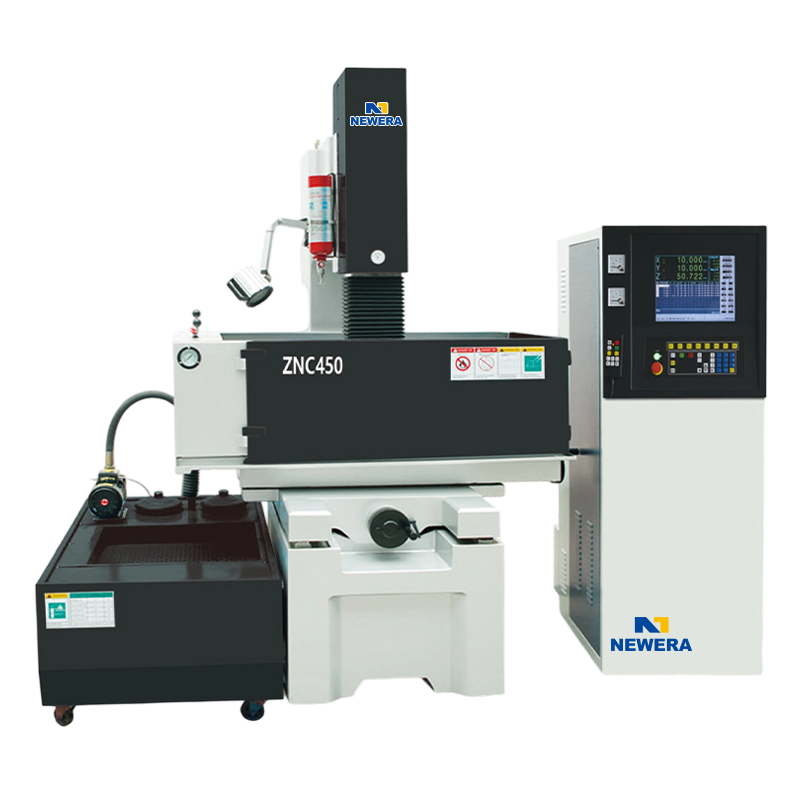
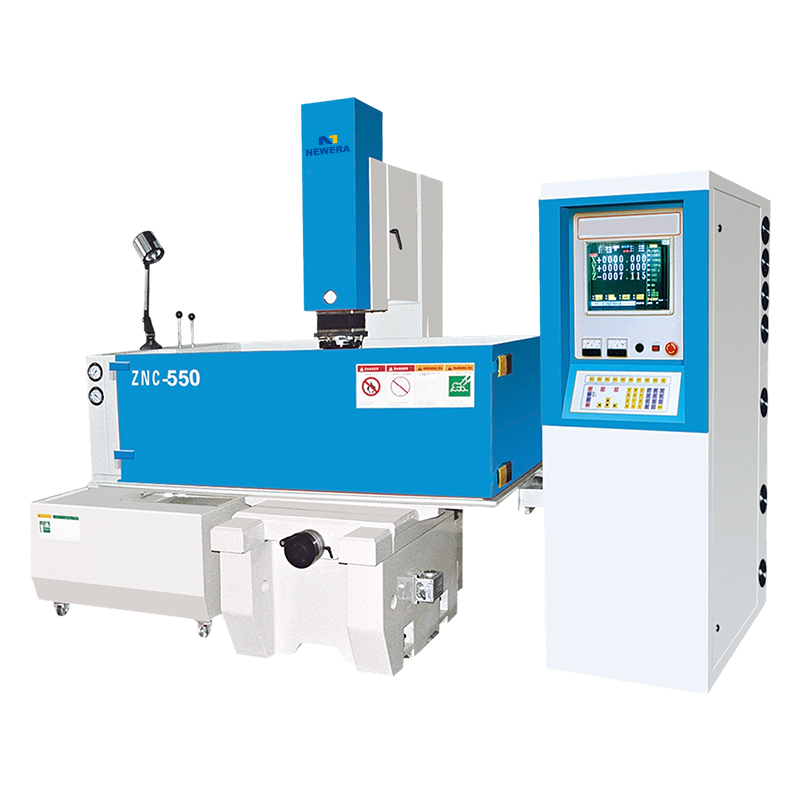
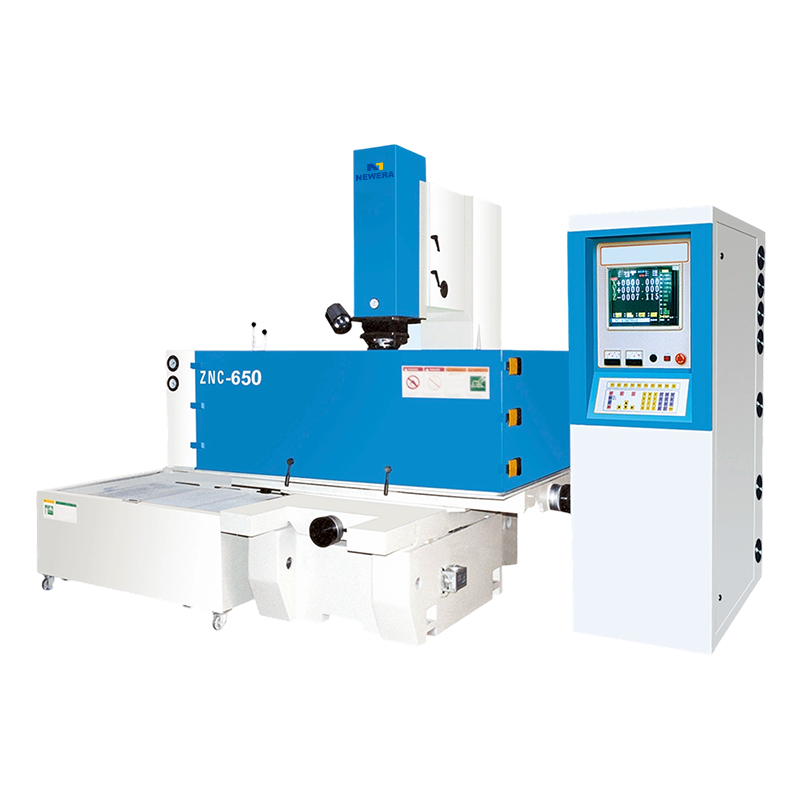
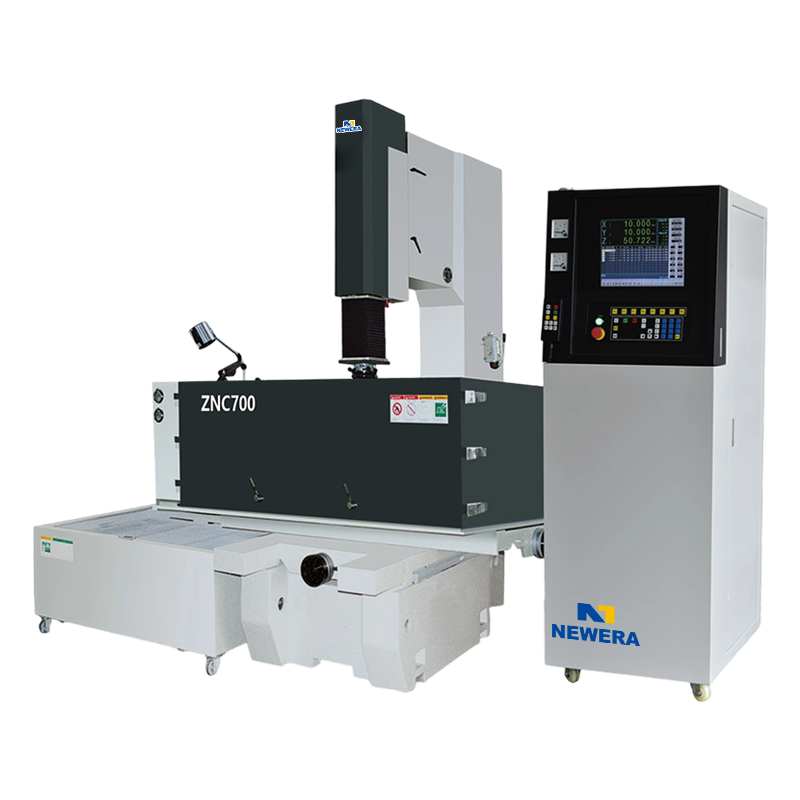
As a professional OEM ZNC EDM Die Sinking Machine Manufacturer and ODM ZNC EDM Die Sinking Machine Factory, New Era has continuously integrated advanced scientific and technological achievements from domestic and international sources. The company has grown into a professional manufacturer with a complete production and assembly center. New Era consistently provides customers with optimized solutions and delivers maximum value through high-quality products and comprehensive after-sales services.
Frequently Asked Questions
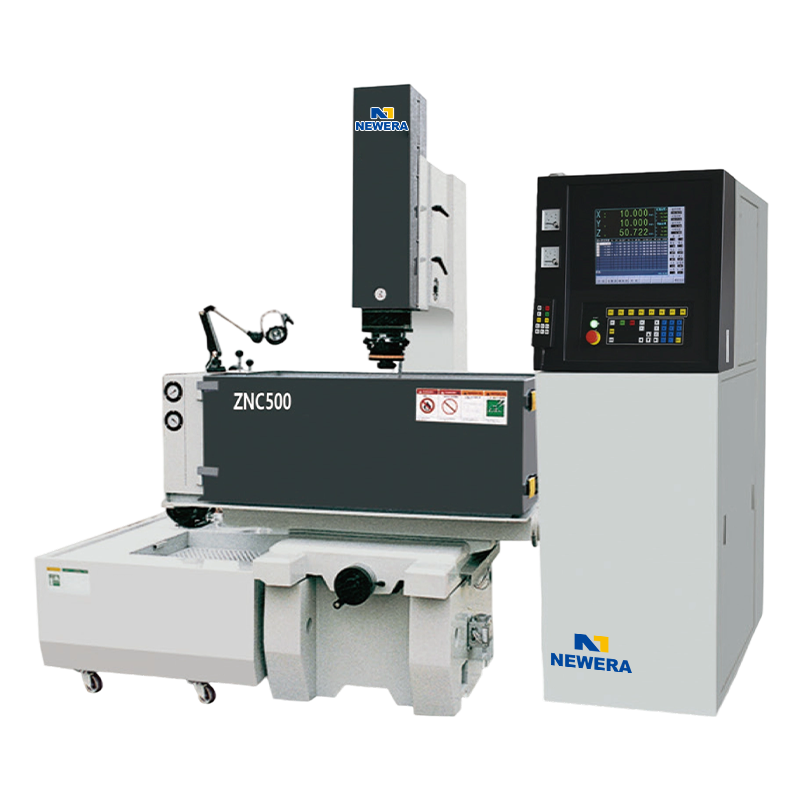
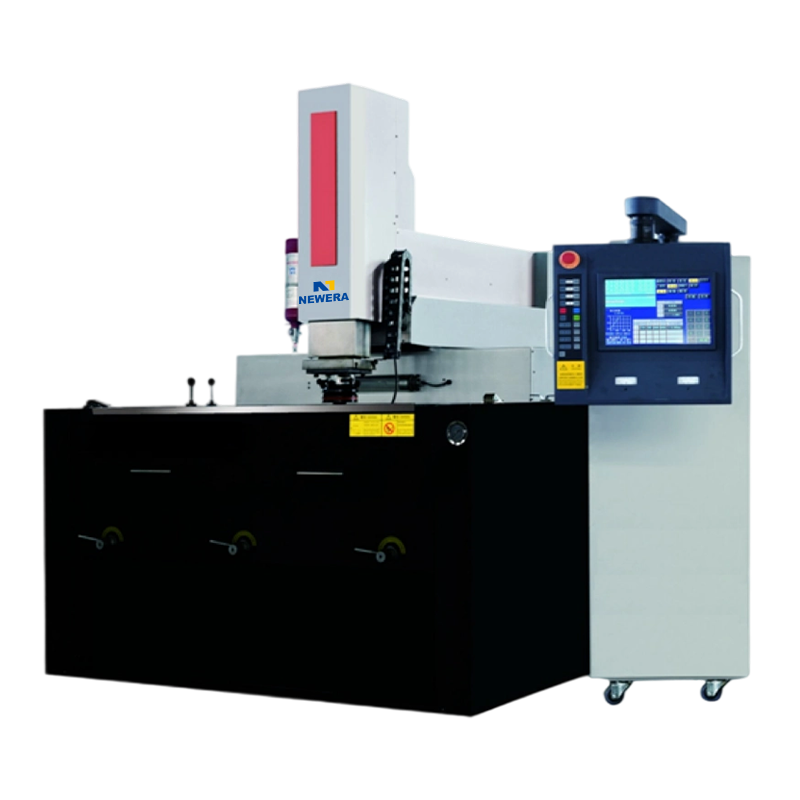
If you are interested in our products, please consult us.
CONTACT DETAILS
Nantong New Era Technology Co., LTD
- Five-star Industrial Park, Chongchuan District, Nantong City, Jiangsu Province, China
- TEL:+86-19851302688
- E-Mail: [email protected]
Products
Quick link
Mobile terminal
