

 русский
 عربى
عربى
Industry News
5 Key Features to Look for in a ZNC EDM Die Sinking Machine
 2026.04.23
 Industry News
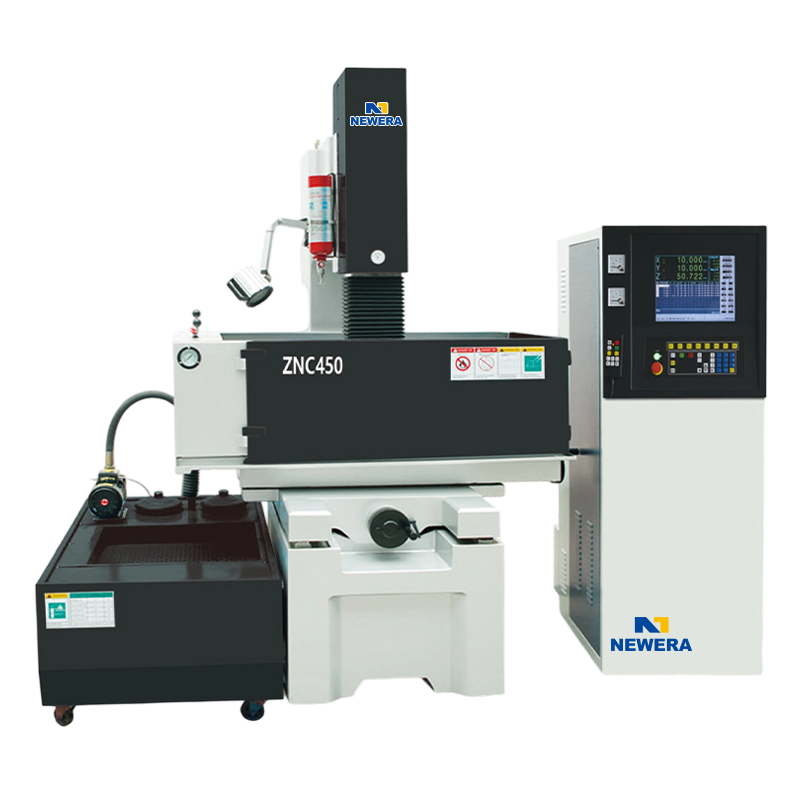
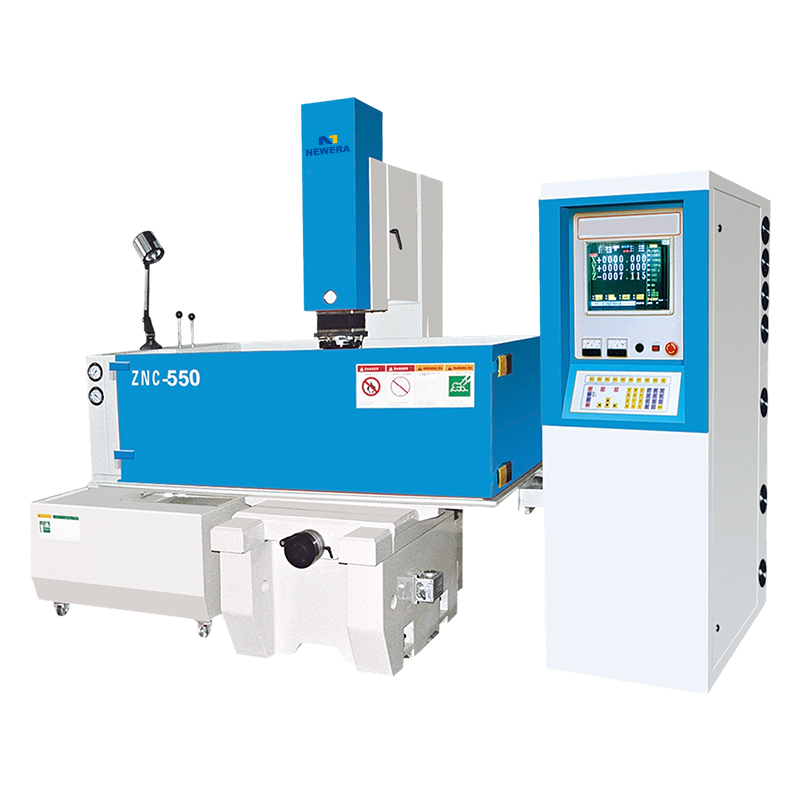
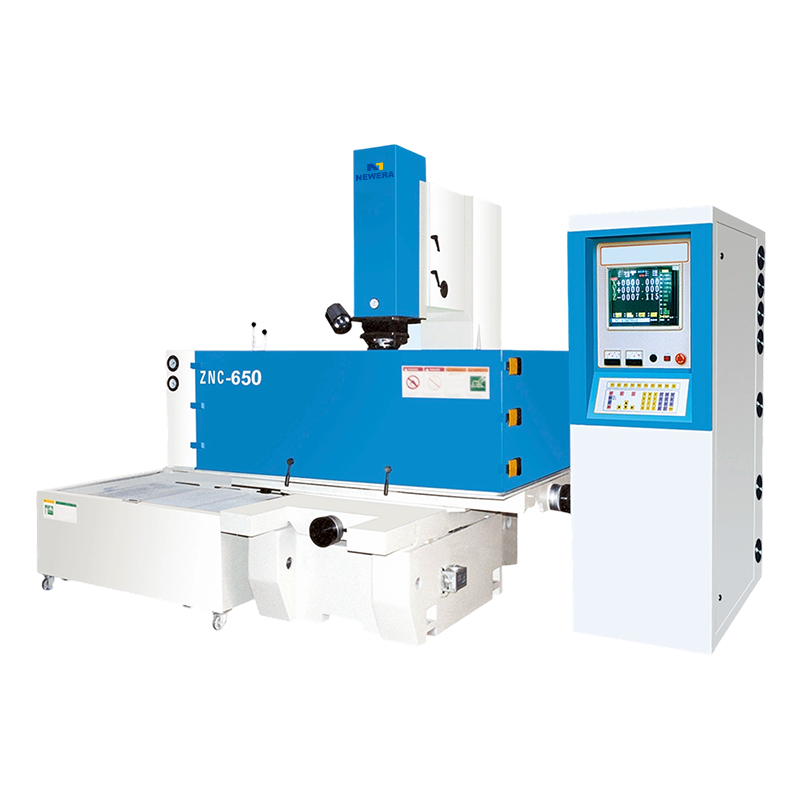
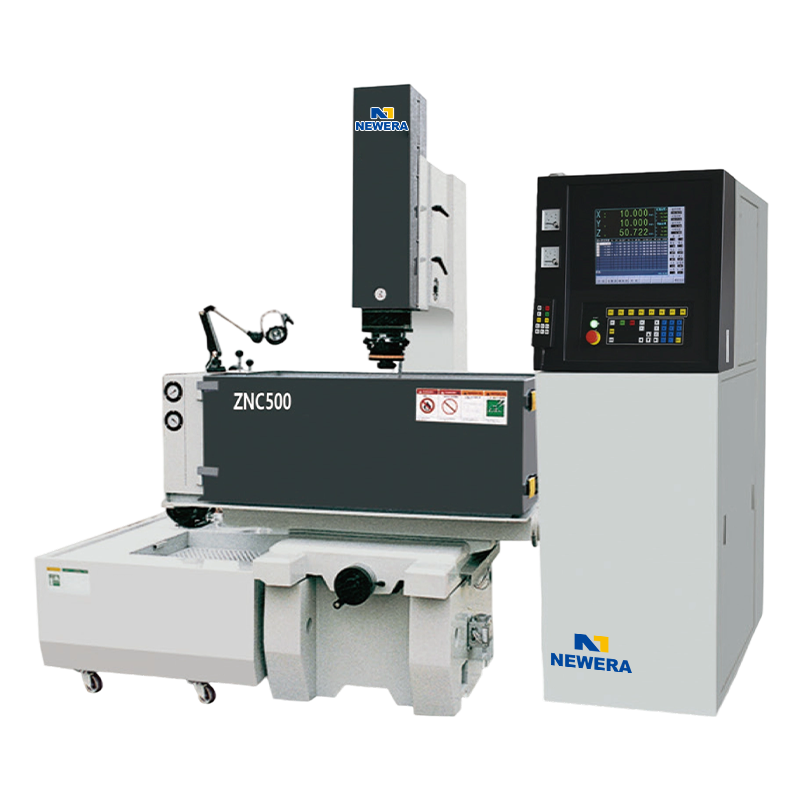
When selecting a ZNC EDM Die Sinking Machine for precision toolmaking or mold manufacturing, five features make the difference between a machine that meets production targets and one that creates constant bottlenecks: control system sophistication, power generator stability, axis positioning accuracy, dielectric fluid management, and electrode wear performance. Understanding each of these before purchasing will save significant rework costs and downtime over the machine's operational life. This article breaks down what to look for in each area — with practical benchmarks you can use to evaluate any precision die sinker on the market.
Content
- 1 Control System: The Intelligence Behind Every Spark
- 2 Power Generator Stability Determines Surface Quality and Speed
- 3 Axis Positioning Accuracy: Where Tolerances Are Won or Lost
- 4 Dielectric Fluid System: Flushing Efficiency Drives Consistent Results
- 5 Electrode Wear Performance: The Metric That Determines True Operating Cost
- 6 Comparing ZNC EDM Die Sinking vs Wire Cut EDM: Choosing the Right Process
- 7 About Nantong New Era Technology Co., Ltd.
- 8 Frequently Asked Questions
Control System: The Intelligence Behind Every Spark
The control system is the most consequential component in any CNC EDM machine. A modern ZNC (Zero Numerical Control) or full CNC controller should offer adaptive discharge control — meaning the machine automatically adjusts pulse parameters in real time based on gap conditions between the electrode and workpiece. Without adaptive control, unstable arcing can increase electrode wear by 30–50% and degrade surface finish from Ra 0.4 to Ra 1.6 or worse.
Look for controllers that provide multi-axis simultaneous interpolation (at minimum X, Y, Z, and C-axis), on-screen machining parameter libraries for common materials, and real-time gap monitoring with automatic anti-arc protection. User interface clarity matters too — operators should be able to call up machining programs, adjust orbital strategies, and monitor process status without navigating through excessive menu layers.
- Adaptive pulse control reduces unstable discharge events by up to 40%
- Multi-axis interpolation enables complex cavity profiles in a single setup
- Built-in material and electrode parameter libraries shorten programming time significantly
- Anti-arc protection circuits prevent workpiece damage during unattended overnight runs
Power Generator Stability Determines Surface Quality and Speed
The pulse power generator is the energy source that drives every erosion spark in a precision die sinker. Generator quality directly determines achievable surface roughness, material removal rate (MRR), and electrode wear ratio. A high-performance generator on a professional ZNC EDM Die Sinking Machine typically delivers a peak current range of 1–80A, pulse-on time from 0.5 to 3,000 microseconds, and can achieve surface finishes as fine as Ra 0.1 in finishing mode.
Transistor-controlled MOSFET generators have largely replaced older thyristor designs because they respond faster to gap condition changes, produce more consistent discharge energy, and allow finer incremental control over pulse parameters. When comparing machines, ask for documented MRR data at both roughing and finishing settings — this reveals actual generator capability rather than theoretical specifications.
| Machining Mode | Typical MRR (mm³/min) | Surface Finish (Ra) | Electrode Wear Ratio |
|---|---|---|---|
| Roughing | 300–500 | Ra 3.2–6.3 | 0.5–1.0% |
| Semi-finishing | 80–200 | Ra 0.8–3.2 | 0.1–0.5% |
| Finishing | 5–30 | Ra 0.1–0.8 | 0.01–0.1% |
Axis Positioning Accuracy: Where Tolerances Are Won or Lost
Positioning accuracy and repeatability are non-negotiable for any operation running tight-tolerance mold cavities or precision dies. For serious toolroom applications, look for positioning accuracy of ±0.002 mm or better, with repeatability of ±0.001 mm on all linear axes. These figures should be verified against a recognized standard such as ISO 230-2 rather than accepted at face value from a datasheet.
The mechanical quality of the machine's ballscrews, linear guides, and spindle bearings underpins these figures. Machines using pre-loaded precision ballscrews with backlash compensation and hardened, ground linear guideways maintain accuracy far longer than those relying on conventional box-way designs without preload. For orbital EDM strategies — where the electrode traces a programmed path offset from the programmed cavity — accuracy in the X-Y plane directly translates to cavity geometry and corner radii precision.
Dielectric Fluid System: Flushing Efficiency Drives Consistent Results
The dielectric fluid system — responsible for flushing eroded particles from the machining gap, cooling the workpiece and electrode, and restoring insulation between discharges — is frequently underestimated as a differentiating factor between EDM machines. Inadequate flushing is the leading cause of surface contamination, secondary arcing, and inconsistent cavity depth in die sinking EDM operations.
A well-designed dielectric system on a professional ZNC EDM Die Sinking Machine will include pressure-regulated jet flushing (typically 0–3 bar adjustable), suction flushing capability, a high-capacity filtration unit with replaceable paper filter elements rated to 5–10 microns, and a fluid temperature control system that maintains the dielectric within ±1°C of the target temperature. Temperature stability is particularly important for precision work — a 5°C variation in dielectric temperature can cause workpiece thermal expansion that shifts dimensional results by several microns.
- Jet flushing pressure range: 0–3 bar, adjustable per application
- Filtration rating: 5–10 microns to prevent gap contamination
- Temperature control: ±1°C stability for dimensional consistency
- Tank capacity: sized to maintain adequate fluid volume during deep-cavity work
Electrode Wear Performance: The Metric That Determines True Operating Cost
Electrode wear is not a fixed characteristic of a machine — it is the outcome of generator design, pulse strategy, and the machine's ability to apply low-wear conditions accurately. However, the machine's generator and control system have a substantial influence over achievable wear ratios. A high-quality precision die sinker using graphite electrodes in steel should achieve a volumetric electrode wear ratio below 0.5% in finishing mode, meaning less than 0.5 mm³ of electrode is consumed for every 100 mm³ of workpiece material removed.
When comparing machines, request electrode wear data for your specific electrode material (graphite, copper, or copper-tungsten) and workpiece material (tool steel, carbide, titanium). Machines with intelligent wear compensation — where the controller automatically adjusts Z-axis feed to account for real-time electrode length loss — maintain cavity depth accuracy even during long unattended runs, which is especially relevant when comparing die sinking EDM to wire cut EDM for through-profile applications.
Comparing ZNC EDM Die Sinking vs Wire Cut EDM: Choosing the Right Process
Many toolrooms operate both die sinking and wire cut EDM processes, and understanding where each excels prevents costly process misassignment. A ZNC EDM Die Sinking Machine is the correct choice for blind cavities, 3D profiled molds, and complex electrode-driven geometry — applications where wire cut EDM cannot reach or cannot maintain the required taper control. Wire cut EDM, by contrast, is superior for through-profiles, punches, and extrusion dies where a continuous wire path can define the entire workpiece contour.
| Criteria | ZNC EDM Die Sinking | Wire Cut EDM |
|---|---|---|
| Blind cavity machining | Excellent | Not possible |
| Through-profile cutting | Limited | Excellent |
| Surface finish (Ra) | Ra 0.1–6.3 | Ra 0.1–1.6 |
| 3D complex geometry | High capability | 2.5D limited |
| Tooling cost (electrode) | Moderate | Low (wire) |
About Nantong New Era Technology Co., Ltd.
Nantong New Era Technology Co., Ltd. specializes in developing, designing, and producing numerical control machines and CNC machine tools for more than 20 years. The company maintains a professional team spanning technology development, manufacturing, and sales services — ensuring that customers receive both capable equipment and knowledgeable support throughout the machine's service life.
As a professional OEM ZNC EDM Die Sinking Machine Manufacturer and ODM ZNC EDM Die Sinking Machine Factory, New Era has continuously absorbed advanced scientific and technological achievements from both domestic and international sources. The company has developed into a professional manufacturer with a complete production and assembly center, capable of delivering customized solutions across the full range of EDM die sinking and CNC machining requirements.
New Era's commitment is straightforward: provide customers with the best solutions and create maximum value through high-quality products and comprehensive after-sales service. Whether supplying standard production machines or developing application-specific configurations for demanding toolroom environments, the company applies the same standard of engineering rigor to every unit shipped.
Frequently Asked Questions
If you are interested in our products, please consult us.
CONTACT DETAILS
Nantong New Era Technology Co., LTD
- Five-star Industrial Park, Chongchuan District, Nantong City, Jiangsu Province, China
- TEL:+86-19851302688
- E-Mail: [email protected]
Products
Quick link
Mobile terminal
