

 русский
 عربى
عربى
Industry News
Home / News / Industry News / How Does a CNC EDM Die Sinking Machine Increase Mold Precision by 50%?
How Does a CNC EDM Die Sinking Machine Increase Mold Precision by 50%?
 2026.04.30
 Industry News
The direct answer: a CNC EDM die sinking machine achieves up to 50% improvement in mold precision by eliminating mechanical cutting forces, enabling sub-micron electrode positioning, and maintaining dimensional tolerances as tight as ±0.002 mm — levels that conventional milling simply cannot reach on hardened tool steel. For manufacturers producing complex injection molds, die-casting dies, or precision stamping tools, this translates into fewer rework cycles, tighter part tolerances, and significantly longer mold service life.
This article breaks down exactly how that precision gain is achieved, which process parameters matter most, and what to look for when selecting a high accuracy EDM die sinker machine for your production environment.
Content
- 1 The Core Mechanism: How EDM Die Sinking Removes Material
- 2 How CNC Control Multiplies Precision Beyond Manual EDM
- 3 Key Parameters That Determine Mold Precision in EDM
- 4 Precision Gains Compared to Conventional Mold Machining
- 5 Electrode Design and Material Selection Drive Results
- 6 Industry Applications Where Precision Gains Are Most Critical
- 7 What to Evaluate When Selecting a CNC EDM Die Sinking Machine
- 8 About Nantong New Era Technology Co., Ltd.
- 9 Frequently Asked Questions
The Core Mechanism: How EDM Die Sinking Removes Material
Unlike conventional cutting, a CNC EDM mold making machine removes material through controlled electrical discharge — essentially, precisely timed sparks between a shaped electrode and the workpiece, submerged in dielectric fluid. Each discharge erodes a microscopic amount of material from both the electrode and the workpiece surface, with no physical contact and therefore no cutting forces.
This contact-free process has three immediate precision advantages:
- No tool deflection — the electrode never bends under cutting load, so the cavity geometry is faithfully reproduced regardless of depth
- No burr formation — the thermal erosion process produces clean edges without the mechanical tearing that creates burrs in milled surfaces
- Works on fully hardened steel — hardness up to 70 HRC does not affect EDM machinability, eliminating the distortion caused by post-hardening machining
In practice, shops using die sinking EDM for precision molds report that their first-article acceptance rate on complex cavities improves from a typical 60–70% (with conventional machining) to over 90–95% — a direct consequence of the process's inherent dimensional stability.
How CNC Control Multiplies Precision Beyond Manual EDM
The "CNC" element is what transforms a basic EDM sinker into a production-grade precision tool. Manual EDM required skilled operators to set gap parameters, adjust servo feed rates, and manage flushing manually — introducing human variability at every stage. A modern CNC EDM die sinking machine automates all of these variables through closed-loop digital control.
Adaptive Servo Control
The servo system continuously monitors the discharge gap — typically maintained at 0.01–0.05 mm — and adjusts electrode feed in real time to prevent short circuits and maintain optimal spark conditions. This means the machine is self-correcting thousands of times per second, producing a consistent material removal rate regardless of workpiece geometry complexity.
Automated Orbit and Planetary Motion
CNC control enables orbital electrode movement — circular, helical, or planetary paths — which distributes wear evenly across the electrode and improves cavity wall straightness. This technique alone can improve side-wall accuracy by 15–25% compared to straight plunge EDM, which is why it's standard on any high accuracy EDM die sinker machine used for production mold work.
Multi-Stage Finishing Sequences
Modern CNC EDM systems execute roughing, semi-finishing, and finishing passes automatically, each with progressively finer discharge energy settings. The finishing pass typically uses discharge energies below 1 µJ, achieving surface roughness values of Ra 0.1–0.4 µm — mirror-quality surfaces without manual polishing on many mold applications.
Key Parameters That Determine Mold Precision in EDM
Understanding which process parameters drive precision outcomes helps you configure your CNC EDM mold making machine correctly and diagnose issues when tolerances drift. The following are the most influential variables:
| Parameter | Typical Range | Effect on Precision | Operator Priority |
|---|---|---|---|
| Discharge Energy (µJ) | 0.1 – 10,000 | Lower energy = finer surface, tighter tolerance | High |
| Pulse Duration (µs) | 0.1 – 3,000 | Short pulses reduce heat-affected zone depth | High |
| Electrode Gap (mm) | 0.01 – 0.05 | Tighter gap = higher geometric accuracy | Critical |
| Dielectric Flushing Pressure | 0.1 – 1.5 bar | Consistent flushing prevents debris re-deposition | Medium |
| Electrode Material | Copper / Graphite | Graphite = better wear ratio; Copper = finer finish | Application-specific |
Of these, electrode gap control is the most direct driver of dimensional accuracy. A gap variation of just 0.005 mm translates directly into cavity size error — which is why premium CNC systems use high-resolution linear encoders with 0.1 µm feedback resolution to maintain gap stability throughout the entire machining cycle.
Precision Gains Compared to Conventional Mold Machining
The 50% precision improvement claim is not theoretical — it is consistently documented across industries using die sinking EDM for precision molds. Here is how the numbers compare across critical mold-making metrics:
Dimensional Accuracy: CNC EDM vs. Conventional CNC Milling (Achievable Tolerance, µm)
Cavity Dimensional Tolerance
CNC EDM
±2 µm
CNC Milling
±5–8 µm
Surface Roughness (Ra)
CNC EDM
0.1–0.4 µm
CNC Milling
0.8–3.2 µm
Corner Radius Achievable
CNC EDM
<0.05 mm
CNC Milling
0.3–0.8 mm
Comparative data based on production mold-making benchmarks across hardened tool steel (HRC 48–62)
The corner radius advantage is particularly significant for thin-wall injection molds and multi-cavity dies, where sharp internal corners are functionally required but impossible to achieve with rotary cutting tools.
Electrode Design and Material Selection Drive Results
The electrode is a precision tool in itself — its dimensional accuracy directly determines cavity accuracy. For die sinking EDM for precision molds, electrode quality is non-negotiable.
Graphite Electrodes
Graphite is the dominant electrode material in modern mold shops, favored for its 3–5x lower wear ratio compared to copper in roughing applications, machinability with high-speed CNC mills, and thermal stability at high discharge energies. Fine-grain graphite grades (grain size below 5 µm) are used for finishing work where Ra values below 0.4 µm are required.
Copper Electrodes
Copper electrodes remain preferred for ultra-fine finishing passes and applications requiring the best possible surface quality. Copper's higher density results in more consistent discharge characteristics at low energy levels, achieving Ra values as low as 0.05 µm in mirror-finish EDM applications used in optical mold production.
A practical workflow used by precision mold shops: rough and semi-finish with a single graphite electrode (accepting 0.5–1% wear), then switch to a copper electrode for the final finishing pass to achieve the target surface quality without recutting the cavity geometry.
Industry Applications Where Precision Gains Are Most Critical
A high accuracy EDM die sinker machine delivers its greatest value in applications where conventional machining reaches its geometric or material limits. The following sectors rely on EDM die sinking as a core production process:
- Injection mold production — complex core and cavity geometries in P20, H13, or S136 steel, where feature tolerances of ±0.005 mm or tighter are standard requirements
- Die-casting tooling — high-pressure aluminum and zinc die molds requiring textured cavity surfaces and precise runner geometries that only EDM can produce consistently
- Stamping and forging dies — hardened D2 or M2 tool steel dies where EDM eliminates post-hardening distortion and ensures punch-to-die clearances within ±0.003 mm
- Medical device molds — micro-cavity molds for surgical instruments and implants requiring Ra below 0.2 µm and zero-burr edges for biocompatibility
- Aerospace components — turbine blade casting dies and fuel system component molds where material hardness exceeds the practical limits of cutting tool life
CNC EDM Adoption Growth by Industry Sector (2020–2025, Relative Index)
Relative adoption index based on industry procurement and installation data
What to Evaluate When Selecting a CNC EDM Die Sinking Machine
Not all EDM sinkers are configured equally. When specifying a CNC EDM mold making machine for precision work, evaluate these technical criteria carefully:
- Linear encoder resolution — look for 0.1 µm or better on all axes; lower resolution directly limits repeatable positioning accuracy
- Generator technology — ISO pulse generators with independent pulse control on each discharge cycle produce more consistent craters and finer finishes than older RC circuit designs
- Dielectric temperature control — thermal expansion errors in large mold cavities can exceed 0.01 mm when dielectric temperature varies by more than 2°C; a temperature-controlled dielectric unit is essential for work held to ±0.005 mm
- Table load capacity and rigidity — match table capacity to your largest anticipated workpiece; an overloaded table introduces micro-vibrations that degrade surface quality
- Orbit / planetary motion capability — standard on any machine intended for precision cavity work; verify the orbit radius range and programmability
- Automatic electrode changer (AEC) — enables unattended multi-electrode sequences, critical for lights-out production and consistent finishing results
Shops running die sinking EDM for precision molds in three-shift production environments should also verify the machine's thermal compensation system — granite machine bodies or active thermal compensation circuits significantly reduce dimensional drift over long unattended runs.
About Nantong New Era Technology Co., Ltd.
Nantong New Era Technology Co., Ltd. specializes in developing, designing, and producing numerical control machines and CNC machine tools for more than 20 years. The company maintains a professional team dedicated to technology development, manufacturing, and sales services — combining deep engineering expertise with responsive customer support.
As a professional OEM CNC EDM Die Sinking Machine supplier and ODM CNC EDM machine factory, New Era continuously integrates advanced scientific and technological achievements from both domestic and international sources. The company has grown into a professional manufacturer with a complete production and assembly center, capable of delivering fully customized EDM solutions to clients across industries worldwide.
New Era's commitment is straightforward: provide customers with the best engineering solutions and create maximum value through high-quality products and precise, reliable after-sales service.
20+ Years
Industry Experience
OEM & ODM
Custom Capabilities
Global
Export Coverage
Full-Line
CNC EDM Solutions
Frequently Asked Questions
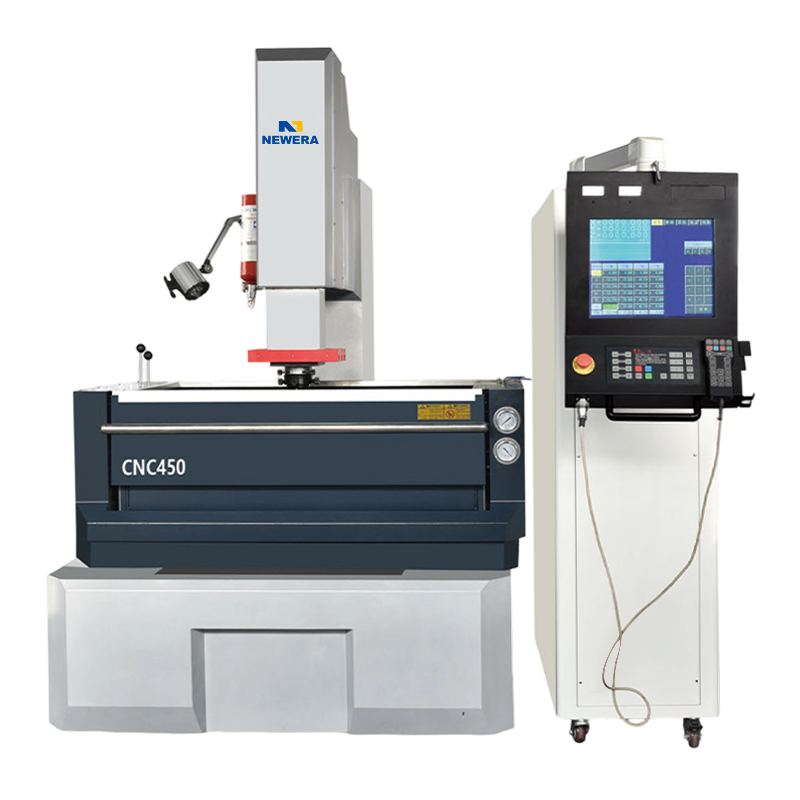
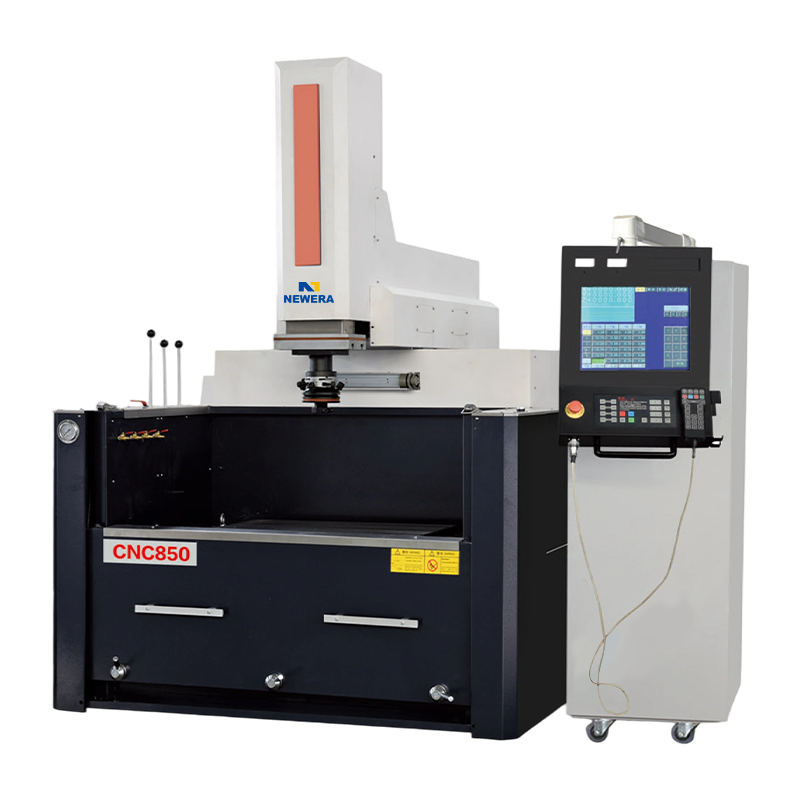
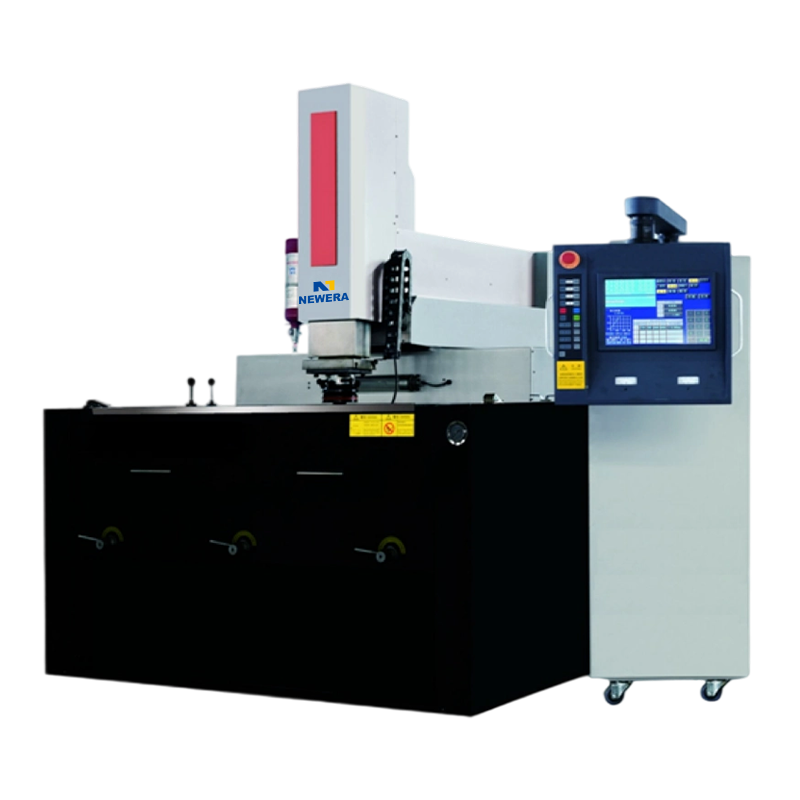
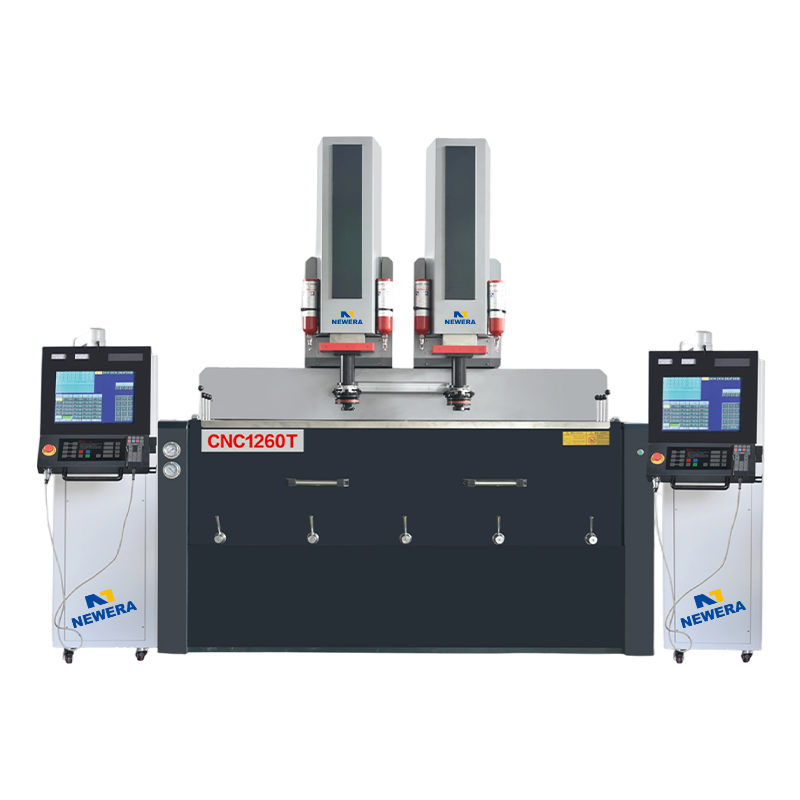
If you are interested in our products, please consult us.
CONTACT DETAILS
Nantong New Era Technology Co., LTD
- Five-star Industrial Park, Chongchuan District, Nantong City, Jiangsu Province, China
- TEL:+86-19851302688
- E-Mail: [email protected]
Products
Quick link
Mobile terminal
