

 русский
 عربى
عربى
Industry News
Home / News / Industry News / CNC Grinder Buying Guide: Key Specs, Accuracy and Practical Selection Tips
CNC Grinder Buying Guide: Key Specs, Accuracy and Practical Selection Tips
 2026.09.09
 Industry News
Press the cycle-start button on a CNC surface grinder and a hydraulic table carries a hardened die insert across a spinning wheel while the wheel head feeds down by a fraction of a micron. If you have ever tried to hold a 0.005 mm tolerance on a hardened part with a manual grinder, you already know why production shops are moving to CNC grinding. The machine does not make the decision; the program does.
Content
What Is a CNC Grinder?
A CNC grinder is a machine tool that removes material with an abrasive wheel, with all feed motions — table travel, crossfeed, wheel downfeed, and dressing — controlled by computer numerical code. The operator writes or imports a part program, servo drives move the axes, and the grinding wheel does the cutting.
CNC grinders are classified by the surface they generate:
- Surface grinders grind flat surfaces and thin stock removal with a horizontal or vertical spindle.
- Cylindrical grinders machine the outside diameter of round workpieces.
- Centerless grinders process high volumes of round parts without fixturing centers.
- Tool and cutter grinders sharpen cutting tools to precise geometry.
The precision a CNC grinder can reach depends heavily on the machine class. The chart below compares typical achievable roughness by method.
Typical achievable surface roughness (Ra) by machining method. Values follow common grinding-industry references.
How a CNC Surface Grinder Works
A workpiece sits on a magnetic chuck clamped to the worktable. The hydraulic traverse carries the table back and forth at a set speed, while the crossfeed moves the table a small amount on each pass. The wheel head, holding an abrasive wheel, is fed downward to the programmed depth. Coolant floods the contact zone to control heat, and the CNC system compensates automatically after each dressing cycle.
Isometric view of a CNC surface grinder: CNC control panel, grinding wheel, wheel head, column, workpiece, magnetic chuck, and bed.
Automatic dressing is the most important maintenance operation on a CNC grinder. Every dressing cycle removes a known amount from the wheel face, and the CNC axis compensates for the change. If you skip it, the wheel face dulls and the machine will still follow the same depth — resulting in burns, chatter, or out-of-tolerance parts.
CNC Grinder vs. Conventional Surface Grinder
When you compare the two on paper, the CNC machine seems to cost more. When you compare them across a full production run, the CNC machine usually wins — because it removes the operator as the main variable in the process.
| Factor | CNC Surface Grinder | Conventional Surface Grinder |
|---|---|---|
| Setup time for repeat jobs | 10-15 min via program recall | 20-40 min with manual adjustments |
| Dimensional consistency | ±0.002-0.005 mm | ±0.005-0.02 mm, operator dependent |
| Surface finish (Ra) | 0.1-0.4 μm | 0.4-1.6 μm |
| Machines per operator | 2-3 machines | 1 machine, constant attention |
| Wheel dressing | Automatic, compensated | Manual, often skipped |
Key Specifications to Evaluate
Before you buy a CNC grinder, check the table and wheel head limits. A machine that cannot travel the full workpiece length will force you into multiple set-ups, which is where accuracy dies. The most important specifications for a mid-size surface grinder are listed below.
| Specification | What It Controls | Common Range for Mid-Size Machines |
|---|---|---|
| Chuck size (W×L) | Maximum workpiece footprint | 200×450 mm to 300×600 mm |
| Table traverse speed | Productivity per pass | 5-25 m/min |
| Wheel head downfeed resolution | Depth accuracy | 0.0005-0.001 mm |
| Spindle motor power | Material removal rate | 3.7-7.5 kW |
| Positioning repeatability | Batch consistency | ±0.002-0.005 mm |
| Coolant system capacity | Thermal stability | 40-100 L |
 Precision Surface Grinding Machine for Consistent Process AccuracyThis precision surface grinder addresses travel limits that force multiple setups, helping you maintain accuracy across the full workpiece length. Ideal for shops prioritizing process consistency over peak spec numbers.View Product →
What to Look for in a CNC Grinder
Buying a grinder is not just about the spec sheet. The real difference between a manual machine and a CNC one shows up in process consistency, not in peak accuracy. The radar chart below compares the two on the factors that matter on a shop floor.
Blue = CNC grinder, grey = conventional surface grinder. Higher score means better in every factor.
Three items are often overlooked during selection:
- Automatic wheel dressing with compensation. Without it, the wheel face changes as it wears and the machine cannot hold the first-part tolerance.
- Thermal management. A dirty coolant system will drift more than the machine's positioning axis.
- Service and spare parts. A CNC grinder is only as productive as the support behind it.
If you are comparing models side by side, a structured CNC surface grinding machine buying guide will help you ask the right questions before you commit.
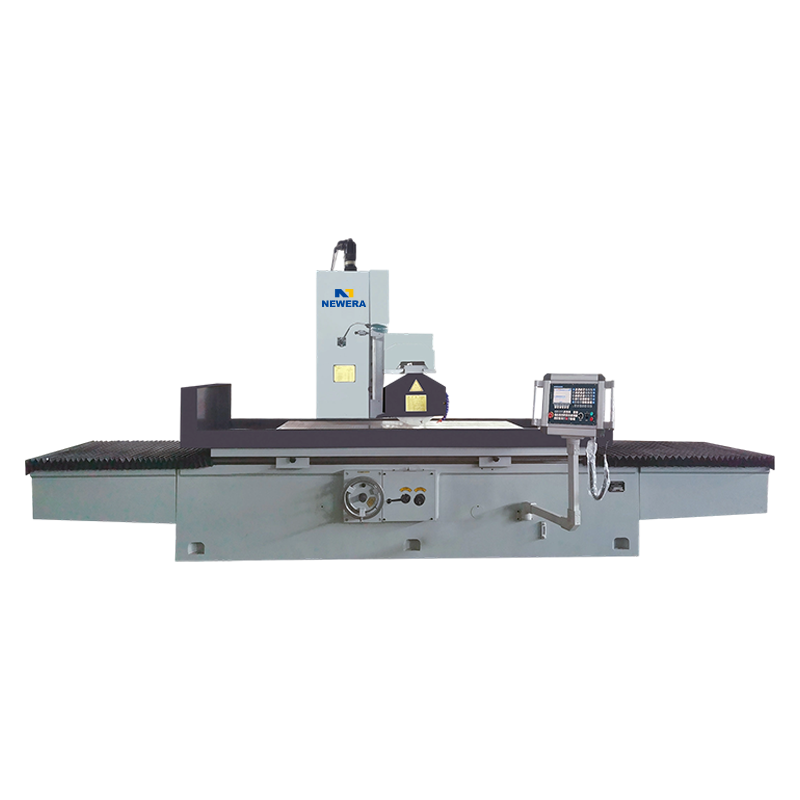 Program Controlled Surface Grinding Machine for Flatness and FinishDesigned for applications where flatness and surface finish are critical, this program-controlled grinder offers reliable control. A structured buying guide helps compare models before committing.View Product →
Real-World Applications
CNC surface grinders show up wherever flatness and finish matter:
- Mold and die making — grinding hardened cavity plates, inserts, and ejector pin areas without deformation.
- Automotive tooling — production of stamping dies and fixture plates with repeatable accuracy across batches.
- Aerospace components — machining thin-walled parts that are sensitive to heat and distortion.
- Production grinding — high-mix runs where program recall cuts setup time dramatically.
For heavier rectangular plates and continuous production, a horizontal-shaft rectangular table surface grinder offers the table width and travel needed. The chart below shows how CNC control holds deviation within a narrow band over a run, while a conventional machine drifts as the wheel wears and the part heats up.
Illustrative trend of dimensional deviation over a 50-part run. Blue = CNC control, grey dashed = conventional control. Shaded band = ±3 μm typical CNC tolerance.
 Horizontal Shaft Rectangular Table Surface Grinder for Heavy PlatesBuilt for large rectangular plates and continuous production, this horizontal-shaft grinder provides ample table width and travel. CNC control keeps deviation narrow over long runs, unlike conventional machines that drift.View Product →
Frequently Asked Questions
Q1. What is a CNC grinder?
A CNC grinder uses a computer-controlled abrasive wheel to remove material from a workpiece to achieve precise dimensions and finish. Common types include surface, cylindrical, and centerless grinders.
Q2. How accurate is a CNC surface grinder?
A modern CNC surface grinder can hold dimensional tolerances of ±0.002 to ±0.005 mm and surface finishes of Ra 0.1 to 0.4 μm, depending on the machine, wheel, and environment.
Q3. What is the difference between a CNC grinder and a conventional grinder?
The main difference is automation. A CNC grinder controls axis feed, table travel, and dressing through code, improving repeatability and reducing operator dependence. A conventional grinder relies on manual adjustments.
Q4. What specifications matter most when buying a CNC grinder?
Chuck size, table traverse speed, wheel head downfeed resolution, spindle power, positioning repeatability, and coolant capacity are the most important. These determine what you can machine and how consistently.
Q5. How much does a CNC grinder cost?
The price depends on size, configuration, and control system. Mid-size precision surface grinders can range from tens of thousands to over one hundred thousand dollars.
Q6. How often should a CNC grinder be maintained?
Daily checks cover coolant, hydraulic oil, and filters. Wheel dressing and spindle lubrication follow the manufacturer's schedule. A full inspection every 6-12 months prevents costly downtime.
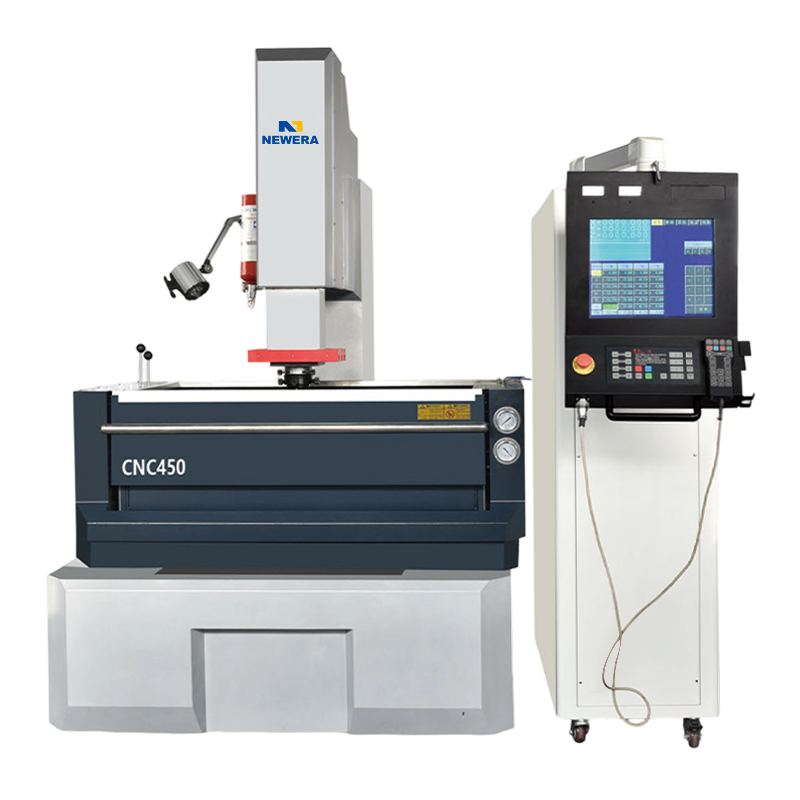
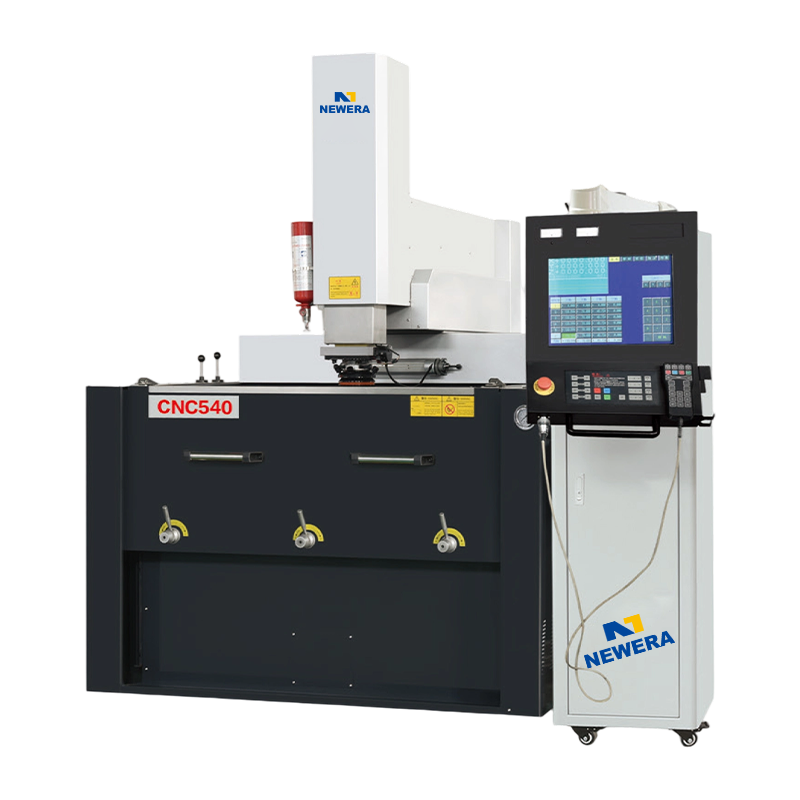
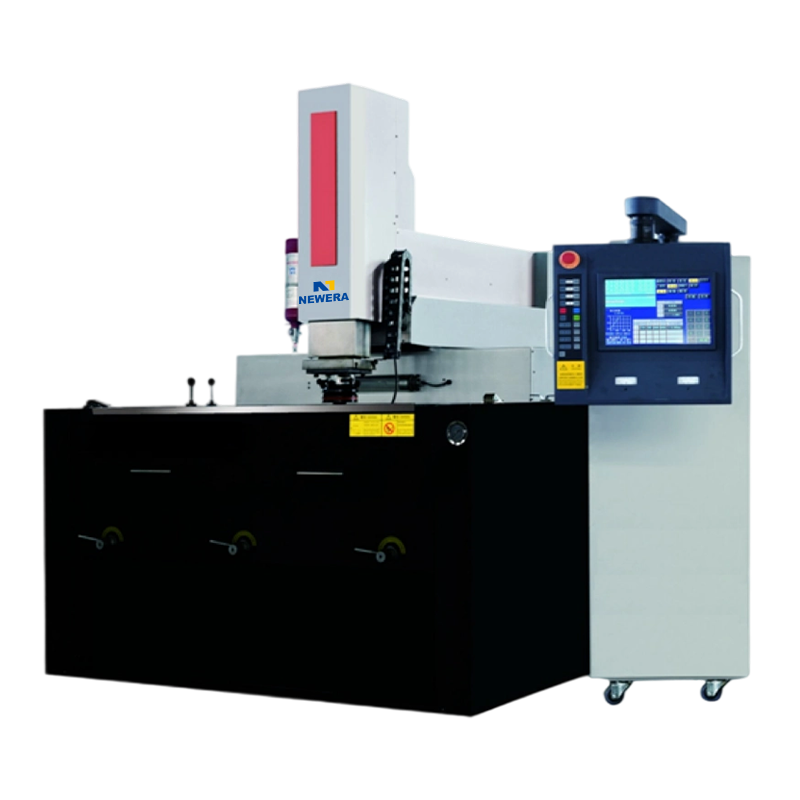
If you are interested in our products, please consult us.
CONTACT DETAILS
Nantong New Era Technology Co., LTD
- Five-star Industrial Park, Chongchuan District, Nantong City, Jiangsu Province, China
- TEL:+86-19851302688
- E-Mail: [email protected]
Products
Quick link
Mobile terminal
