

 русский
 عربى

Industry News
Home / News / Industry News / Gantry Machining Center for Mold Manufacturing: Sizing, Specs, and Risks
Gantry Machining Center for Mold Manufacturing: Sizing, Specs, and Risks
 2026.11.18
 Industry News
A 1,400 × 900 mm cavity insert in pre-hardened 718H. Six pockets 260 mm deep, 8 mm corner radii, first article due in eight weeks. On a typical 40-taper vertical machining center with 800 mm of X travel, that block needs three setups, two re-clamps and a great deal of confidence in your re-zeroing routine. That is the point where machine choice stops being a preference and becomes a constraint.
The short answer: specify a gantry machining center when your mold inserts no longer fit — or can no longer be reached — inside a C-frame VMC in one setup, and specify it for finishing, not just for heavy roughing. Ram stiffness, thermal behavior and control resolution decide whether the machine makes good cavities or merely big chips. Everything below is about making that call correctly and putting the right numbers into the RFQ.
Content
- 1 Why Mold Work Pushes Toward a Bridge Structure
- 2 Travel and Table Size: Size It to the Insert, Not the Brochure
- 3 Ram, Z-Stroke, and Stiffness: What Decides the Surface Finish
- 4 Spindle, Control, and Finishing Capability
- 5 Gantry vs VMC vs HMC: An Honest Comparison
- 6 Procurement Checks Before You Sign
- 7 Where EDM Still Finishes the Job
- 8 Frequently Asked Questions
- 8.1 What is a gantry machining center used for in mold making?
- 8.2 How much does a gantry machining center cost?
- 8.3 Can a gantry machining center cut steel harder than 45 HRC?
- 8.4 What is the difference between a double-column machining center and a bridge mill?
- 8.5 What accuracy should I require for mold cavity work?
- 8.6 Do I still need a sinker EDM if I have a gantry?
Why Mold Work Pushes Toward a Bridge Structure
In a double-column gantry, the ram rides on a cross rail carried by two columns. Cutting force runs down through the ram, into the rail, and symmetrically into both columns and the base. Nothing hangs off a single column, so geometric error from a long-reach tool stays more predictable and does not swing direction as the table travels.
Three mold-shop realities make that geometry valuable:
- Deep cavities demand reach. A 250 mm pocket cut with a 10 mm ball-nose tool needs a long, slender cutter. Buying reach in the machine structure instead of in the tool shank keeps overhang short and deflection low.
- Hard stock pushes load into the frame. Pre-hardened mold steels in the 30–40 HRC range, and hardened inserts above 45 HRC, transfer far more force into the structure than aluminum work does.
- Electrodes are bulky. Graphite blanks for a large cavity electrode routinely exceed the table of a mid-size VMC.
A gantry is not automatically more accurate than a VMC — a poorly built one is considerably worse. The bridge layout buys reach and symmetry; the accuracy still comes from ram cross-section, rail geometry and the thermal package. If you want the architectural basics first, this explanation of what a gantry machining center is covers the structure clearly.
Travel and Table Size: Size It to the Insert, Not the Brochure
Start with the largest insert you realistically expect in the next five years, add the fixture plate (usually 50–100 mm), then add clearance for tool change and edge probing. A practical rule: X travel should exceed insert length plus fixture plus at least 150 mm of positioning margin, and Y travel should cover insert width plus fixture. If your numbers land near 2,000 mm of X, a compact double-column machine does the job without dragging a 20-ton frame into your bay.
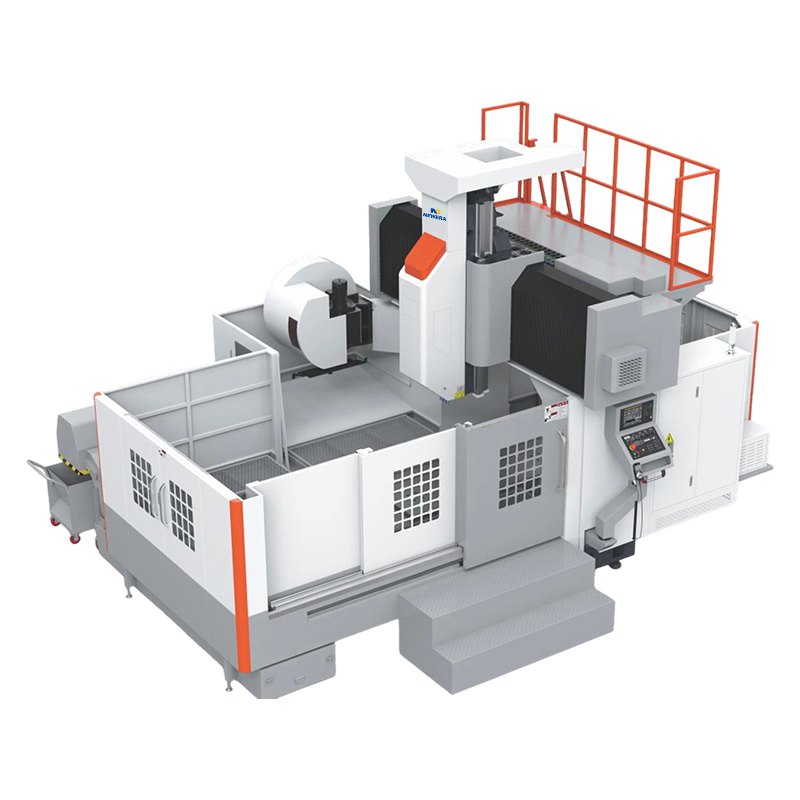
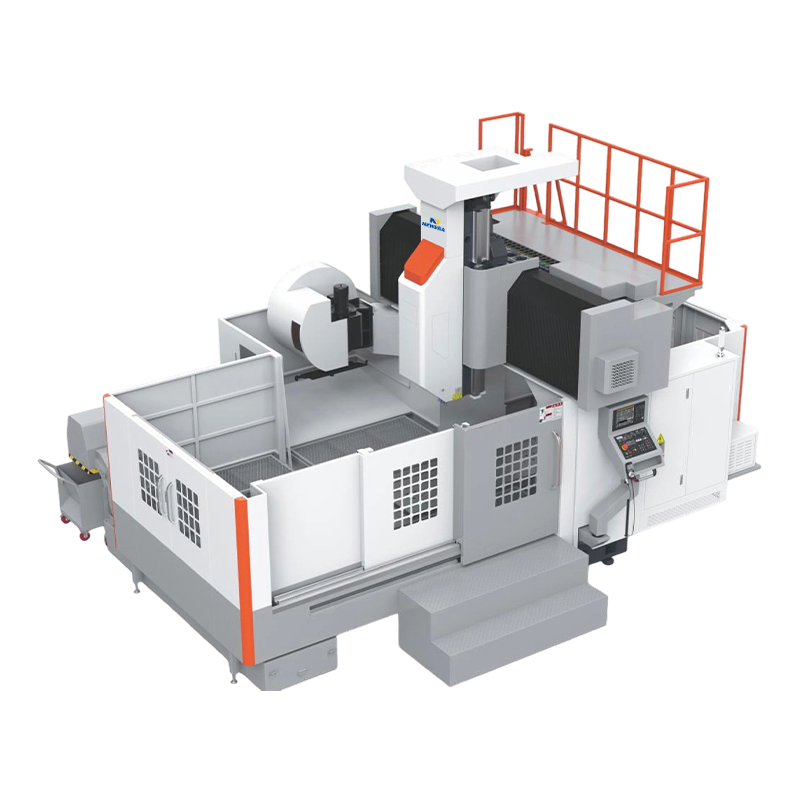
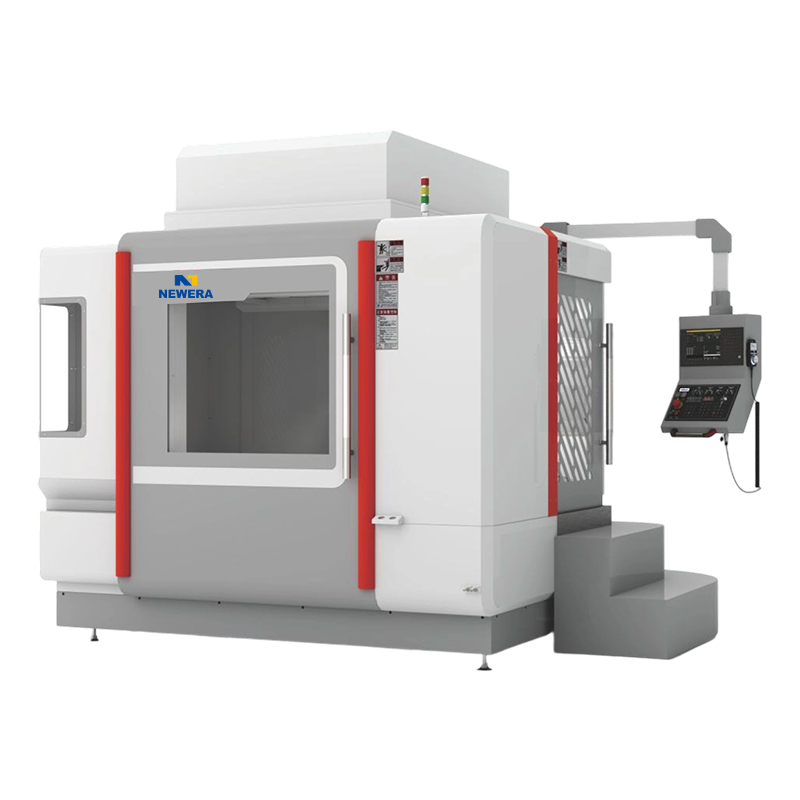
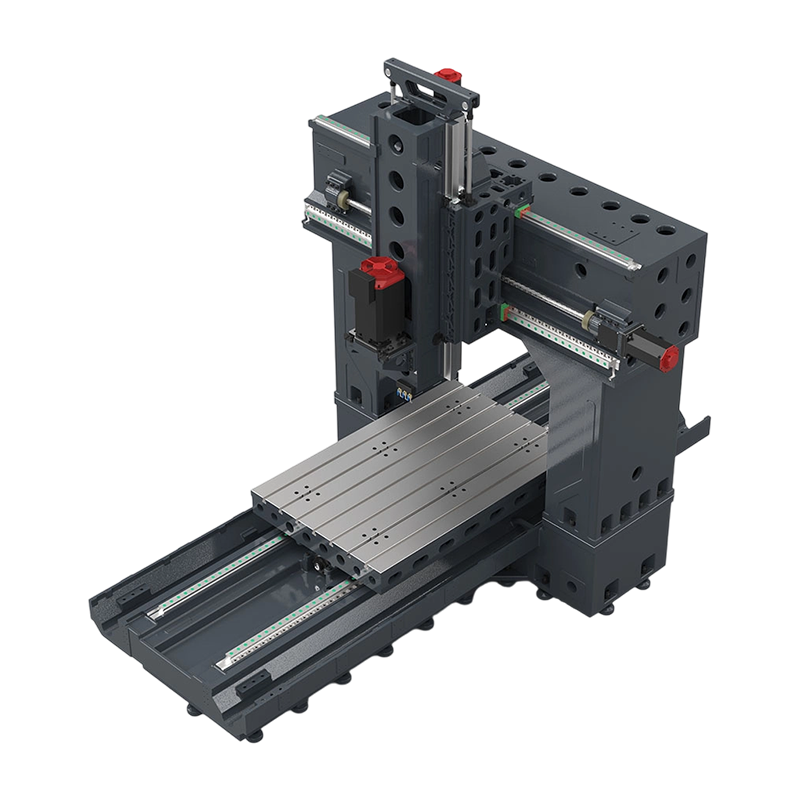 PL2016 Gantry Machining Center by New EraReview this gantry machining center when comparing machine size against large insert work, before committing to an oversized frame.View Product →
One very common buying error: sizing the machine for the biggest part ever quoted, then paying for it on every small job. Large gantries accelerate slowly and demand more floor space, power and foundation work. If roughly 80% of your work fits under 1,000 mm, a compact gantry working alongside a VMC usually beats one oversized gantry doing everything.
Ram, Z-Stroke, and Stiffness: What Decides the Surface Finish
Ram deflection grows with the cube of overhang: double the extension and the tip moves roughly eight times as far for the same cross-section and load. That single relationship explains why two machines with identical 2,000 mm X travel behave completely differently on a 300 mm deep pocket.
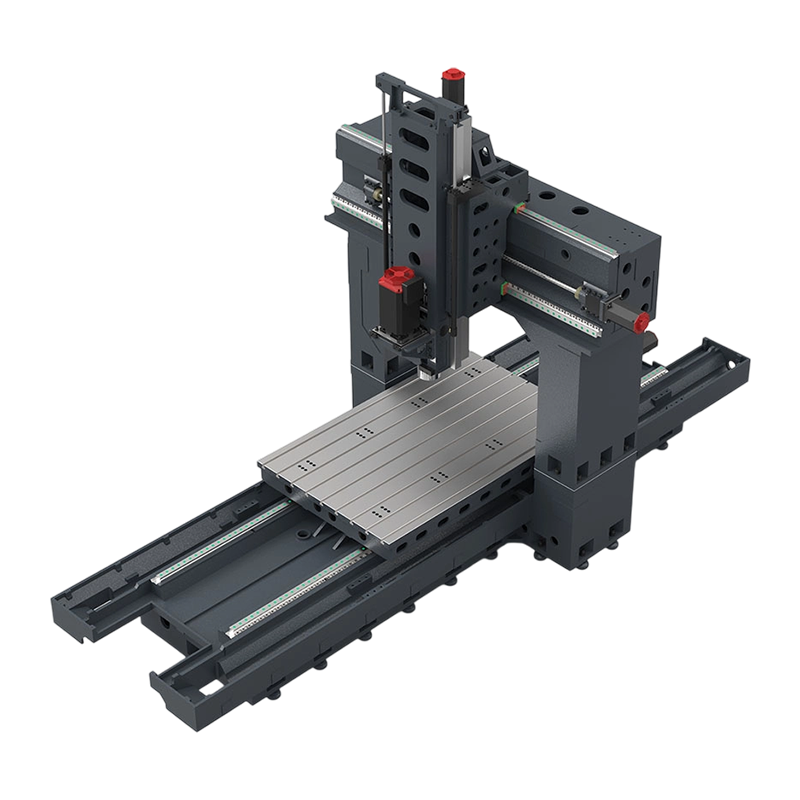 PL2518 Gantry Machining Center for Deep-Pocket ConsiderationsCheck the PL2518 gantry machining center when deep cavities and ram overhang make Z-axis stiffness and sag compensation important questions.View Product →
Ask specifically for ram cross-section dimensions, the Z-axis guideway type (box way or linear roller), and whether the machine compensates Z-axis sag or head weight. Sag compensation is normal on better gantries and rare on economy builds — and sag is precisely the error that shows up as wall taper or a mismatch between the top and bottom of a deep cavity.
Spindle, Control, and Finishing Capability
For mold cavities, spindle speed range and thermal behavior matter more than peak kilowatts. A 15–18 kW, 10,000–15,000 rpm HSK-A63 spindle covers most cavity and electrode milling with 3–10 mm cutters. Larger 50-taper spindles give torque for roughing but lose the rpm small tools need; if your shop does both, two machines are frequently cheaper than one compromise.
Ask for spindle thermal growth in numbers — a figure over an eight-hour run, not the phrase "cooled spindle". On the control side, the practical requirements are look-ahead block processing for complex 3D surfaces, fine interpolation for small moves, and a data interface that lets you export accuracy and maintenance logs. If a builder cannot name the standard behind a quoted accuracy figure — ISO 230-2 for positioning, or VDI/DGQ 3441 for positional scatter — treat the number as marketing.
Gantry vs VMC vs HMC: An Honest Comparison
GantryVMCHMC
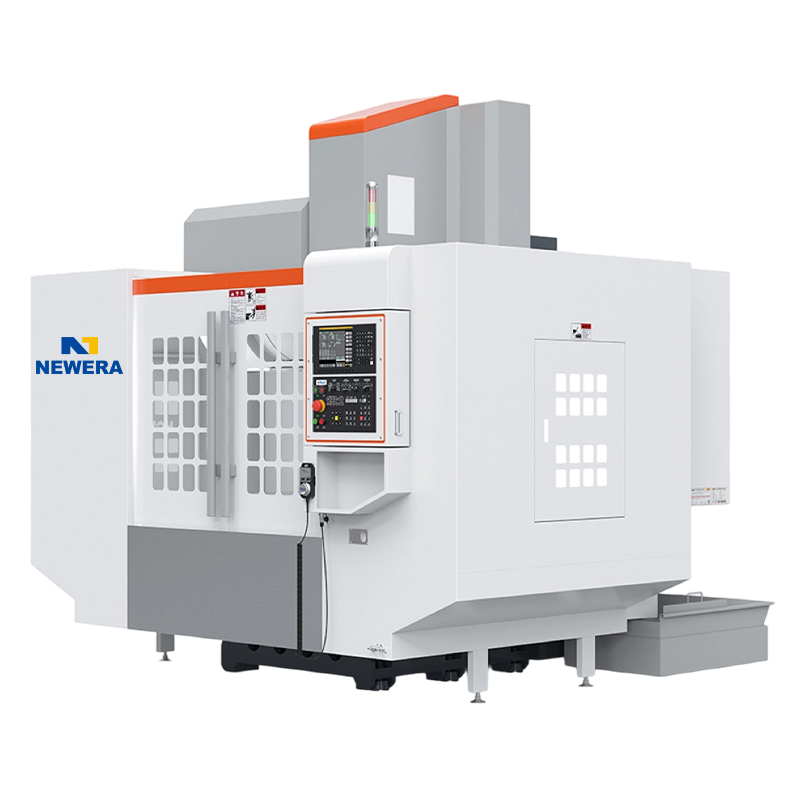
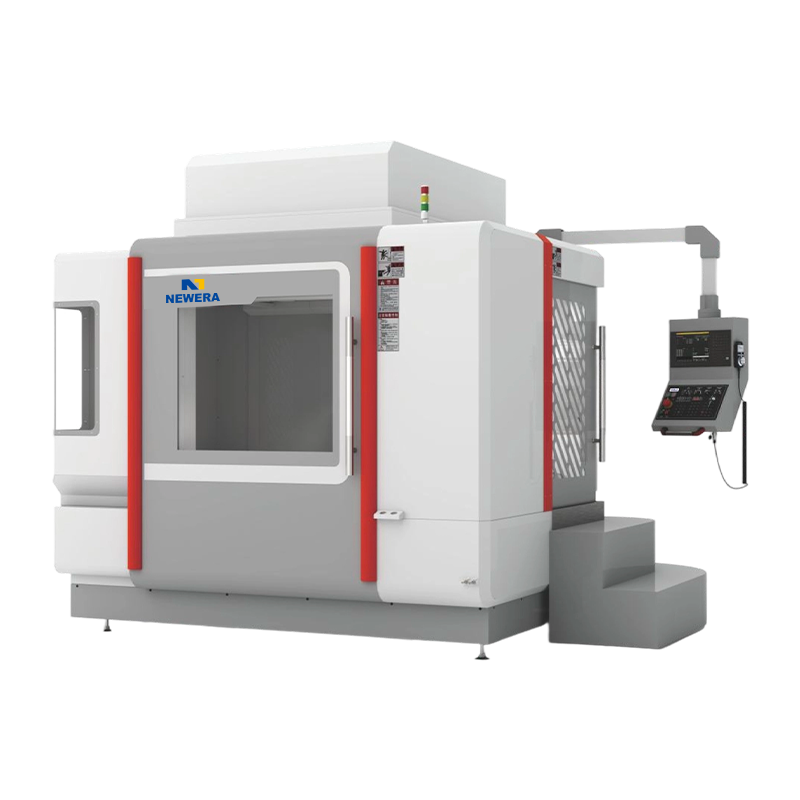
No architecture wins everywhere. A horizontal machining center is excellent for prismatic production parts with tombstone setups, but deep single-sided cavities are awkward to reach. A VMC is efficient, cheap per unit of travel and fast on small inserts. The gantry earns its floor space when reach, symmetry and part size dominate — and it loses when your mix is mostly inserts under 400 mm, where you are moving a large structure for small work.
Procurement Checks Before You Sign
Most gantry complaints after installation trace back to specifications that were never written down. Fix these in the RFQ:
| Parameter | Why it matters for mold work | What to request |
|---|---|---|
| Ram section and Z stroke | Deflection rises with overhang; a slim ram shows up as wall taper | Section dimensions, guideway type, sag-compensation spec |
| Positioning accuracy | A figure without a standard cannot be compared | ISO 230-2 values with test conditions, plus a ballbar report |
| Spindle torque curve | Peak kW hides weak low-speed torque for roughing | Full torque/rpm curve, taper type, thermal growth data |
| Control capability | 3D surfacing quality and maintenance logging depend on it | Block-processing spec, log export, remote diagnostics |
| Foundation and services | A gantry loads the floor differently from a VMC | Anchoring drawing, power, air, coolant and chiller load |
Then insist on a cutting test on a block that resembles your actual work: same material, same pocket geometry, same tool overhang. Measure the cavity with a CMM — wall parallelism, floor flatness and corner radius consistency tell you more about the machine than any brochure curve.
Where EDM Still Finishes the Job
Mill it close, burn it sharp. A gantry brings the cavity to within a few hundredths of a millimetre, but sharp internal corners, deep ribs and the fine surface texture still belong to a sinker. Plan the two as one process: leave 0.2–0.3 mm on walls for the electrode, and decide early whether electrode milling happens on the same gantry or on a dedicated graphite machine — graphite dust and coolant do not mix well in the same enclosure.
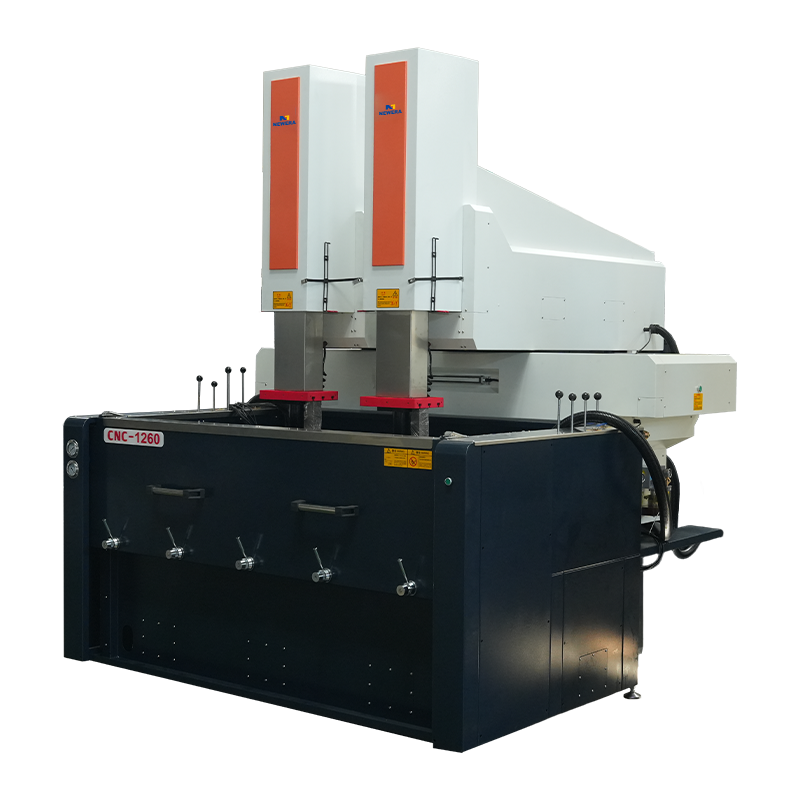 CNC 1260 EDM Die Sinking MachineConsider the CNC 1260 sinker EDM when planning sharp internal corners and fine texture after gantry roughing leaves stock for electrodes.View Product →
Budget the pair together. A gantry that removes most of the roughing stock changes the EDM requirement from "big and slow" to "precise and repeatable" — which usually means fewer electrodes, shorter burn times and a smaller machine than the original plan assumed.
Frequently Asked Questions
What is a gantry machining center used for in mold making?
Large cavity blocks, deep pockets, long inserts and graphite electrodes — mainly where a VMC's table size or Z reach runs out and a single-setup cavity is required.
How much does a gantry machining center cost?
Cost is driven by table size, ram cross-section and Z stroke, spindle taper and the control package. Foundation, rigging and chiller work are often underestimated and should be quoted alongside the machine.
Can a gantry machining center cut steel harder than 45 HRC?
Yes, with the right cutter and a rigid ram, but hardened inserts are usually finished by high-speed milling with small radial engagement or by EDM. Above 50 HRC, burning is often the more economical route.
What is the difference between a double-column machining center and a bridge mill?
The terms overlap. "Bridge mill" usually describes a bridge-type structure for large parts; a gantry may have a moving table or a moving gantry. What matters is the load path and the ram design, not the label.
What accuracy should I require for mold cavity work?
Ask for positioning accuracy and repeatability per ISO 230-2 with test conditions stated, plus a ballbar report and a cutting test. Commonly quoted figures for this class sit around ±0.005 mm per 300 mm with roughly 0.003 mm repeatability — verify them, do not assume them.
Do I still need a sinker EDM if I have a gantry?
Yes, for sharp internal corners, deep narrow ribs and fine surface finishes that no rotating tool reaches. Milling removes the bulk; the sinker delivers the geometry.
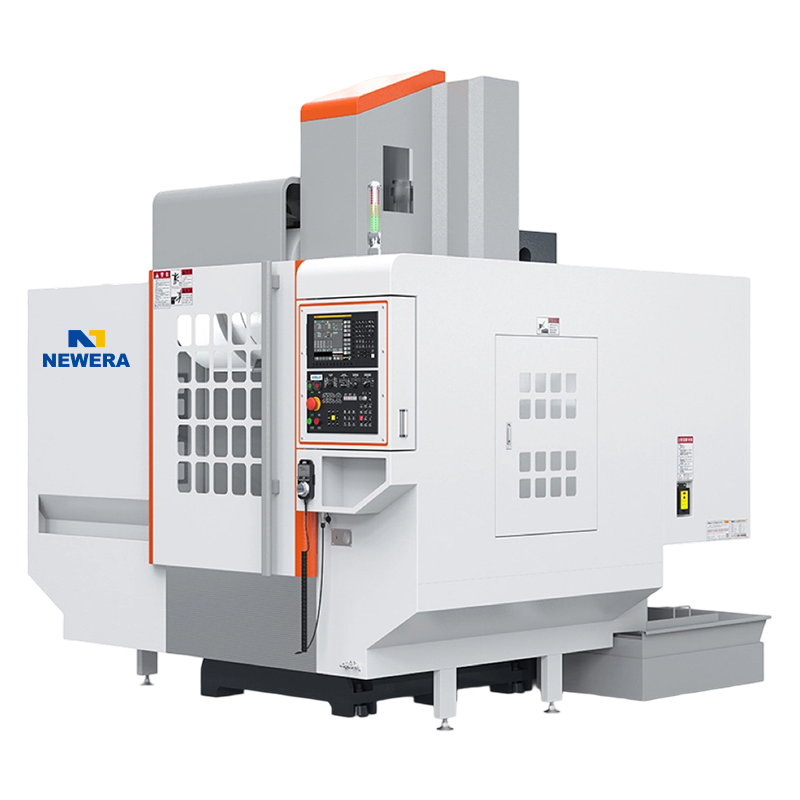
If you are interested in our products, please consult us.
CONTACT DETAILS
Nantong New Era Technology Co., LTD
- Five-star Industrial Park, Chongchuan District, Nantong City, Jiangsu Province, China
- TEL:+86-19851302688
- E-Mail: [email protected]
Products
Quick link
Mobile terminal
