

 русский
 عربى
عربى
Industry News
Home / News / Industry News / EDM Types Explained: A Practical Guide to CNC Sinker EDM Machine Classes
EDM Types Explained: A Practical Guide to CNC Sinker EDM Machine Classes
 2026.08.26
 Industry News
Ask ten toolroom managers which EDM machine they use and you will hear ten variations of the same answer: sinker, wire, or hole drilling. The part that confuses new buyers is the control level printed on the machine—ZNC, PNC, or CNC. If your job involves a blind mold cavity with a shaped electrode, the practical decision is usually the control level, not the process family. This guide starts with the main EDM process types, then compares the three sinker EDM control architectures and shows which one fits a typical shop budget and workload.
Content
EDM Types Overview: Sinker, Wire, and Hole Drilling
Electric discharge machining removes material with controlled sparks between two electrodes. A sinker EDM forms the shape of a pre-machined electrode into the workpiece under dielectric fluid. Wire EDM cuts a path through a solid workpiece using a thin energized wire. Hole drilling EDM uses a rotating tubular electrode to make deep, small-diameter holes. Micro EDM scales the same principle down to very small features. Among these, sinker EDM is the most common choice for mold cavities because it can produce blind pockets, ribs, and textured surfaces that wire cannot reach.
| EDM Type | Process | Best For | Electrode | Typical Result |
|---|---|---|---|---|
| Sinker EDM | Formed electrode erodes a cavity | Mold cavities, dies, complex 3D shapes | Graphite or copper block | Blind cavities with fine or textured finish |
| Wire EDM | Travelling wire cuts through the part | Stamping dies, precision punch tools | Brass or zinc-coated wire | Clean edges and high dimensional accuracy |
| Hole Drilling EDM | Rotating tube electrode burns a deep hole | Cooling holes, wire threading start holes | Tubular brass or copper electrode | Fast deep-hole drilling with less burr |
| Micro EDM | Miniature electrodes with low discharge energy | Micro molds, nozzles, medical components | Micro rod or tube electrode | Very fine details and small features |
The tradeoffs are not just about shape. Wire EDM has no side force and produces very clean edges, but it needs a start hole and cuts only through features. Sinker EDM excels when an electrode can reach a complex cavity directly. For shops evaluating their first machine, sinker EDM machines remain the most flexible entry point because a single electrode can be reused for a batch of identical cavities.
In a sinker EDM, the working principle is straightforward: a servo head holds the electrode, the dielectric tank surrounds the machining area, and the workpiece sits on the table with a controlled spark gap between the electrode and the part surface.
Simplified isometric view of a sinker EDM system.
Sinker EDM Control Levels: ZNC, PNC, and CNC
Once you settle on sinker EDM, the control system defines the machine’s capability, price, and the level of operator skill it demands. Three control architectures are common in the market: ZNC, PNC, and CNC. They share the same mechanical foundation but differ in how much of the machining sequence is automated.
ZNC Machines: Manual Positioning with an Automatic Z-Axis
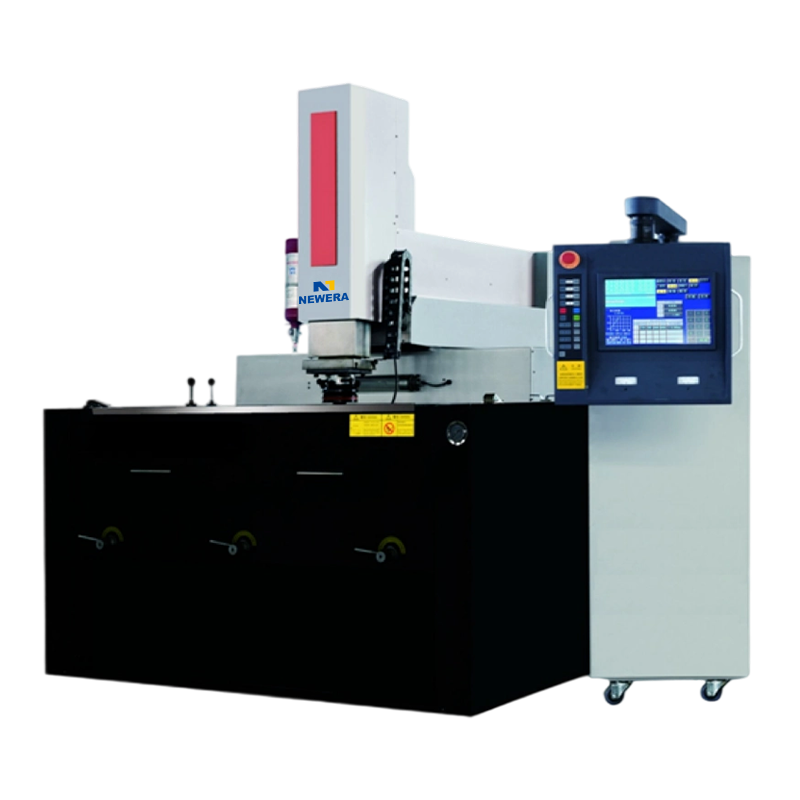
ZNC stands for Z-axis numerical control. The machine handles the sparking depth automatically, while the operator positions X and Y manually and manages the electrode setup. This is the simplest sinker EDM architecture and a practical option for toolrooms with experienced setters and low production volumes. If your workflow is small batches, a compact ZNC-450 sinker EDM gives you a controlled spark cycle without a high-end control investment.
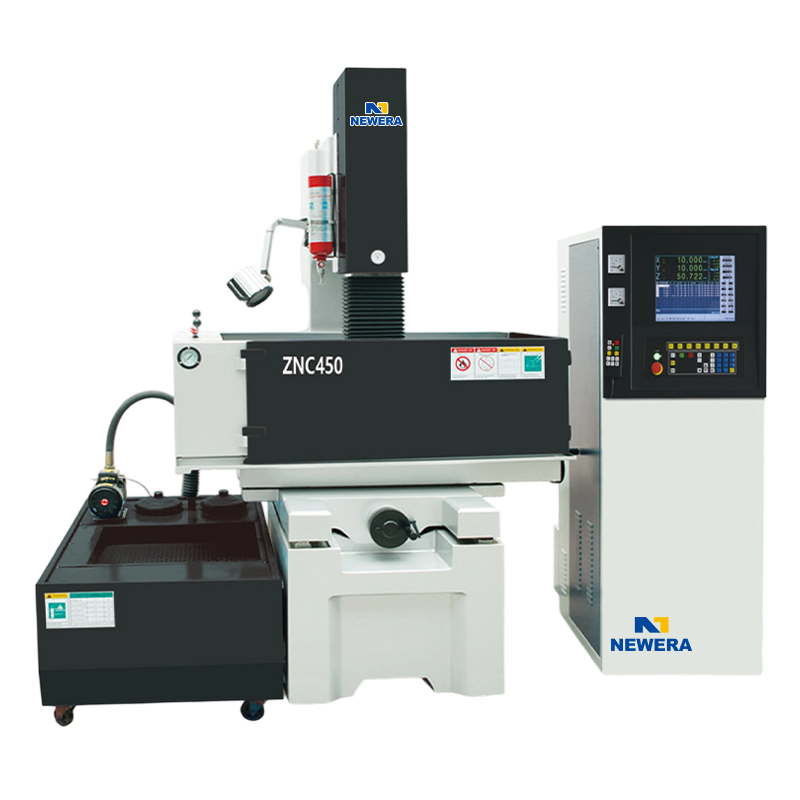 ZNC 450 EDM Die Sinking Machine/Sinker EDM Manufacturers, Company - Nantong New Nantong New Era Technology Co., Ltd is China OEM/ODM ZNC 450 EDM Die Sinking Machine/Sinker EDM manufacturers and company, Fog system de...View Product →
PNC Machines: Programmed Positions and Sequences
PNC machines add memory and programmable positioning. The operator can store electrode positions, sparking depths, and flushing sequences, which reduces setup time when a mold has multiple cavities. For shops producing larger batches or frequent repeat jobs, the automation a PNC-450 sinker EDM provides usually pays back quickly through more consistent cycles and less supervision.
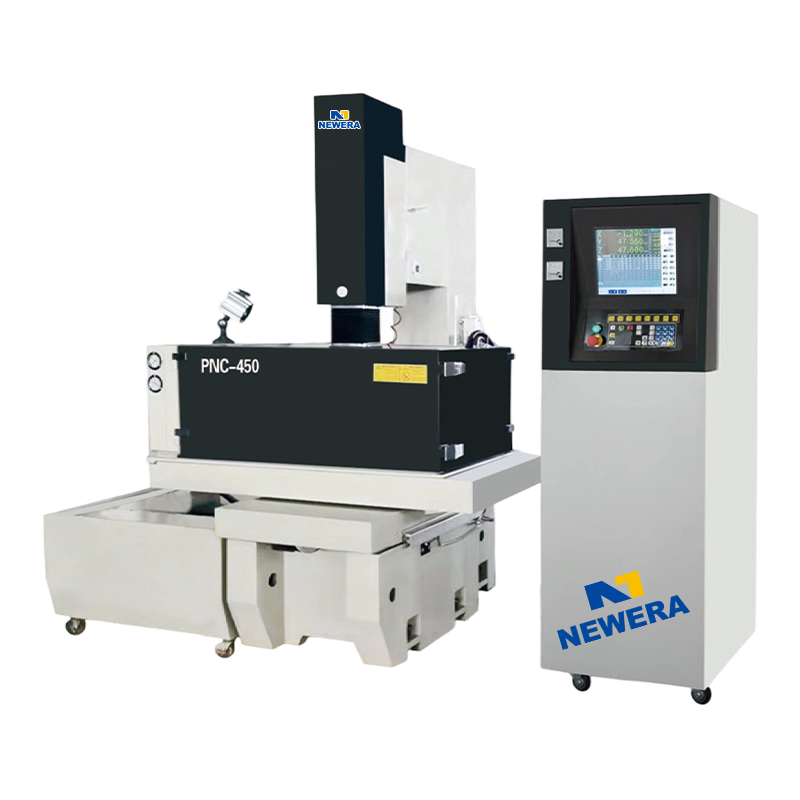 PNC 450 EDM Die Sinking Machine/Sinker EDM Manufacturers, Company - Nantong New Nantong New Era Technology Co., Ltd is China OEM/ODM PNC 450 EDM Die Sinking Machine/Sinker EDM manufacturers and company, Fog system de...View Product →
CNC Machines: Full Multi-Axis Machining
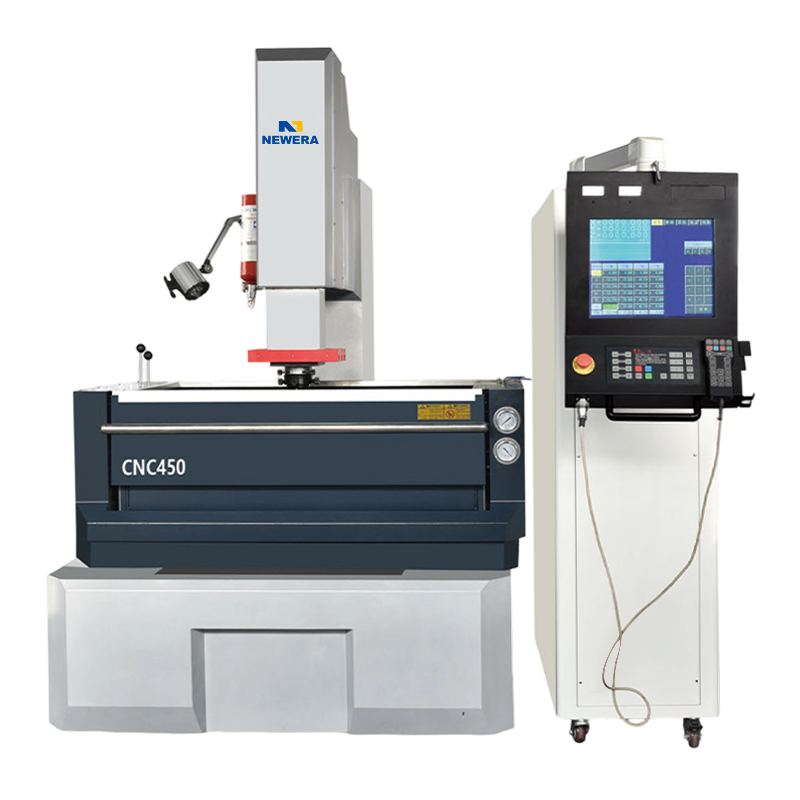
CNC sinker EDMs take the concept further with full multi-axis coordination. The control can drive X, Y, Z, and additional rotary axes, orbit the electrode to improve flushing, create taper or helical erosion, and support unattended running with tool-changing systems. This is the category to choose for high-precision mold and die work where repeatability and long unattended runs justify the higher price. A machine in this class, such as the CNC-540 sinker EDM, moves the setup effort from the operator to the CAM program.
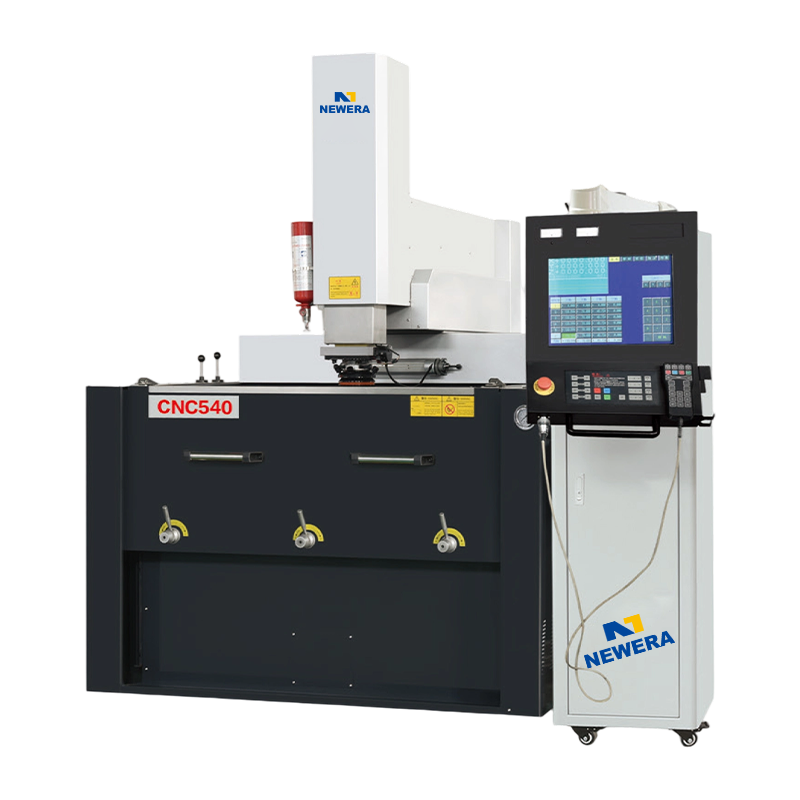 CNC 540 EDM Die Sinking Machine/Sinker EDM Manufacturers, Company - Nantong New Nantong New Era Technology Co., Ltd is China OEM/ODM CNC 540 EDM Die Sinking Machine/Sinker EDM manufacturers and company, The high rigid...View Product →
Relative comparison of ZNC, PNC, and CNC control levels. Higher price score means a more expensive machine.
How to Choose the Right EDM Type
There is no universal answer. The decision should start with part geometry and then move to production volume. In the machining industry, the most reliable approach is to match the process family to the feature shape first, then choose the control level based on how many hours the machine will actually run.
- Blind cavities with formed electrodes point to sinker EDM.
- Through-cut contours in hardened steel point to wire EDM.
- Deep cooling holes or wire-threading holes point to hole drilling EDM.
- High mix and frequent repeat jobs make a PNC machine attractive.
- Round-the-clock unattended operation is where CNC earns its premium.
- Low volume and highly skilled operators can still achieve good results with ZNC.
Before you approve a budget, review what a sinker EDM can realistically handle so you do not overbuy precision or undersize the work tank.
Frequently Asked Questions About EDM Types
What is the difference between EDM and sinker EDM?
EDM is the broader process family. Sinker EDM is the specific type that uses a shaped electrode to erode a cavity into a workpiece.
What are the three main types of EDM?
The three main types are sinker EDM, wire EDM, and hole drilling EDM. Micro EDM is sometimes listed as a fourth category.
Which EDM type is best for mold making?
Sinker EDM is usually the best fit for mold cavities because it can produce blind, complex shapes with a formed electrode.
What does ZNC mean in an EDM machine?
ZNC means the Z-axis is numerically controlled while X and Y are positioned manually. It is the entry-level control architecture.
Is a CNC EDM machine worth the extra cost?
For shops running multi-cavity molds or unattended shifts, CNC machines usually pay back through lower labor cost and better repeatability.
Can wire EDM make a blind cavity?
No. Wire EDM only cuts through the workpiece, so a blind cavity normally requires a sinker EDM with a formed electrode.
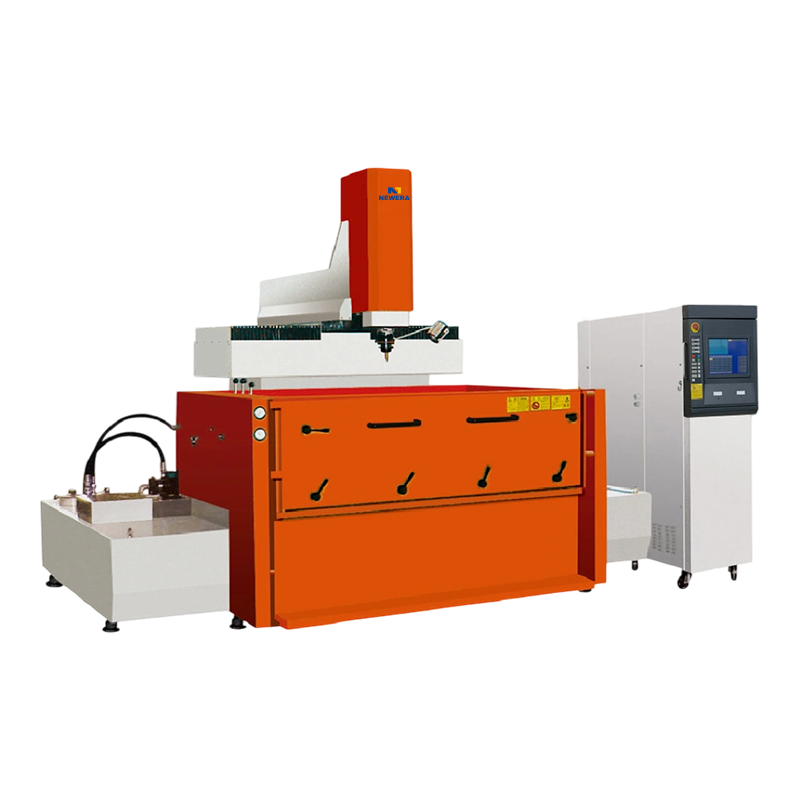
If you are interested in our products, please consult us.
CONTACT DETAILS
Nantong New Era Technology Co., LTD
- Five-star Industrial Park, Chongchuan District, Nantong City, Jiangsu Province, China
- TEL:+86-19851302688
- E-Mail: [email protected]
Products
Quick link
Mobile terminal
