

 русский
 عربى
عربى
Industry News
Beginner’s Guide to CNC Milling Machines
 2026.05.26
 Industry News
A Vertical Machining Center (VMC) is a computer-controlled machine tool designed to perform complex milling, drilling, tapping, and contouring operations on metal and other materials. The spindle axis runs vertically, making it ideal for flat parts, molds, and precision components. Modern VMC machines feature automatic tool changers, high-speed spindles, and multi-axis movement — enabling manufacturers to achieve tight tolerances and consistent repeatability at industrial scale.
For beginners entering the world of CNC machining, understanding the fundamentals of a CNC Milling Center is the critical first step. Whether you're sourcing an Industrial CNC Machine for a new production line or evaluating a 3 Axis CNC Machine for prototype work, this guide covers everything you need to make an informed decision.
Content
- 1 What Is a Vertical Machining Center?
- 2 Core Components of a CNC Milling Machine Explained
- 3 Understanding CNC Axes: 3-Axis, 4-Axis, and 5-Axis Machining
- 4 BT40 vs. BT50 Spindle Taper: Choosing the Right Tool Interface
- 5 Aluminum CNC Machining: Why VMCs Excel at Non-Ferrous Materials
- 6 Industry Applications: Where Vertical Machining Centers Are Used
- 7 Key Specifications to Evaluate When Selecting a VMC Machine
- 8 Automatic Tool Changer CNC: How It Works and Why It Matters
- 9 Precision CNC Milling: Achieving Tight Tolerances in Practice
- 10 About Our Vertical Machining Center Solutions
- 11 Frequently Asked Questions About VMC Machines
What Is a Vertical Machining Center?
A Vertical Machining Center is a subtype of CNC machining center where the cutting spindle is oriented vertically. This design positions the tool perpendicular to the worktable, making it highly effective for machining flat surfaces, cavities, slots, and complex profiles on a single workpiece setup. VMCs are widely used across aerospace, automotive, mold-making, electronics, and general manufacturing industries.
Unlike a horizontal machining center, a VMC offers easier workpiece visibility and loading, making it a preferred choice for shops handling medium-to-large prismatic parts. The enclosed work area and chip management systems common in modern VMC machines help maintain a clean machining environment, contributing to longer tool life and better surface finishes.
Key structural components of a Vertical Machining Center include the column, spindle head, worktable, saddle, knee (or base), and the CNC control unit. Together, these parts govern the machine's rigidity, thermal stability, and overall machining accuracy.
| Feature | Vertical Machining Center | Horizontal Machining Center |
|---|---|---|
| Spindle Orientation | Vertical | Horizontal |
| Best For | Flat parts, molds, single-setup work | Heavy parts, 4-sided machining |
| Footprint | Compact | Larger |
| Chip Evacuation | Manual or conveyor-assisted | Gravity-assisted (more efficient) |
| Operator Visibility | Excellent | Limited |
| Common Application | Mold making, aerospace parts | Engine blocks, transmission parts |
Core Components of a CNC Milling Machine Explained
Understanding the anatomy of a CNC Machining Center helps operators and procurement managers evaluate specifications more accurately. Each component contributes to the machine's overall performance, longevity, and suitability for specific applications.
Spindle System
The spindle is the heart of any Precision CNC Milling operation. It rotates the cutting tool at speeds typically ranging from 6,000 to 24,000 RPM, depending on the machine class. High-speed spindles (above 15,000 RPM) are used in High Speed VMC models for fine-finish aluminum and titanium work. Spindle taper standards — such as BT40 and BT50 — determine tool holder compatibility.
Automatic Tool Changer (ATC)
An Automatic Tool Changer CNC system allows the machine to swap between different cutting tools without manual intervention. Standard VMC configurations offer 20 to 30 tool positions, while advanced models support 60+ tools. A typical ATC completes a tool change in under 3 seconds, dramatically reducing non-cutting time and supporting unattended or lights-out manufacturing operations.
Worktable and Travel Range
The worktable holds the workpiece using T-slots or fixture plates. Table size and X/Y/Z axis travel directly determine the maximum workpiece dimensions the machine can process. A common mid-size VMC offers X-axis travel of 1,000 mm, Y-axis travel of 500 mm, and Z-axis travel of 500 mm — sufficient for most mold and structural components.
CNC Control System
The CNC controller interprets G-code and M-code programs to precisely control axis movement, spindle speed, feed rate, and coolant. Leading control platforms offer conversational programming, real-time tool compensation, and network connectivity for DNC (Direct Numerical Control) integration.
Relative Impact of VMC Components on Machining Precision (%)
This chart illustrates how different machine components contribute to overall machining precision. The spindle accounts for the largest share at 30%, as its rotational accuracy and thermal stability directly affect surface finish and dimensional tolerance. Guide rails and ball screws together contribute 44%, underscoring the importance of mechanical rigidity in achieving repeatable results. A well-integrated CNC control system, while at 12%, acts as the coordinating intelligence that ties all physical components into a coherent, accurate machining process.
Understanding CNC Axes: 3-Axis, 4-Axis, and 5-Axis Machining
Axis configuration is one of the most important specifications when selecting a CNC Machining Center. The number of axes determines what geometry a machine can produce in a single setup, which directly impacts cycle time, fixture cost, and part accuracy.
A 3 Axis CNC Machine moves along X (left-right), Y (front-back), and Z (up-down) directions. This is the standard configuration for most VMC machines and covers the vast majority of prismatic machining tasks — including pocketing, contouring, drilling, and face milling. Most entry-level and mid-range industrial shops rely on 3-axis VMCs as their primary production asset.
Adding a 4th axis (rotational A or B axis) allows continuous machining of cylindrical features without repositioning. A 5-axis VMC further adds tilt capability, enabling complex undercuts, turbine blade profiles, and deep cavity molds to be machined with a single setup — significantly reducing cumulative error from multiple fixturings.
| Axis Type | Movements | Typical Use Cases | Setup Changes Required |
|---|---|---|---|
| 3-Axis | X, Y, Z | Flat parts, plates, housings | Multiple |
| 4-Axis | X, Y, Z + Rotation | Cylindrical parts, cams, shafts | Reduced |
| 5-Axis | X, Y, Z + 2 Rotations | Turbines, implants, complex molds | Single setup |
BT40 vs. BT50 Spindle Taper: Choosing the Right Tool Interface
The spindle taper standard defines compatibility between the machine spindle and the tool holder. The two most prevalent standards in VMC machining are BT40 and BT50 (also written as MAS-BT). Choosing the correct taper is critical before purchasing tooling or fixtures.
A BT40 Machining Center uses a 40-taper tool holder, which is lighter and enables faster tool changes (important in high-speed VMC applications). BT40 is the industry standard for VMC machines up to approximately 15 kW spindle power, making it ideal for aluminum, plastics, and light steel work. BT50, by contrast, handles heavier cutting loads with greater rigidity and is preferred for large-format steel and cast iron machining.
Some modern High Speed VMC machines also support HSK (Hollow Shank Taper) interfaces, which offer higher clamping forces and improved concentricity at elevated RPMs — particularly valuable in 5-axis and micro-machining scenarios.
BT40 vs BT50 Performance Radar Comparison
The radar chart above compares BT40 and BT50 spindle taper standards across six performance dimensions. BT40 consistently outperforms in high-speed capability, aluminum machining suitability, and ATC cycle speed — making it the preferred choice for high-speed VMC applications targeting aluminum CNC machining or intricate mold work. BT50 offers advantages in rigidity and sustained heavy cutting, making it better suited for large steel components that require substantial material removal rates. Understanding this trade-off helps procurement teams align spindle taper selection with their core production requirements before finalizing a machine purchase.
Aluminum CNC Machining: Why VMCs Excel at Non-Ferrous Materials
Aluminum CNC Machining represents one of the largest application segments for vertical machining centers. Aluminum alloys — including 6061, 7075, and 2024 — are widely used in aerospace frames, automotive brackets, consumer electronics enclosures, and medical device housings. Their relatively low hardness (compared to steel) allows VMCs to run at significantly higher feed rates and spindle speeds, dramatically increasing material removal rates.
Typical aluminum machining parameters on a high-speed VMC include spindle speeds of 12,000–20,000 RPM, feed rates of 3,000–8,000 mm/min, and depth-of-cut values ranging from 0.5 mm (finishing) to 5 mm (roughing). These parameters allow a skilled programmer to achieve surface finishes of Ra 0.8 µm or better — meeting the cosmetic and functional requirements of most aerospace and consumer product specifications.
Through-spindle coolant delivery is particularly important in aluminum machining to flush chips away from the cutting zone and prevent material re-welding onto the tool edge. Combined with coated carbide end mills (AlTiN or ZrN coatings), modern Precision CNC Milling setups can run continuously for extended periods with minimal tool wear.
Surface Roughness (Ra µm) vs Spindle Speed (RPM) — Aluminum 6061
This line chart shows the inverse relationship between spindle speed and surface roughness (Ra) when machining aluminum alloy 6061 on a high-speed VMC. As RPM increases from 4,000 to 20,000, Ra values drop from approximately 2.8 µm down to 0.6 µm — representing a substantial improvement in surface quality. The highlighted optimal zone (14,000–20,000 RPM) reflects the operating range where most high-speed VMC machines deliver both excellent surface finish and acceptable tool wear. Pushing into this zone requires proper tooling geometry, balanced tool holders, and sufficient coolant flow to sustain consistent results across full production runs.
Industry Applications: Where Vertical Machining Centers Are Used
The versatility of the Industrial CNC Machine category means VMCs appear across a remarkably wide range of manufacturing sectors. Their ability to combine multiple operations — milling, drilling, boring, tapping, and contouring — in a single automated cycle makes them indispensable for modern production environments.
- Aerospace: Structural frames, brackets, ribs, and bulkheads machined from aluminum and titanium billets. Tolerances often within ±0.01 mm.
- Automotive: Engine mounts, gearbox housings, brake calipers, and transmission components machined in medium-to-high volume batches.
- Mold and Die Making: Injection mold cavities and cores requiring complex 3D surface profiles and mirror-quality polished finishes.
- Electronics: Heatsinks, chassis plates, and enclosures for servers, telecom equipment, and consumer devices — typically in aluminum 6061.
- Medical Devices: Orthopedic implants, surgical instruments, and diagnostic equipment housings machined in stainless steel and titanium.
- Energy: Valve bodies, pump housings, and turbine components for oil and gas and power generation equipment.
VMC Adoption Rate by Industry Sector (%)
The column chart above reflects how deeply vertical machining centers have penetrated key manufacturing sectors. Mold and die making leads at 92% adoption, driven by the VMC's ability to machine complex 3D cavities with fine surface finishes in hardened steel. Aerospace follows at 88%, where tight tolerances and material traceability requirements align well with VMC capabilities. Even sectors like Energy (58%) and Medical (65%) show significant reliance on VMC technology for high-value, precision-critical components. These figures underscore why investing in a quality CNC Machining Center is a strategically sound decision across diverse manufacturing environments.
Key Specifications to Evaluate When Selecting a VMC Machine
Selecting the right VMC Machine requires evaluating a set of interdependent specifications that collectively determine suitability for your application. No single number tells the full story — it is the combination of specifications that defines machine capability.
Spindle Speed and Power
Maximum RPM determines your material and tooling options. A standard VMC typically offers 8,000–12,000 RPM, while a High Speed VMC reaches 15,000–24,000 RPM. Spindle motor power (typically 7.5–22 kW) governs your ability to take heavy cuts in steel or hardened materials.
Table Size and Work Envelope
Table dimensions determine maximum workpiece footprint. Common VMC table sizes range from 700×400 mm (compact) to 1,600×700 mm (large format). Ensure your most demanding workpiece fits within the X/Y/Z travel envelope with sufficient clearance for tooling and fixturing.
Positioning Accuracy and Repeatability
For Precision CNC Milling, positioning accuracy of ±0.005 mm and repeatability of ±0.003 mm are typical benchmarks for quality VMC machines. These values should be verified against ISO 230-2 or JIS B 6201 test standards for reliable comparison.
Tool Magazine Capacity
For complex parts requiring many tools, a larger ATC magazine reduces setup time. A 24-tool carousel is standard; 30, 40, and 60-tool magazines are available for lights-out production. Arm-type ATCs are faster (under 2 seconds) than carousel-type for high-frequency tool changes.
Buyer Priority Ranking for VMC Specifications (Survey of 200 Manufacturers)
This survey-based ranking from 200 manufacturing buyers reveals that accuracy and repeatability is by far the most important VMC specification, cited by 94% of respondents as a top-three priority. Spindle speed and ATC capacity follow closely, reflecting the industry's focus on both quality and throughput. Interestingly, the CNC control system — while critically important — ranks lower on the priority list, likely because leading control platforms have converged to a high baseline quality level. Buyers evaluating a CNC Milling Center should use this ranking as a starting framework while adjusting weights based on their specific application and production volume.
Automatic Tool Changer CNC: How It Works and Why It Matters
The Automatic Tool Changer CNC system is one of the most transformative features distinguishing a modern VMC from a manual milling machine. Without an ATC, every time a different cutting tool is needed, the operator must stop the machine, manually swap the tool holder, re-calibrate tool length, and restart. For complex parts requiring 8–15 different tools, this manual process adds 30–60 minutes of non-cutting time per part.
An ATC system eliminates this bottleneck. The tool magazine — either a carousel disk or umbrella-style rack — stores pre-loaded and pre-measured tool holders. When the CNC program calls for a tool change via an M06 command, the spindle moves to the tool change position, the ATC arm retrieves the new tool, swaps it with the current tool, and returns the used tool to its magazine pocket — all within 1.5 to 4 seconds in modern machines.
For production environments using a BT40 Machining Center, ATC systems allow operators to preload an entire family of parts' tooling into the magazine and run unattended overnight. This "lights-out machining" capability is a significant productivity driver — one machine can effectively produce the output of two manually operated machines when running overnight shifts.
- Carousel ATC: Tools rotate in a fixed disk to the change position. Simple, reliable, but slower on high tool-count magazines.
- Arm-Type ATC (Double-Arm): A mechanical arm simultaneously grabs the spindle tool and the next tool, swapping them in a single motion. Fastest cycle time, standard on high-performance VMCs.
- Chain-Type Magazine: Supports 30–120 tool positions for complex, multi-operation parts. Common on large-format CNC Machining Centers.
Precision CNC Milling: Achieving Tight Tolerances in Practice
Precision CNC Milling is not just about buying a capable machine — it requires a disciplined process approach that encompasses workholding, tooling, programming, thermal management, and quality inspection. A VMC capable of ±0.003 mm repeatability can only deliver that performance consistently when the surrounding process is equally controlled.
Workholding rigidity is often the most underestimated factor. A workpiece that flexes or shifts under cutting forces will yield inconsistent dimensions regardless of machine accuracy. Hydraulic vises, zero-point clamping systems, and vacuum fixtures each offer different advantages depending on part geometry and batch size.
Thermal compensation is another critical element. As the spindle motor and ball screws heat up during a production run, thermal expansion causes axis drift of up to 20–30 µm over the first hour of operation. Advanced VMC control systems apply real-time thermal compensation algorithms using embedded temperature sensors, keeping positional error within specification throughout the shift.
In-process gauging using touch probes mounted in the ATC magazine allows the machine to measure part features mid-cycle and automatically adjust tool offsets — a practice known as adaptive machining. This closed-loop approach ensures that dimensional drift from tool wear is corrected before it causes scrap, particularly valuable for high-value aerospace and medical components.
About Our Vertical Machining Center Solutions
Nantong New Era Technology Co., Ltd. has dedicated more than 20 years to developing, designing, and producing numerical control machine tools and CNC machining centers. As a professional OEM Vertical Machining Center manufacturer and ODM VMC machine company, New Era continuously integrates advanced scientific and technological achievements from both domestic and international sources.
Our complete production and assembly center supports rigorous quality control at every manufacturing stage. With a dedicated team across technology development, manufacturing, and sales services, we provide customers with tailored solutions — from standard 3-axis VMC configurations to high-speed and large-format models — matching specific production requirements across industries including aerospace, automotive, mold making, electronics, and medical devices.
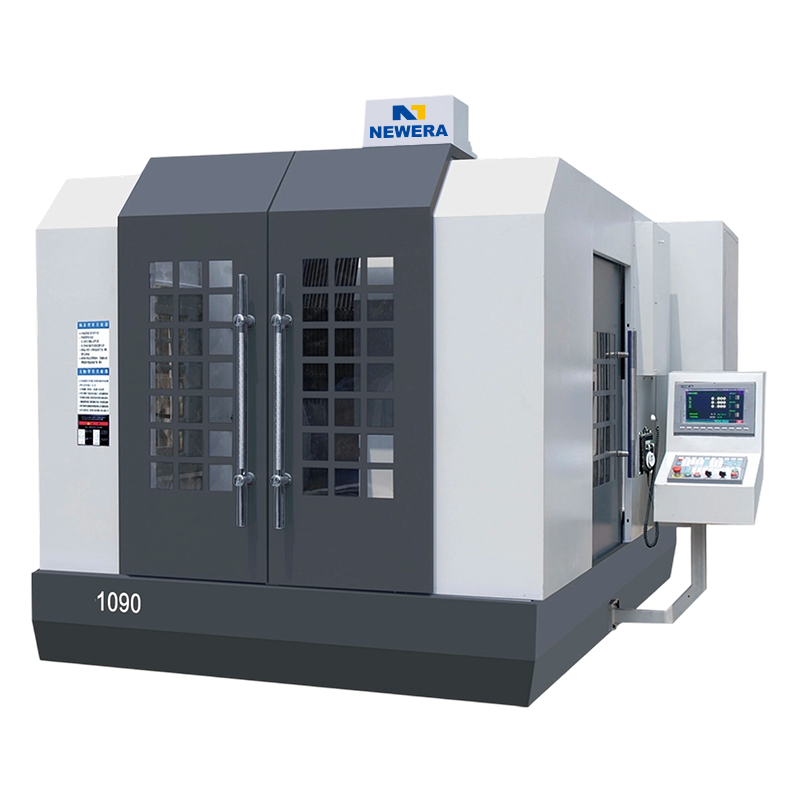
New Era's vertical machining centers feature fully enclosed work areas, high-efficiency Automatic Tool Changer CNC systems, rigid cast iron structures, and leading CNC control platforms — delivering the combination of reliability, accuracy, and versatility that modern manufacturing demands. We are committed to creating maximum value through high-quality products and comprehensive after-sales service support.
Frequently Asked Questions About VMC Machines
Q1: What is the difference between a VMC machine and a conventional milling machine?
A conventional milling machine is manually operated — the operator controls axis movement using handwheels. A VMC machine is fully CNC-controlled, reading G-code programs to execute precise movements automatically. VMCs include automatic tool changers, enclosed work areas, and servo-driven axes, delivering far greater repeatability, speed, and the ability to run complex multi-step operations without manual intervention.
Q2: How many tools does a standard Automatic Tool Changer CNC hold?
Most standard VMC machines come equipped with a 20- or 24-tool ATC magazine. Mid-range models often offer 30-tool options, and large-format or production-oriented CNC Machining Centers may support 40 to 60+ tool positions. The required magazine capacity depends on part complexity — a simple prismatic part may need 6–8 tools, while a complex mold cavity might require 20 or more.
Q3: Is a 3 Axis CNC Machine sufficient for most manufacturing tasks?
For the majority of prismatic parts — including brackets, plates, housings, and mold bases — a 3 Axis CNC Machine is fully sufficient. Industry surveys indicate that over 70% of machined parts in general manufacturing can be completed on a 3-axis VMC with one or two setups. 4-axis or 5-axis configurations become necessary primarily for complex curved surfaces, undercuts, or parts that require simultaneous multi-surface machining in a single clamping.
Q4: What materials can a Vertical Machining Center process?
A Vertical Machining Center can process a wide range of materials including aluminum alloys (6061, 7075), mild and alloy steel, stainless steel, cast iron, copper, titanium, brass, and engineering plastics such as PEEK and Delrin. Material selection influences spindle speed, feed rate, tooling choice, and coolant strategy. Aluminum CNC Machining is particularly efficient on high-speed VMCs due to the material's favorable machinability characteristics.
Q5: What does BT40 mean on a CNC Machining Center specification sheet?
BT40 refers to the Japanese standard (MAS-BT) for the spindle taper interface. The "40" indicates a 7:24 taper with a 44.45 mm gauge diameter. This standard defines which tool holders are compatible with the machine spindle. A BT40 Machining Center is optimized for high-speed, lighter-duty cutting operations and is the most common taper found on mid-size VMC machines. BT50 offers a larger, more rigid interface suited for heavy-duty cutting.
Q6: How do I maintain a VMC Machine to ensure long-term accuracy?
Regular maintenance of a VMC Machine includes daily cleaning of way surfaces and chip evacuation systems, weekly lubrication of linear guideways and ball screws, monthly inspection of spindle runout and tool holder cleanliness, and periodic geometric calibration (every 6–12 months) using a laser interferometer or ball bar test. Following the manufacturer's maintenance schedule — particularly for spindle bearing pre-load checks and ATC gripper wear — is essential for sustaining long-term positioning accuracy and machine longevity.
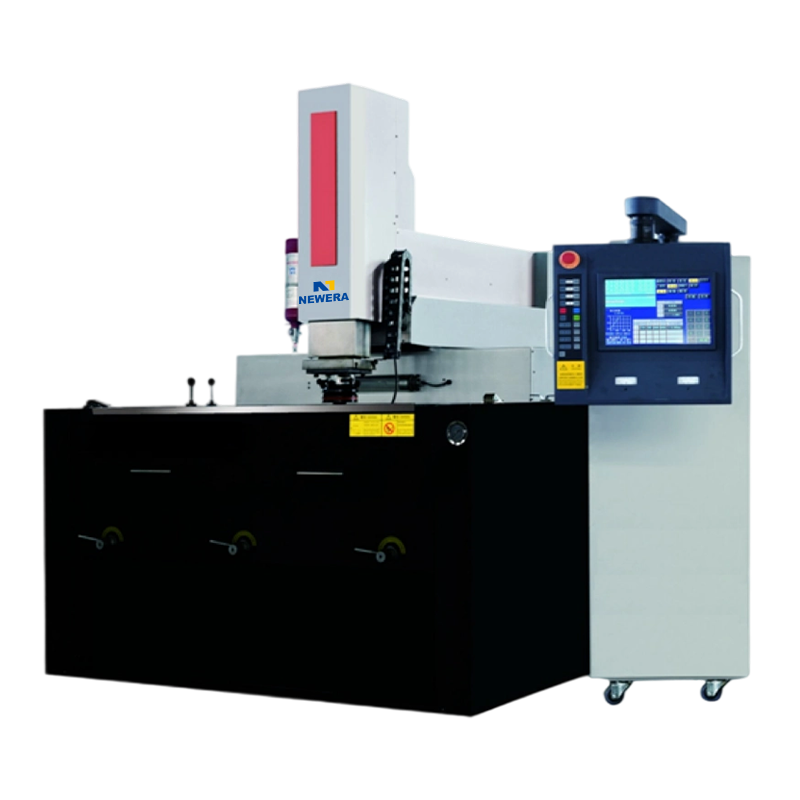
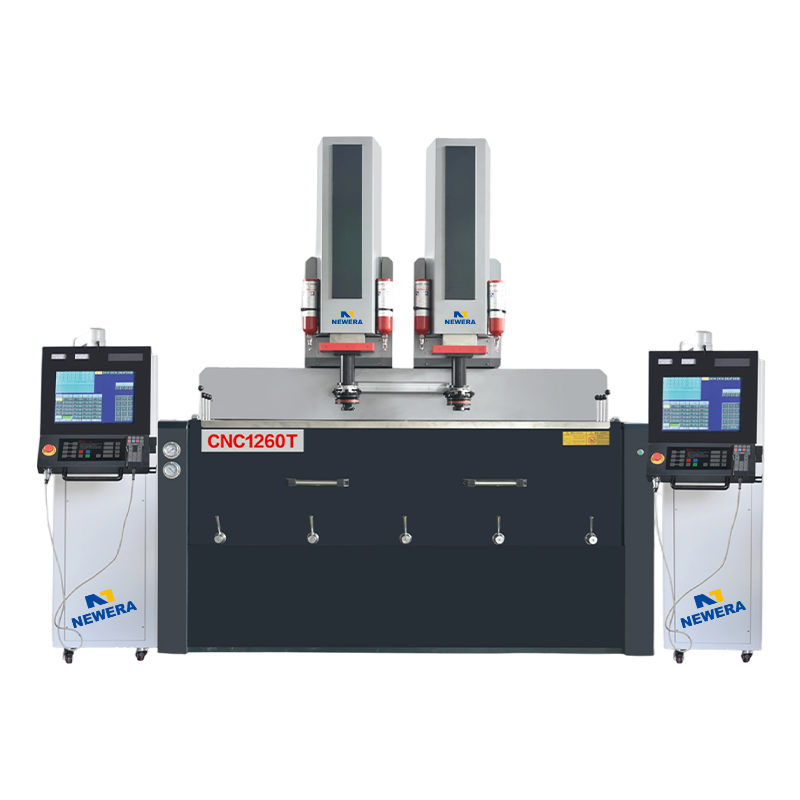
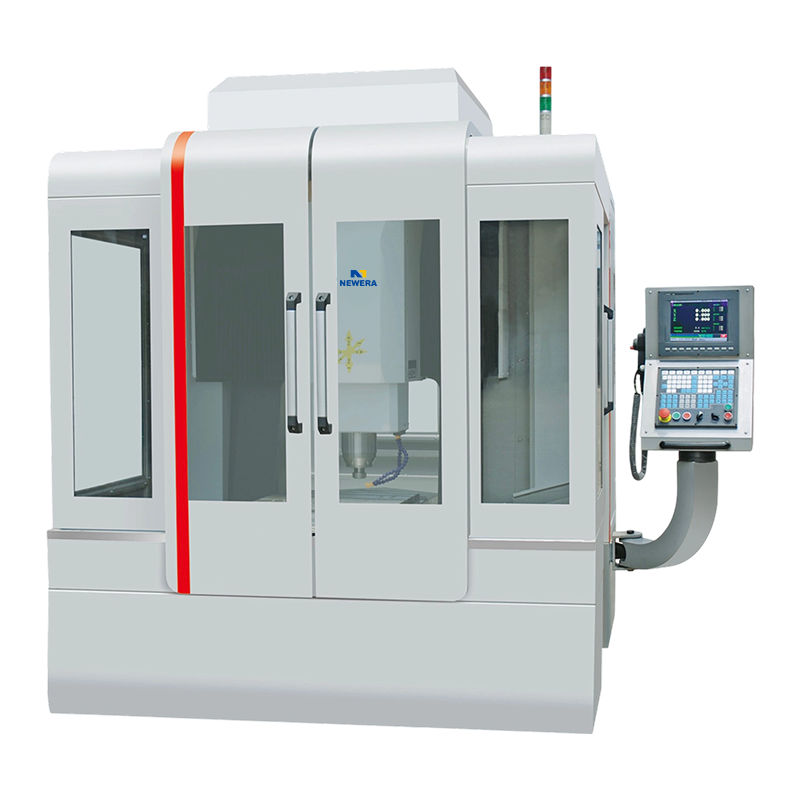
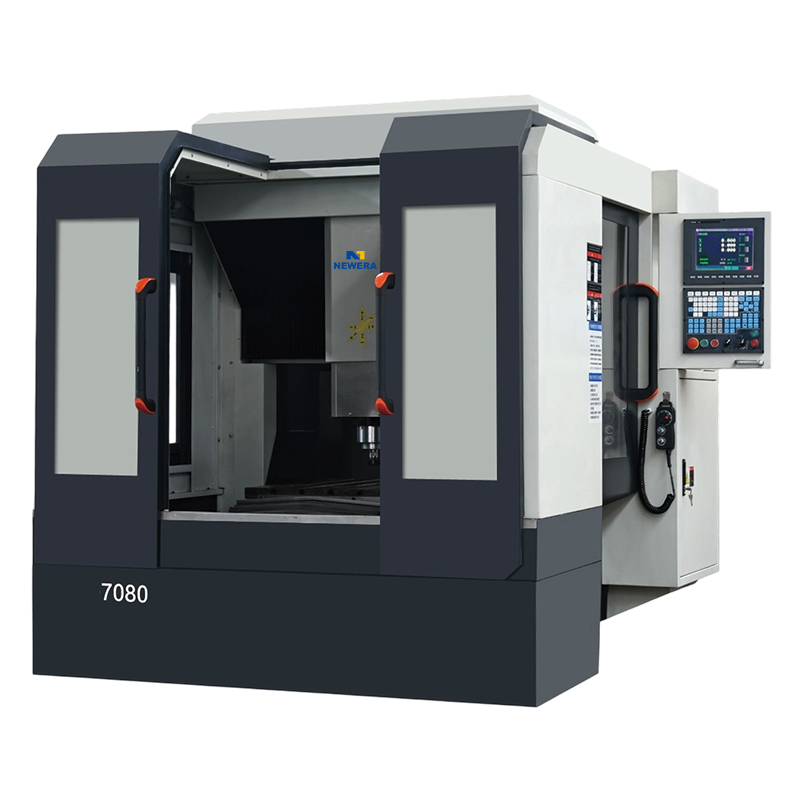
If you are interested in our products, please consult us.
CONTACT DETAILS
Nantong New Era Technology Co., LTD
- Five-star Industrial Park, Chongchuan District, Nantong City, Jiangsu Province, China
- TEL:+86-19851302688
- E-Mail: [email protected]
Products
Quick link
Mobile terminal
