

 русский
 عربى
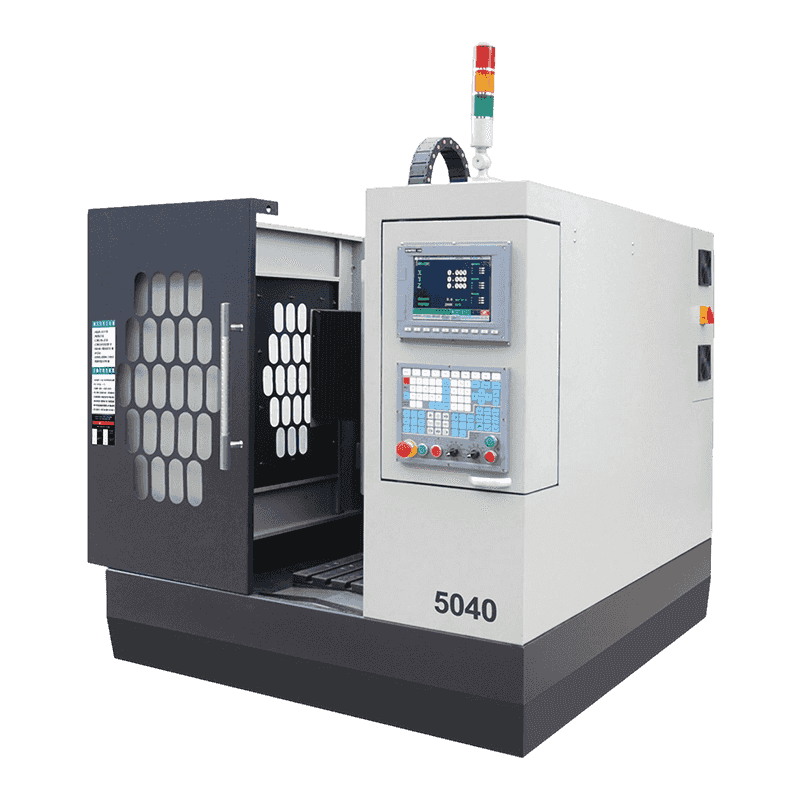
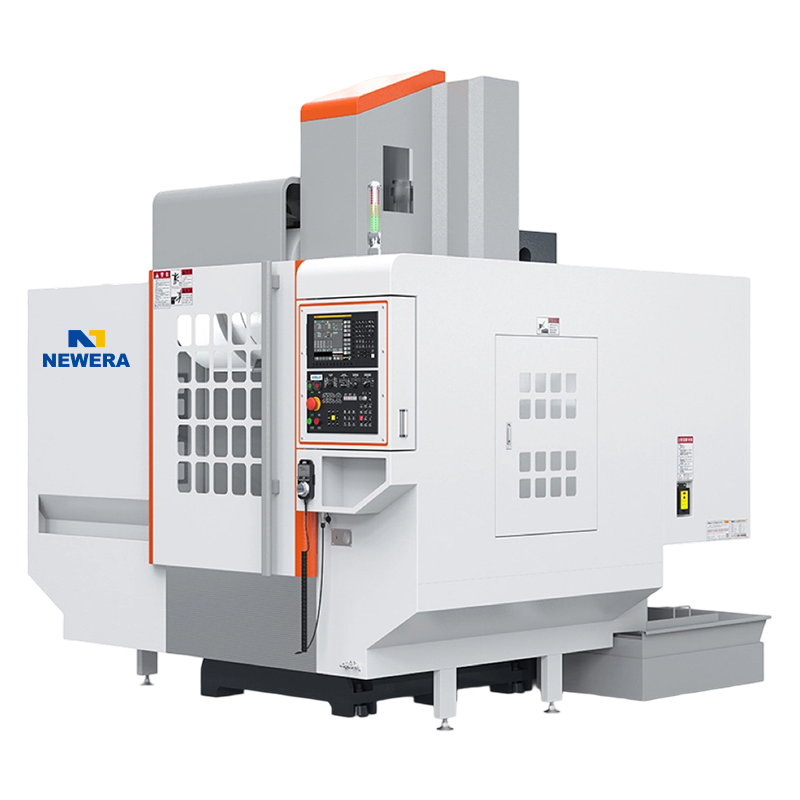
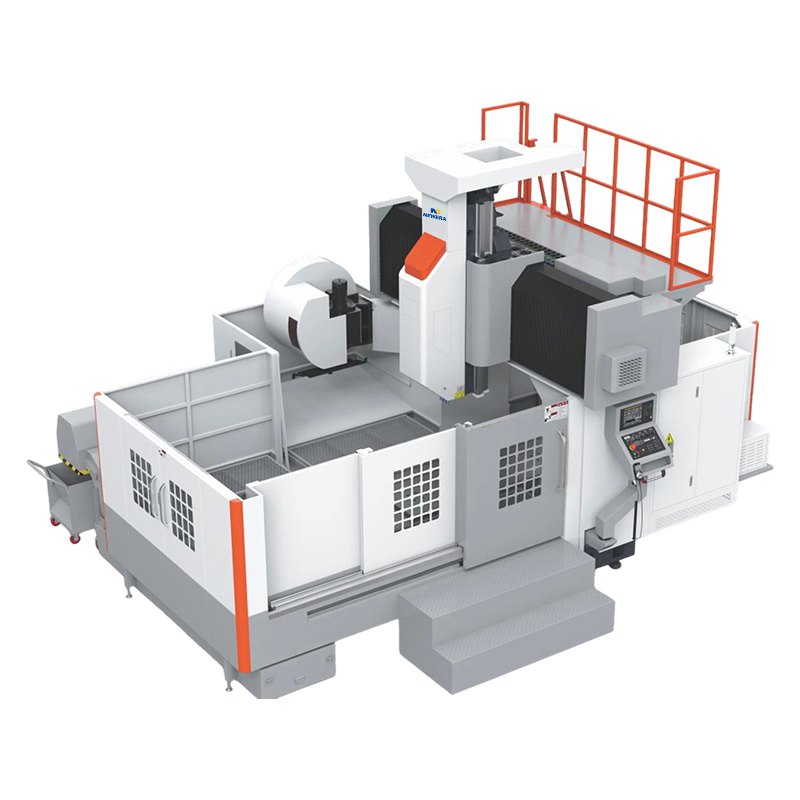
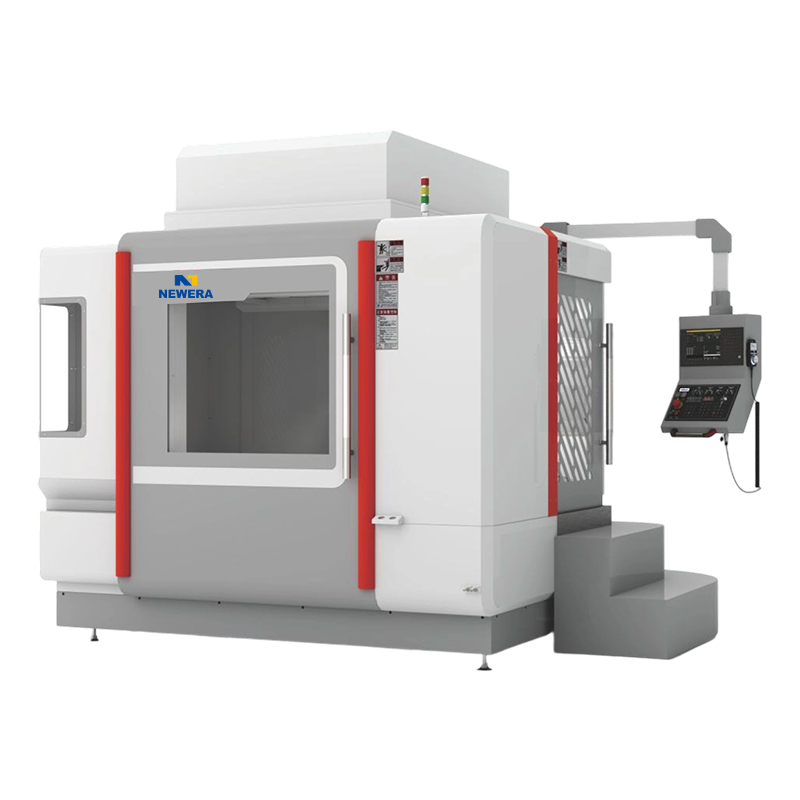
EDM Machine
-- Steady & Reliable Manufacturer --
Brief Product Description
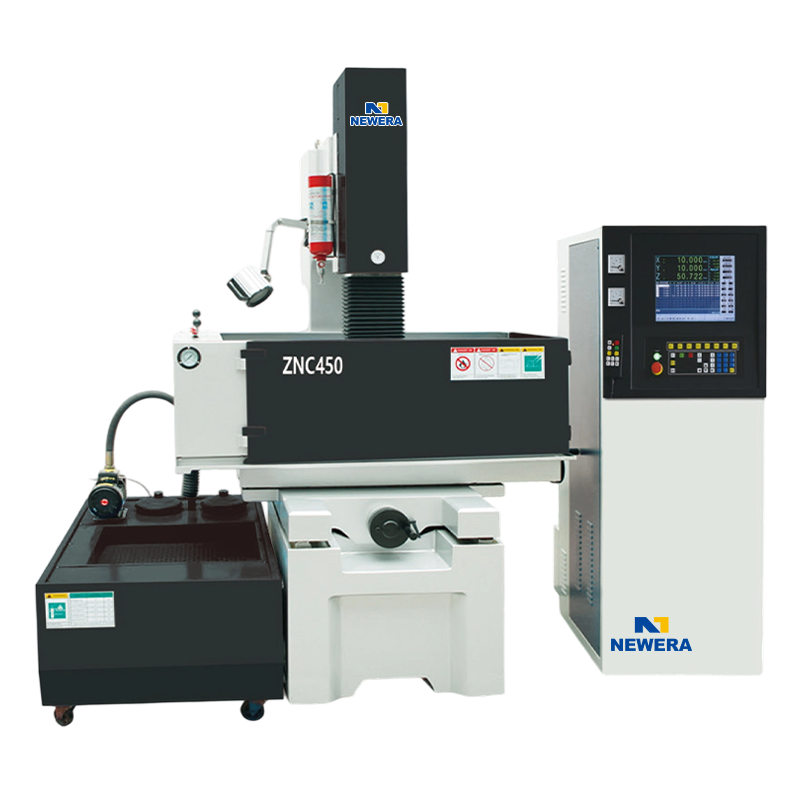
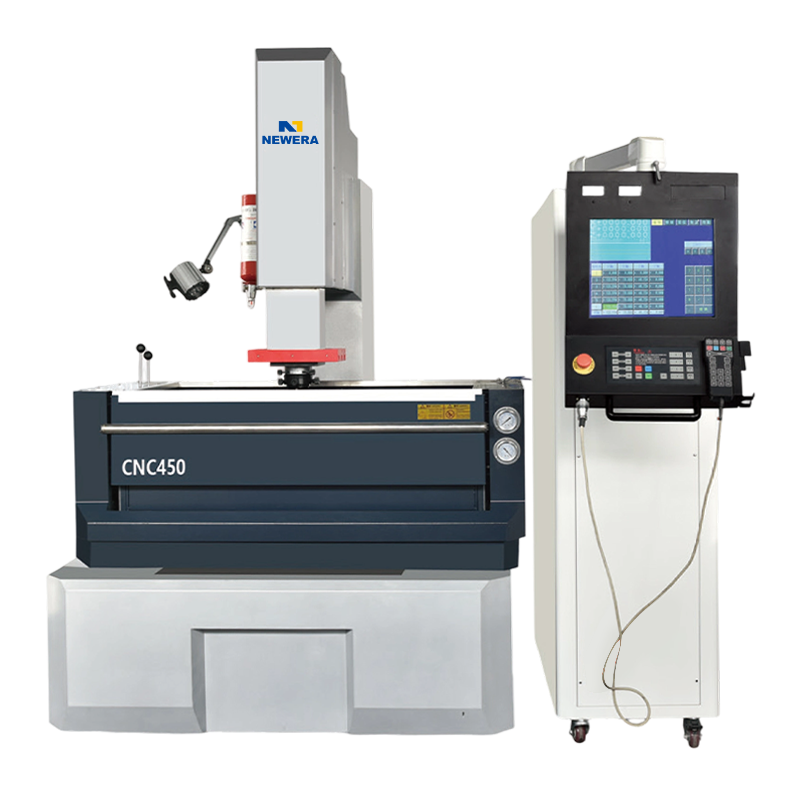
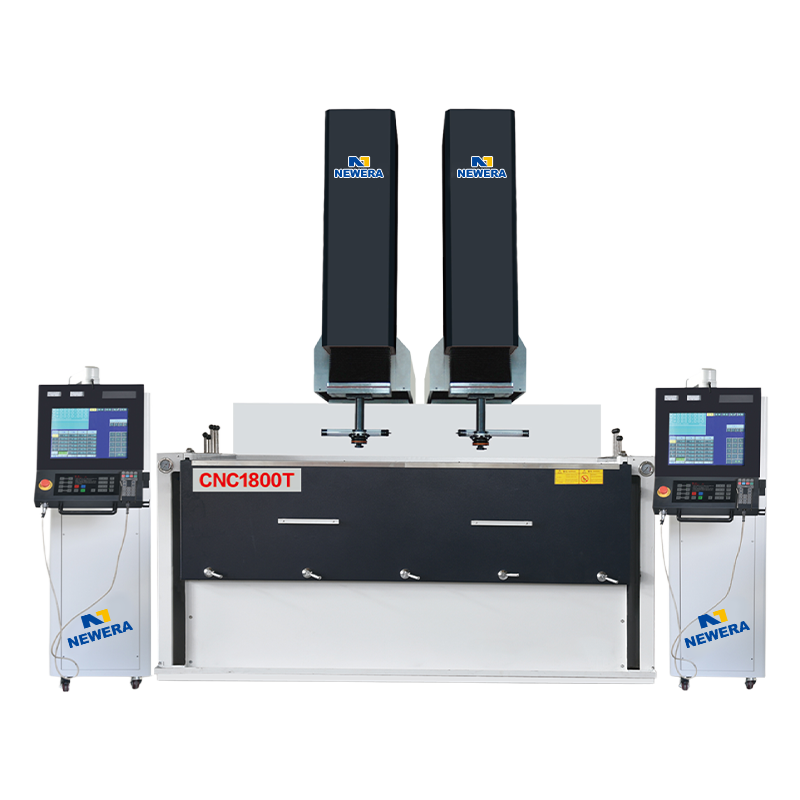
An EDM machine removes metal through controlled electrical sparks between a shaped electrode and the workpiece, submerged in dielectric fluid. Because the process uses no cutting force, it is the standard route for hardened tool steel, carbide, and deep or intricate cavities that milling cutters cannot reach cleanly. Thin walls, sharp inside corners, and fine ribs can be produced without distortion, which is why EDM machines are found in almost every mold and die workshop.
The typical buyers are mold makers, tooling shops, precision parts subcontractors, and distributors who resell to local workshops. During sourcing, they compare worktable size, maximum workpiece weight, Z-axis stroke, generator output current, achievable surface finish, and electrode wear rate. The control language, servo response, and dielectric tank volume also decide how smoothly the machine runs in daily production.
Nantong New Era Technology Co., Ltd. has built numerical control machines and CNC machine tools for more than 20 years, with in-house design, machining, and assembly. We support OEM and ODM projects such as private labeling, control panel language, paint color, and electrical standard. Samples and test cuts can be arranged before you commit, and trial orders of a single unit are accepted on standard models. Final configuration, lead time, and export packing are confirmed in the quotation.
Before placing an order, it helps to prepare three facts: the largest workpiece you will burn, the deepest cavity you must reach, and the surface finish your customers expect. With these, our engineers can narrow the choice of table size, Z stroke, and generator quickly. We also suggest planning your electrode material and filtration routine early, because both affect running cost and finish consistency across the first year of production.
- Core ProcessSpark erosion with a servo-controlled gap
- Typical UsersMold shops, tooling plants, distributors
- Key ParametersTable size, Z stroke, max current, surface finish
- ControlCNC controller with multi-language interface
- CustomizationOEM and ODM, branding, voltage, accessories
- Order TermsSamples, single-unit trial order, export packing
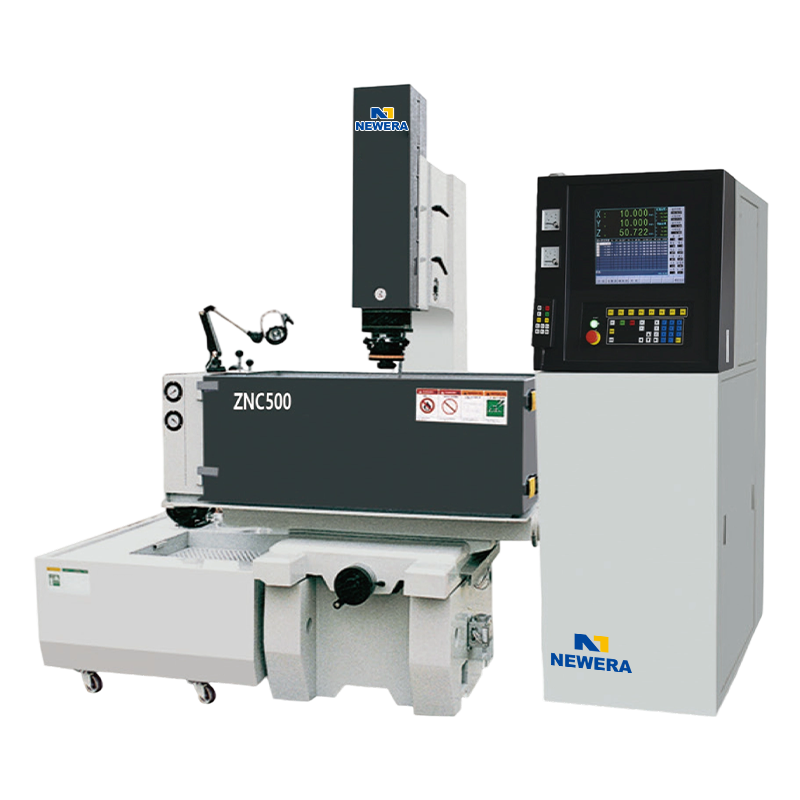
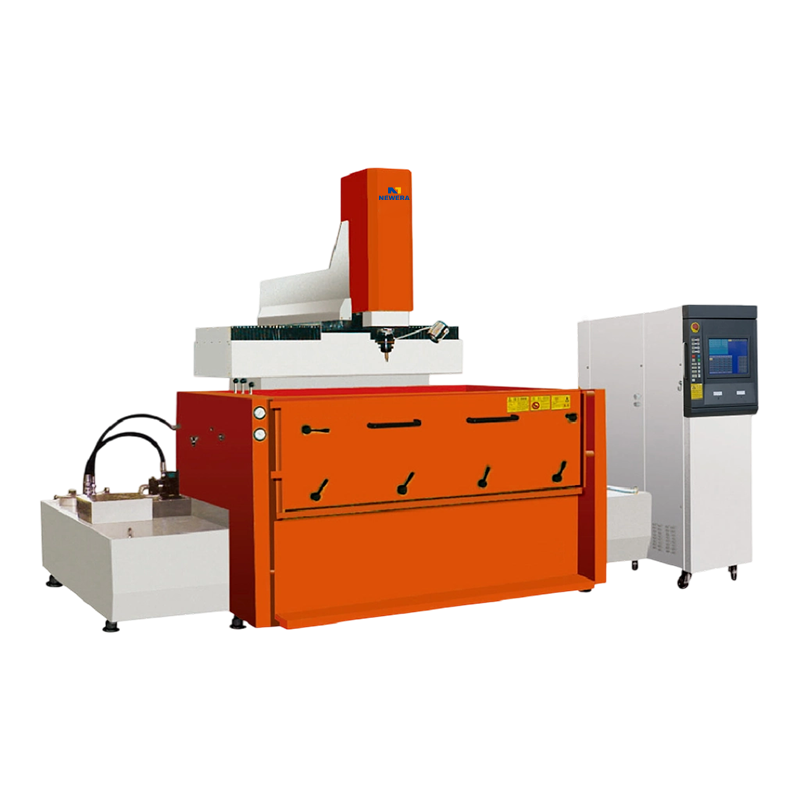
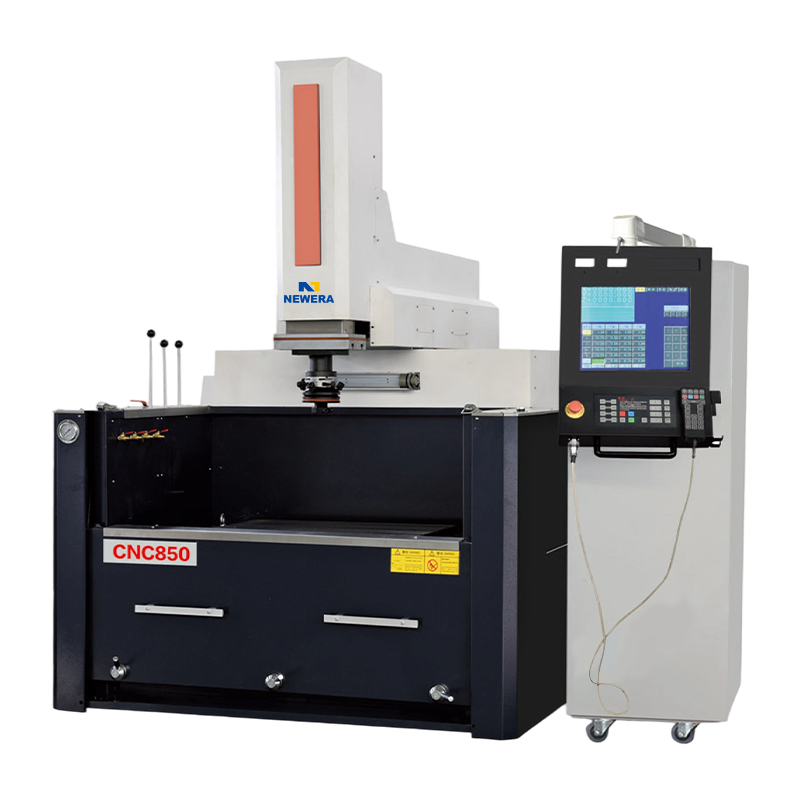
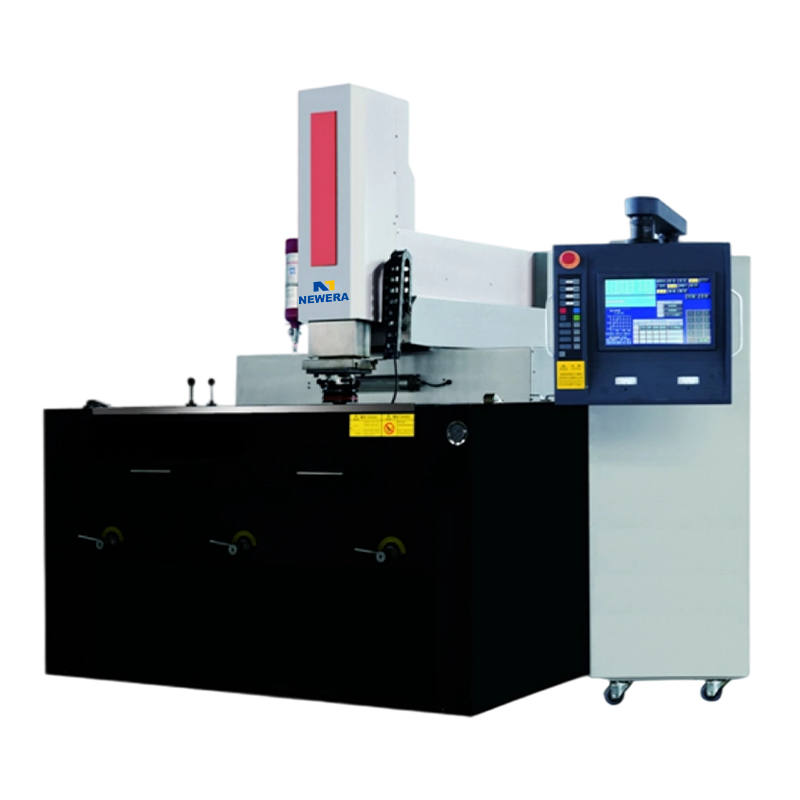
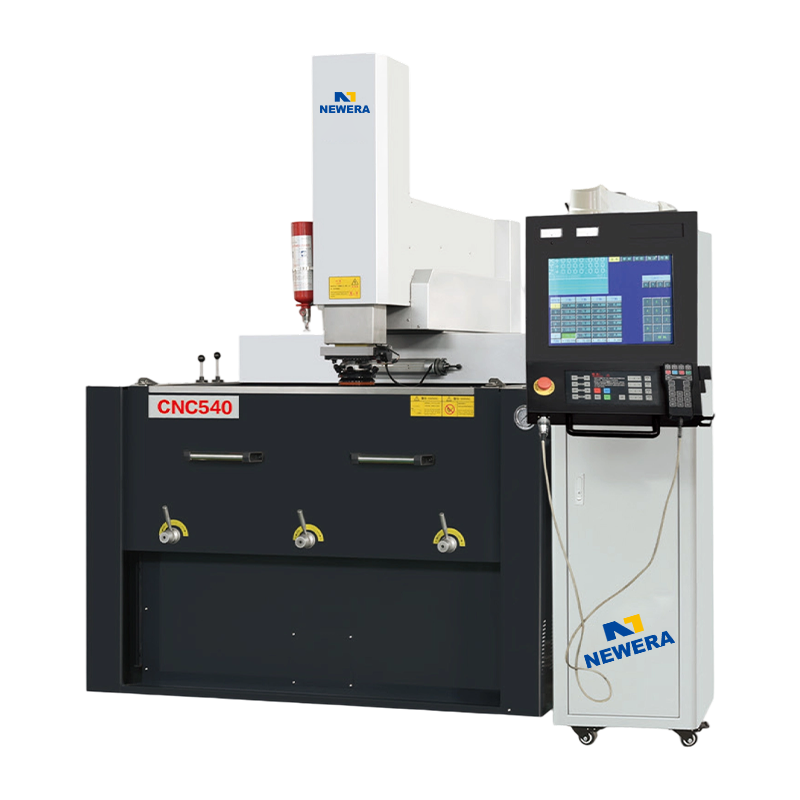
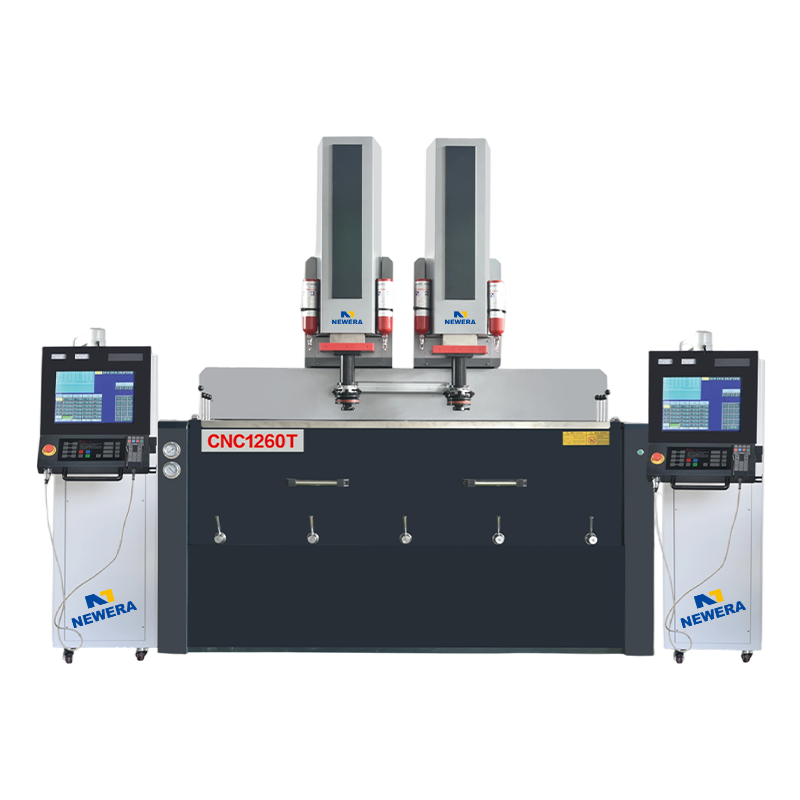
Specification
| Parameter | Specification |
| Model Range | Compact to large-format models, configurable |
| Worktable Size | 400 x 250 mm to 1000 x 600 mm |
| X / Y / Z Travel | 300 x 200 x 250 mm to 800 x 500 x 400 mm |
| Max Workpiece Weight | 500 kg to 2000 kg, by model |
| Max Electrode Weight | 50 kg to 200 kg, by model |
| Dielectric Tank Capacity | 200 L to 800 L |
| Max Machining Current | 30 A to 75 A |
| Max Removal Rate | Up to about 400 mm3/min, by model and material |
| Best Surface Finish | Down to about Ra 0.2 um with fine-finish circuit |
| Electrode Wear | Low-wear settings available for graphite and copper |
| Controller | CNC controller with graphical interface |
| Power Supply | 380 V, 3 phase, 50 Hz, other voltages on request |
| Machine Weight | About 1200 kg to 4500 kg |
| Customization | Branding, language, color, accessories |
Application
Application Scenarios
| Industry | Typical Parts | Buyer Focus |
| Mold and Die | Injection mold cavities, die-casting inserts | Surface finish, electrode wear, stable long runs |
| Tooling | Punches, stamping dies, gauges | Accuracy, corner sharpness, repeatability |
| Aerospace Parts | Turbine slots, fuel nozzles, fixtures | Material range, process documentation |
| Medical and Precision | Surgical tool features, micro holes | Fine finish, clean surface, low recast layer |
Target Customers
- Mold MakersNeed dependable cavity burning on hardened steel
- Contract Machining ShopsNeed flexible capacity for mixed small batches
- DistributorsNeed standard models with stable supply and manuals
- Equipment UpgradersNeed to replace aging machines with modern control
Suitable and Unsuitable Uses
- Hardened tool steel and carbide parts
- Deep ribs and sharp inside corners
- Thin-wall features that must not deform
- Complex shapes that a cutter cannot reach
- Mass removal of soft aluminum where milling is faster
- Non-conductive materials such as plain ceramic or plastic
- Very large flat surfaces with no detail
- Jobs with no budget for electrodes and fluid
Selection Guidance
- 1. Start with the partList the biggest workpiece, the deepest cavity, and the finish you must reach, then select the table and generator around them.
- 2. Match the generatorHigh current speeds up roughing, while a good fine-finish circuit saves polishing time later.
- 3. Plan the electrodesDecide whether graphite or copper suits your parts, and whether you will make electrodes in-house.
- 4. Think about serviceAsk for manuals, wiring diagrams, and spare parts lists so maintenance stays simple.
Usage Notes
- Keep the dielectric fluid clean and replace filters on schedule
- Fix the workpiece and electrode firmly and check alignment before burning
- Set flushing correctly to avoid arcing in deep cavities
- Warm up the machine before precision finishing
- Never leave the machine unattended without fire safety measures
- Record parameters for each material to repeat good results
Advantages
- Stable gap control
A servo system that responds in milliseconds keeps the spark gap steady, which reduces arcing and protects your electrode and workpiece from damage.
- Hardness-independent cutting
Because the process erodes by sparks, a 60 HRC mold steel cuts as easily as a soft one, so you can finish after heat treatment and avoid distortion.
- Flexible parameter library
Stored parameter sets for common material pairs shorten setup time, helping new operators reach consistent results sooner and lowering scrap risk.
- Rigid cast frame
A heavy cast structure absorbs vibration during long burns, which supports repeatable accuracy on deep cavities and reduces rework on critical dimensions.
- OEM and ODM support
Panel language, color, voltage, and branding can be adjusted before production, so distributors can launch a product that fits their local market without extra tooling.
- Documented delivery
Each shipment includes manuals, wiring diagrams, and a packing list, and sample cutting can be done before shipping, reducing commissioning delay at your site.
Frequently Asked Questions
- Q: What materials can an EDM machine cut?
- A: Any electrically conductive material, including hardened tool steel, carbide, titanium, copper, and graphite. Non-conductive materials cannot be machined.
- Q: What surface finish can I expect?
- A: Fine-finish settings can reach roughly Ra 0.2 to 0.4 um depending on the electrode, the material, and the generator. We can confirm with a test cut.
- Q: Do you offer OEM or ODM service?
- A: Yes. We can adjust branding, control panel language, color, and electrical standard. Details are confirmed in the quotation.
- Q: What is your minimum order quantity?
- A: Standard models can be ordered as a single-unit trial order. For OEM projects, the quantity is discussed per project.
- Q: Can you make a sample before I order?
- A: Yes. Send a drawing or sample part and we can arrange a test cut or video so you can judge the result.
- Q: What documents come with the machine?
- A: A user manual, wiring diagram, packing list, and inspection record are provided. Other export documents are available on request.
- Q: What power supply is required?
- A: The standard is 380 V, 3 phase, 50 Hz. Other voltages and frequencies can be configured for your country.
- Q: How is the machine packed for export?
- A: It is fixed on a base, wrapped against moisture, and packed in a wooden case suitable for sea or air freight.
Contact us to learn more
CONTACT DETAILS
Nantong New Era Technology Co., LTD
Five-star Industrial Park, Chongchuan District, Nantong City, Jiangsu Province, China
TEL:+86-19851302688
E-Mail: [email protected]